More Than a Match: The People Behind VTA’s World Cup Success
By Santa Clara Valley Transportation Authority staff | 7/14/2026
SANTA CLARA VALLEY TRANSPORTATION AUTHORITY STAFF
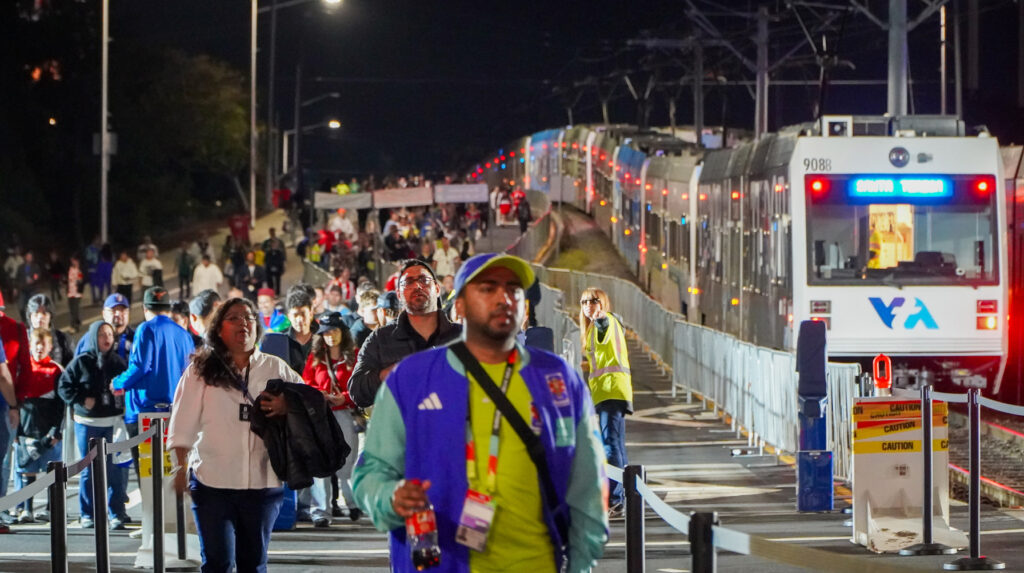

Long before the first train filled with soccer fans arrived at Great America Station, another story was unfolding. It wasn’t happening on station platforms or inside buses. It wasn’t visible to riders or television cameras.
It was unfolding in offices, maintenance facilities, dispatch centers, conference rooms, and rail yards, where hundreds of Santa Clara Valley Transportation Authority (VTA) employees spent nearly two years preparing for one of the largest transportation operations in the agency’s history. Every division played a role. Every employee contributed in some way.
The matches themselves lasted only a few hours, but the planning, collaboration, and innovation behind them will strengthen VTA long after the final whistle. This is the story behind that success.
Designing the Service
Moving tens of thousands of visitors while continuing to serve everyday riders required years of careful planning. VTA’s planning and development division created the operational blueprint for every match, determining train frequencies, bus deployment, operator assignments, and service schedules well before the tournament began.
Meanwhile, engineering and program delivery focused on preparing the physical system itself. Engineers completed station improvements, upgraded passenger information displays, enhanced accessibility, improved security systems, modernized ticket vending machines, and installed queue management lighting to safely organize thousands of riders after each match. Many visitors never noticed these improvements—but each contributed to a smoother, safer customer experience.
Planning for the unexpected, the operations division tested service scenarios, refined operating plans, and prepared contingency strategies. VTA’s safety and security division prepared through tabletop exercises, emergency drills, cybersecurity planning, and extensive coordination with local, state, and federal partners.
Building the Foundation
Every successful transit operation depends on people. VTA’s government affairs division worked with federal, state, regional, and local partners to ensure decision-makers understood the agency’s central role in the tournament, coordinated with the Bay Area Host Committee, and pursued funding opportunities.
The finance division ensured that the resources were available to support every aspect of the operation. From installing technology inside the emergency operations center to creating special payroll procedures and securing last-minute supplies, the work was essential to keeping the tournament running smoothly.
Before and during the tournament, the human resources division focused on ensuring that employees had the support necessary to succeed, filling critical operational positions and building excitement through engagement programs.
For many visitors, their first interaction with VTA happened long before they boarded a train. They watched a news story, visited VTA’s World Cup webpage, downloaded the Transit app, or saw social media posts explaining how to reach Levi’s Stadium by transit. The “Take Transit” campaign encouraged fans to leave their cars behind while providing easy-to-follow information on fares, trip planning, and mobile ticketing.
Bringing the Plan to Life
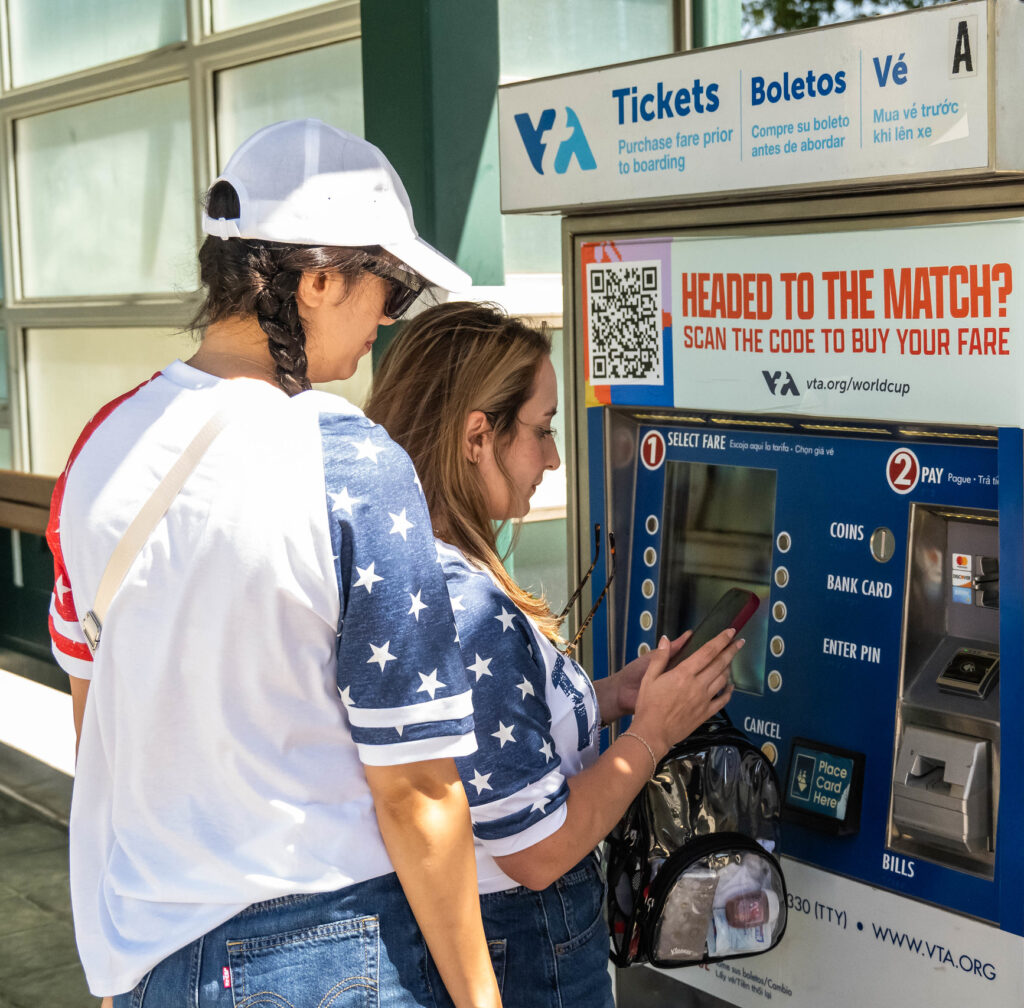
When match day arrived, years of planning became reality. Supervisors reported before dawn to prepare buses, trains, drivers, and facilities, while dispatchers coordinated thousands of communications among vehicles, supervisors, and field staff. Planners shifted from designing operations to measuring performance. Collection of real-time passenger counts allowed quick repositioning of trains, buses, and staff wherever demand was greatest.
Once fans arrived at Levi’s Stadium (named San Francisco Bay Area Stadium for the World Cup), nearly every available light rail vehicle had to be repositioned in preparation for the post-match rush. Working together, drivers, dispatchers, maintenance employees, field supervisors, and service managers safely moved nearly 20,000 passengers after each match, consistently clearing crowds in less than 90 minutes—well ahead of industry expectations.
Throughout every match, security personnel, sheriff’s deputies, transit security officers, and private security teams monitored stations while cybersecurity specialists worked around the clock protecting VTA’s digital infrastructure.
Inside the emergency operations center, representatives from nearly every division worked side by side, continuously monitoring passenger volumes, train locations, weather, traffic, media activity, and security conditions. The steady flow of information allowed leaders to make real-time decisions to keep passengers moving safely and efficiently.
Behind the scenes, facilities and vehicle maintenance staff ensured buses and trains remained service-ready, while operations analysis and reporting staff monitored system performance. Paratransit operations and regional transportation services continued providing reliable service to customers across Santa Clara County, ensuring everyday riders remained a priority even during one of the busiest periods in VTA’s history.
The Faces of VTA
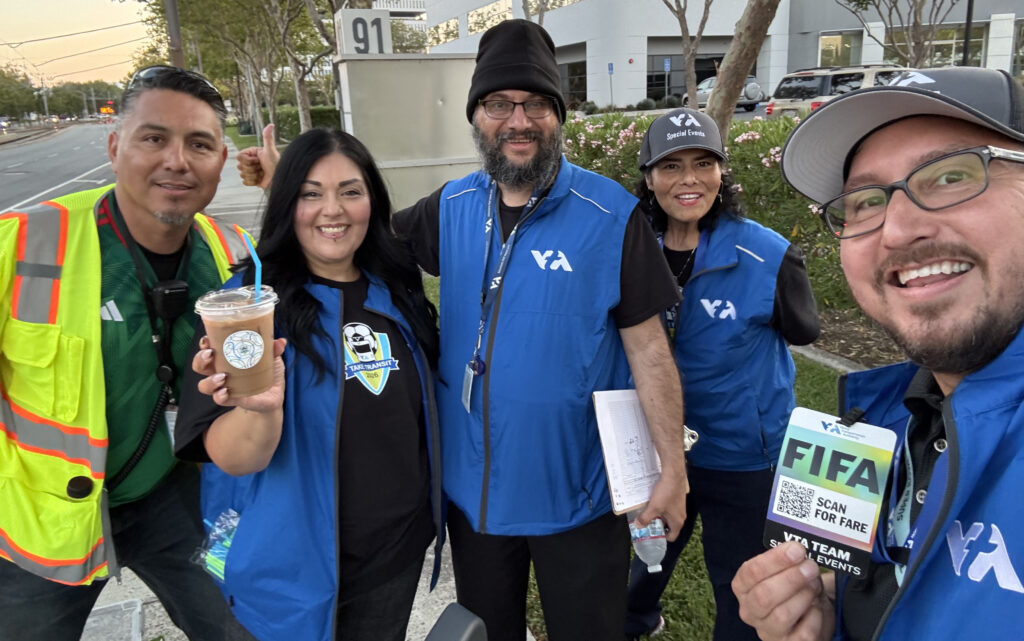
Thousands of visitors needed something only another person could provide—a reassuring answer, help finding the right platform, purchasing a ticket, or simply confirming they were headed in the right direction.
Customer service expanded support hours and helped thousands of passengers confidently navigate the system, while community outreach and public engagement employees became the welcoming faces of VTA as ambassadors at stations across the county.
Employees from every division volunteered to welcome visitors, answer questions, assist with ticket purchases, and help passengers confidently navigate an unfamiliar transit system. More than 500 ambassador shifts helped fans navigate their way. Finance employees recorded the highest participation in the ambassador program, demonstrating staff commitment to the agency beyond traditional responsibilities.
The tournament showcased far more than VTA’s ability to provide transportation. It demonstrated what is possible when planners, drivers, mechanics, engineers, communicators, finance professionals, safety personnel, human resources staff, government affairs specialists, customer service representatives, and hundreds of other employees work toward a common goal. Every contribution mattered.