APTA’s 2026 Workforce Summit Asked: “Is Your Workforce AI Ready?”
6/4/2026
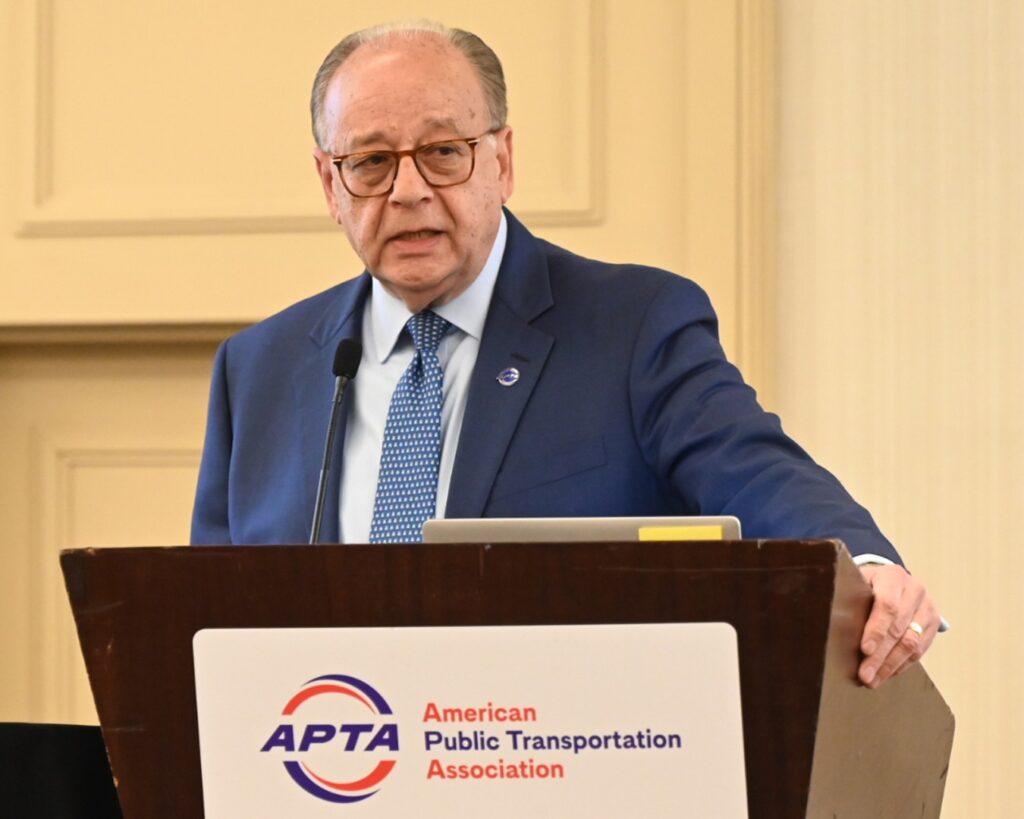
The message from the 2026 APTA Workforce Summit is clear, the future of transportation includes AI, autonomous vehicles (AVs), technology, and workers. For the public transportation industry, workforce recruitment, retention, and reskilling are challenges. Attendees of the Workforce Summit, May 20-21 in Salt Lake City, UT, heard from organizations exploring solutions.
At the summit, transit executives, labor partners, policymakers, academia, and leaders working in human resources, operations, and technology gathered to answer the question, “Is your workforce AI ready?” In his opening remarks, APTA President and CEO Paul P. Skoutelas said, “It all comes down to the people and preparing them for the pace of the industry’s technology changes. APTA’s new report, Artificial Intelligence and Public Transportation, catalogs some of the uses of this technology in our industry for scheduling, customer information, predictive maintenance, and service. On the service side, we know that AVs are here. We are working to figure out where they fit and how they can make our lives better.”
During a CEO roundtable panel, Nathaniel P. Ford Sr., CEO of Jacksonville Transit Authority (JTA), and Tiffany J. Gunter, CEO of Suburban Mobility Authority for Regional Transportation (SMART), discussed the impact of decisions made to either replace or update equipment. Jacksonville’s Neighborhood Autonomous Vehicle Innovation (NAVI) replaces a 35-year-old automated people mover. Ford said, “The data that we are collecting with these vehicles are far beyond what we imagined.” Looking to the future, JTA is looking at ways to commercialize or monetize the data collected through NAVI’s lidar scans, which can detect an early pothole or roadway obstacle, while ensuring privacy.
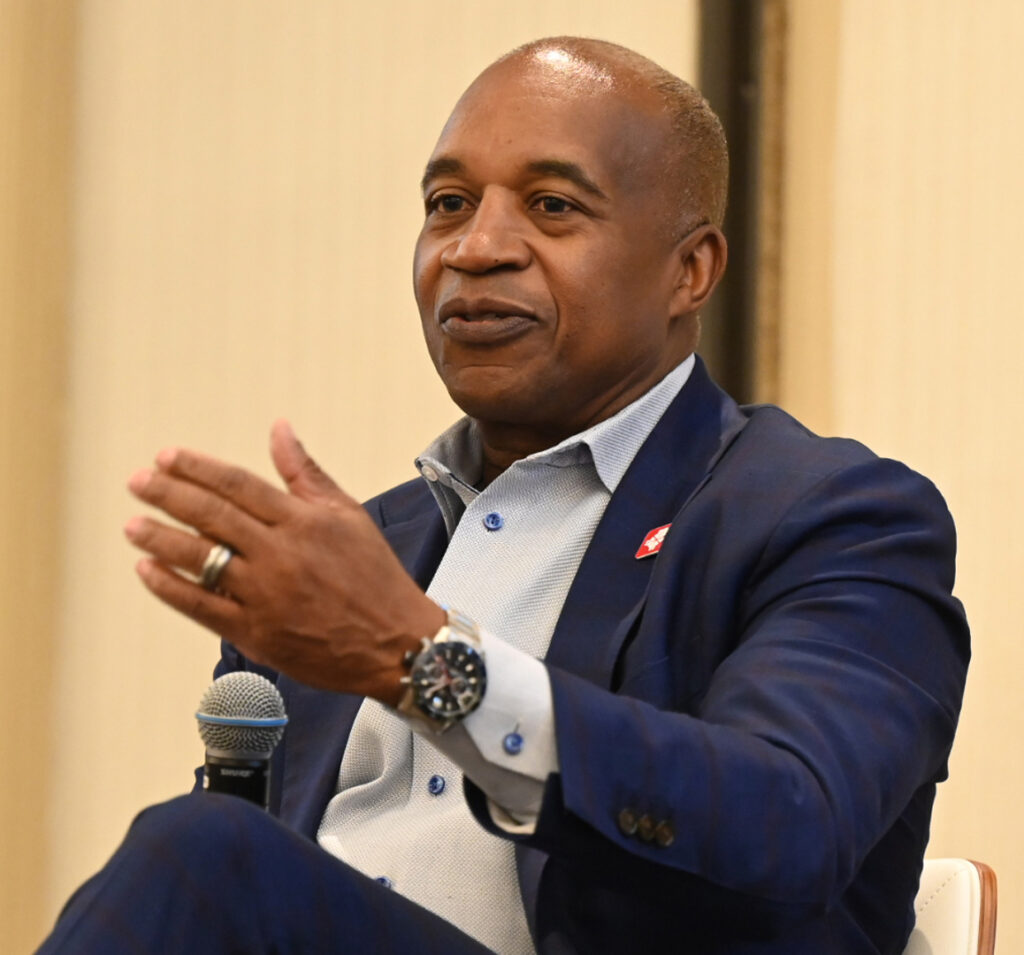
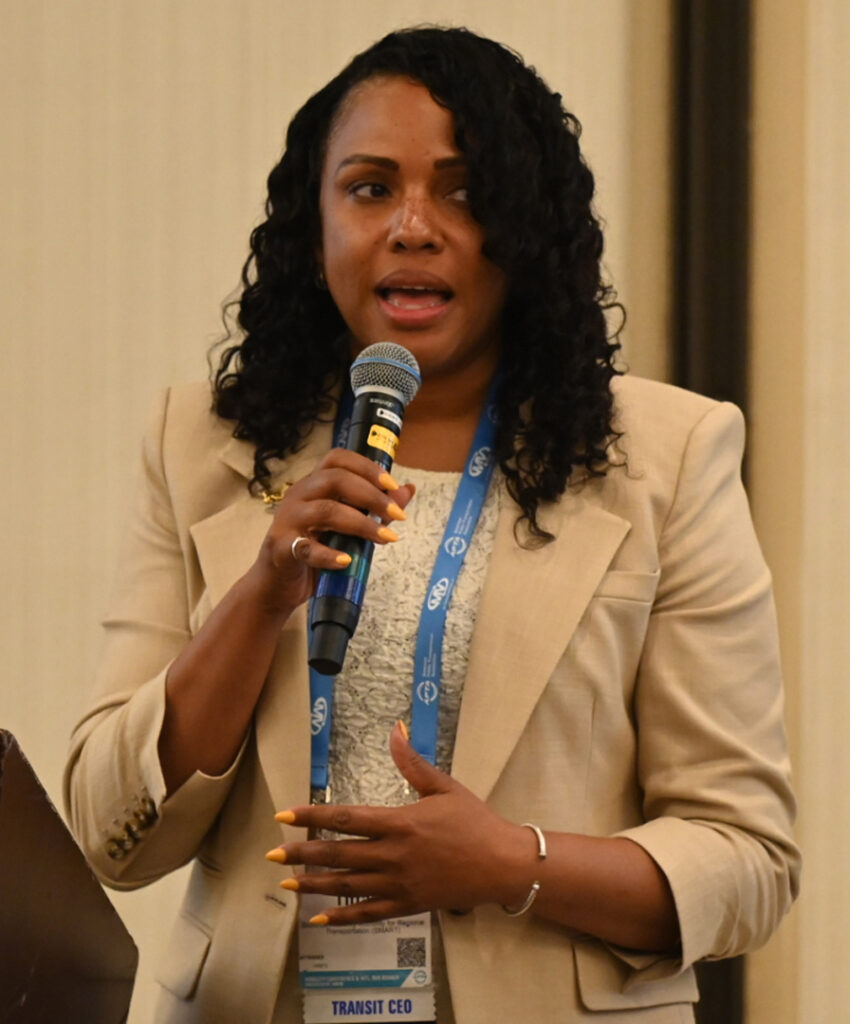
As agencies work to modernize systems and integrate AI tools, the industry faces the critical challenge of ensuring that workers are prepared, while feeling protected and empowered to succeed. Ford mentioned a JTA partnership with a local college to offer industry certifications to prepare the workforce for opportunities to work with emerging industry technology. The conversation suggested that the organizations most likely to succeed in the era of technological transformation will be those that invest in both technology and people.
Harry Wilson, Chairman and CEO of MV Transit, discussed the use of AI to predict if new hires will stay on the job. Results have proven to be between 50-97 percent accurate in a pilot phase. Erik Hansen, CEO of SouthWest Transit, spoke about the organization’s transition from counting customers with a hand clicker to using AI. Hansen described it as a journey of trust—drivers had to see that the hand clicker and the automated system came up with the same totals. More importantly, the transition to automation empowers operators to engage with customers and answer questions rather than focus on clicking or counting.
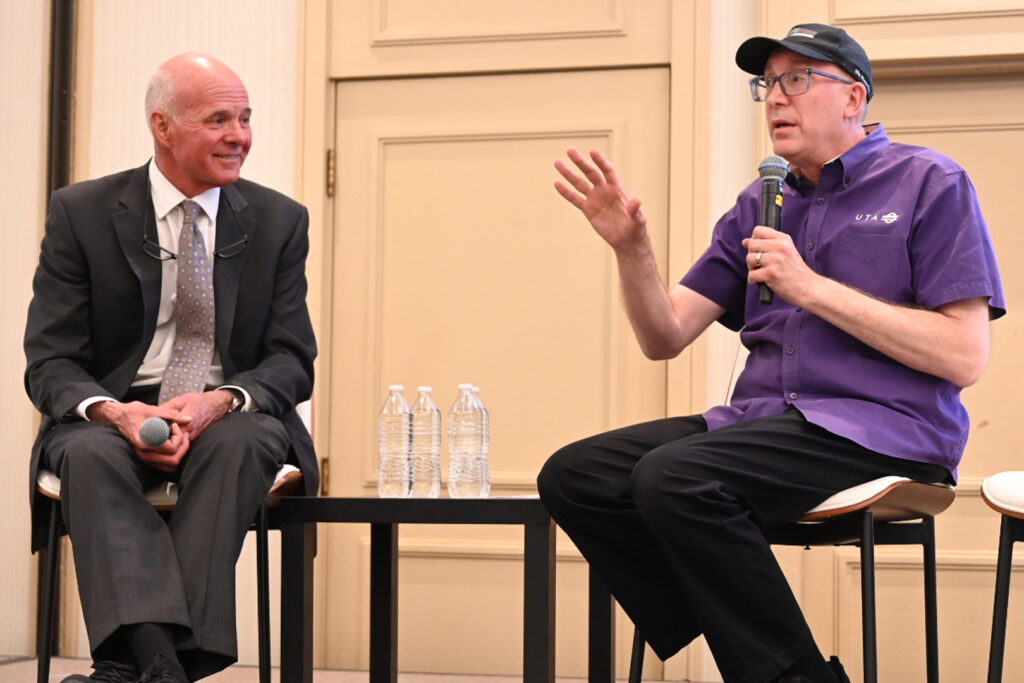
During a fireside chat, Jay M. Fox, executive director of Utah Transit Authority (UTA), and Carlos Braceras, executive director of Utah’s DOT, spoke about the importance of an organization’s culture, which they often referred to as a “work family.” Braceras spoke of UDOT values of integrity and caring about and respecting people. Fox spoke of his commitment to attend UTA employee orientations, during which he asks new employees to think about what the agency’s mission—“We move you”—means to them. When speaking at community events, he says, “Ask not what UTA can do for you, but what ‘we’ can do together.”
As agencies nationwide continue to struggle with recruiting and retaining operators, maintenance staff, engineers, and other professionals in careers like cybersecurity, discussions centered around solutions such as reskilling and training. Edwin Rodriguez with FTA’s Office of Research Management, Innovation, and Outreach spoke about FTA’s history supporting workforce development and Section 5314 of the federal public transportation law, which funds training and workforce development.
The APTA Workforce Summit focused on reskilling existing employees, attracting all titles of workers to the industry, developing apprenticeship pipelines, and integrating AI responsibly into transit environments. Thanks are due to the teams of industry professionals that collaborated with APTA’s Workforce Development and Educational Services to create a summit that addressed current issues and what is needed for the future.
View more images from the 2026 Workforce Summit.
Register to watch video of Workforce Summit sessions.
Join the Conversation: If your organization has a noteworthy innovative workforce practice, please share it using APTA’s new online form.
Contact Us: Reach the APTA Workforce Team at Workforce@apta.com.