Workforce Development Initiatives Center People in the Process
7/7/2026
Today’s transit workforce development challenge is equal parts how to attract employees now and over time, how to engage existing employees for longer retention, and how to equip them with the information, skills, and tools they’ll need to manage inevitable industry changes.
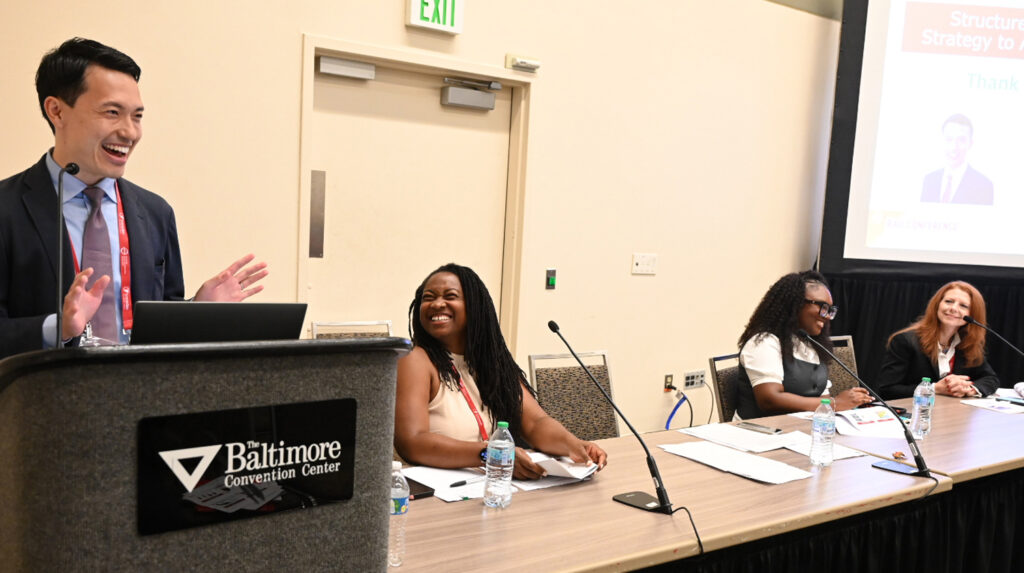
While there is no single solution, approaches emphasizing flexibility, personal growth, and inspiration were in the spotlight at APTA’s 2026 Rail Conference session, “Growing the Rail Workforce.”
An organizational reform underway at the East Japan Railway Company lets employees explore other work roles within the company to bring creativity to the job and do what only humans can do, said Takaaki Fujioka, assistant manager of standardization strategies and promotion. They can challenge themselves, explore their strengths, and grow the company.
Fujioka believes employee engagement will increase in the new environment, when they can “fully maximize their motivation and abilities, in an organization that recognizes and supports those efforts,” he said. “Key factors are flexibility, opportunities for growth, and a sense of purpose.”
Through its supervisor training program, conference host agency the Maryland Department of Transportation – Maryland Transit Administration (MDOT MTA) offers employees a rare opportunity in the transit industry, combining technical expertise, “soft” skills, practical exercises, and self-reflection. Participants are asked to self-define leadership, says Kezia Joyner, MDOT MTA organizational development consultant.
The program was created because leadership is rarely taught, and people promoted to supervisor roles are often expected to learn those skills on the job. “That should not be the only path to leadership,” Joyner said. “Leadership is a skill that can be developed … and when you invest in your leaders in the way we do with our supervisor training program, it strengthens communication and improves employee experience.”
Inspiring students of all ages with the possibilities of careers in transit is part of the formal approach that Lisa Staes, associate director, Center for Urban Transportation Research, discussed. The comprehensive approach to promoting railroading careers and developing the rail industry workforce is funded by a $17 million federal grant that aims “to ensure that the U.S. rail system has the skilled, diverse, and technology-ready workforce it needs both now and in the future,” said Staes.
Through numerous partnerships, Staes said they are creating opportunities and interest in schools at every level, including research, application development, curriculum creation, internships, and training. The work is based on three pillars, which capture the industry’s workforce priorities: Inspire, Pathways, and Capacity.