FAA Ground Stop: Analogies to Consider for Public Transit Agencies
By William Hui | 11/23/2026

WILLIAM HUI
Director, Systems Engineering
South Coast British Columbia Transportation Authority (TransLink)
New Westminster, BC, CANADA
Chair,
APTA Systems Lifecycle Engineering Subcommittee

On November 13, 2026, the Federal Aviation Administration (FAA) ordered a four-hour ground stop, leading to a halt of all air traffic in the United States’ airspace—a stoppage that has only occurred two other times in history. The activities surrounding the incident bear striking similarities to the work undertaken at public transit agencies. The incident highlights the need to invest in maintenance and modernization projects, and the consequences of not doing so in a structured and timely manner.
State of Good Repair
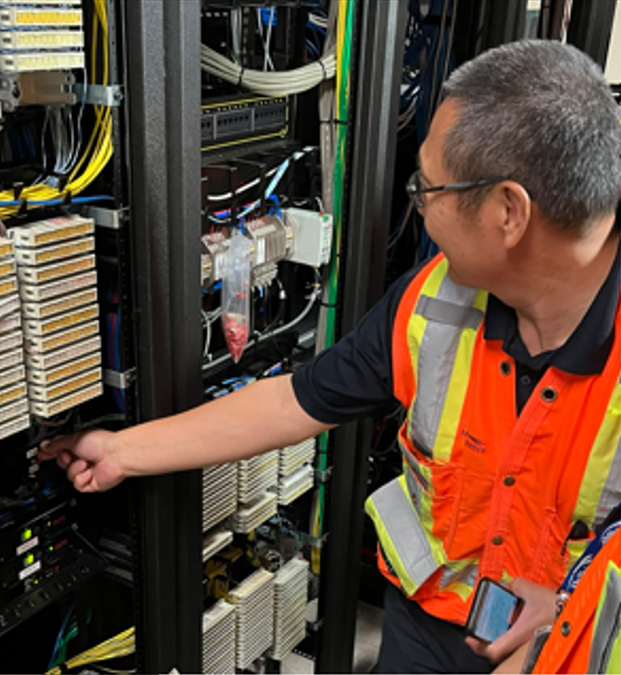
Work is being carried out to modernize antiquated aviation technology, specifically replacing copper connections with fibre. Modernization is a key component within many public transit agencies, with some actively conducting the same communications upgrades from copper to fibre.
Technical Debt
In both industries, modernization work has been long overdue. Operating and maintaining older systems becomes increasingly difficult over time due to lack of expertise and spare parts. It is easy to defer modernization efforts due to costs and other priorities, but this causes technical debt to mount over time, and recovery becomes progressively challenging. Tracking technical debt in terms of deferrals, risk, and urgency may help prioritize investments in capital planning.
Operational Systems
Systems that power transit agencies, as with airports, cannot be “turned off” for extended periods of time for maintenance activities. Often, maintenance and upgrades can only be completed during short periods of engineering hours when the system is not serving customers, which extends timelines for modernization efforts to be completed. The reality is that if these systems are working, no one notices. But when failures do occur, they are usually unexpected and have wide-reaching impacts on customers and operations.
Vendor Management
Many critical systems run by transit agencies are complex and rely on niche or even sole-source vendors. A common frustration of agencies is mitigating impacts resulting from technology not working properly or contractors not following procedures or best practices. Working with vendors to understand the root cause of failures can often be time consuming; again, leading to long timelines required for modernization efforts.
The System Failed, but it Failed Safely
Like most critical systems utilized by transit agencies, the system used by aviation failed safely. That is, although the equipment did not function as expected, there were safeguards in place to protect the travelling public. Despite the inconvenience, safety was not compromised—a fact reiterated by the U.S. Administration.
Risk-Averse Agencies
Like public transit agencies, the FAA, airlines, and airports are risk averse. They typically do not want to adopt technology that is “bleeding edge,” and rightly so. These organizations prefer mature, proven technologies, but this tends to make them late adopters of technology. Coupled with how long it takes to modernize the technology given the geographical/physical extent of modern transportation networks, this exacerbates issues such as technical debt.
The Almighty Dollar
Funding consistently underlies how organizations prioritize operations, maintenance, and modernization efforts. Operational systems, being typically invisible to most customers, are easily underappreciated in terms of their significance, with customer-facing and revenue-generating elements often prioritized ahead for capital expenditure. The breadth of responsibilities of these technologies, its complexities, and sometimes, its age, contribute to costly investments due to the labor involved and the extended timelines to complete the work. Timely investments in maintaining operational systems are key to avoiding serious disruptions caused by aging technology.
The Bottom Line
The FAA ground stop offers insight that is relevant to many transit agencies across North America. It is critical to recognize the complex nature of operational technologies and their crucial role in customer experience and operating the transit network. Especially at a time when many agencies are facing significant funding pressures, it is imperative to properly plan and fund essential maintenance and modernization work and human capital to avoid accumulating technical debt resulting in unexpected customer-facing failures. If deferrals cannot be avoided, a proper understanding of residual risks is crucial and a realistic plan to recover from the technical debt should be developed so that critical works can commence when funding becomes available.
Acknowledgements:
From British Columbia Rapid Transit Company: Jason Janz and John Wollenzin
From TransLink: Myles Ho and Cleo Wong
References:
Wright, G. and Davidson, H. (2026, November). Copper wire upgrade behind US flight suspension, transport secretary says. BBC. https://www.bbc.com/news/articles/c6wy9lynq4qno. Isidore, C. (2026, November).
The systems used to keep America flying are ancient. That makes fixing the problem that much more difficult. CNN.
https://www.cnn.com/2026/11/15/business/faa-tech-systems-us-government.
Pawlyk, O. (2026, November). ‘Incompetence’ or faulty equipment? Duffy blames air contractor and demands $50B from Congress. Politico.
https://www.politico.com/news/2026/11/14/duffy-atc-presser-01166601.
Ali, A., Sweeney, S., et al. (2026, November). Nationwide ground stop lifted after more than 4 hours as Trump administration blames old, overloaded tech. ABC News.
https://abcnews.com/US/nationwide-ground-stop-ordered-airports-faa/story?id=138121848.
The Associated Press. (2026, November). Trump administration asks for billions to overhaul FAA. Democrats question how money was spent. Newsday.
https://www.newsday.com/news/nation/trump-ground-stop-air-travel-faa-duffy-g40931.