How Signage Can Improve Ridership and Customer Experience
By Joe Leonard | 11/12/2026
JOE LEONARD
Press Officer
SEPTA
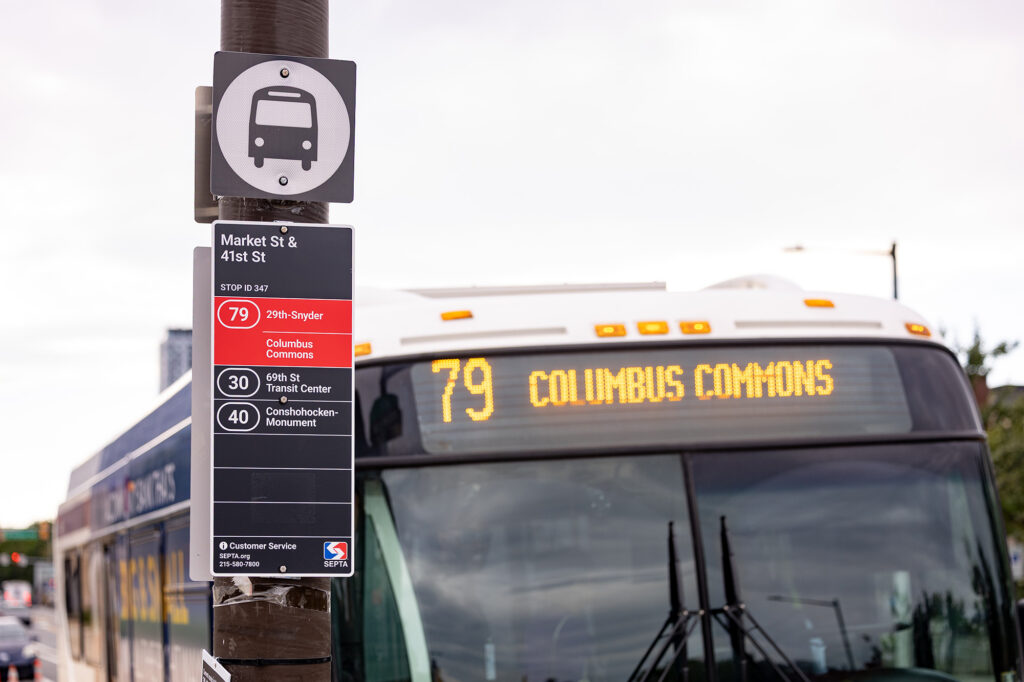
In August, Southeastern Pennsylvania Transportation Authority (SEPTA) implemented Phase 1 of its New Bus Network, the first ever overhaul of the system’s decades-old network. As part of the rollout, SEPTA decided to redesign bus signs across the sprawling system.
The design process resulted in a new sign concept: a circular, reflective bus icon mounted above stop-specific signs with route number and destination information. The bold new signs include white typeface on a black backdrop—intended to make them stand out, day and night.
“One of the major concerns with the old design was that customers had difficulty finding stops on crowded streets among competing signage and general city clutter,” said Lex Powers, SEPTA chief officer of customer experience and brand alignment. “I’ve already received comments from many people saying they didn’t realize how many bus stops they had in their neighborhood.”
The bus network is the busiest part of SEPTA’s system, accounting for more than half of overall ridership. Clearly advertising that service to pedestrians is an essential aspect of providing good customer experiences.
“Signage is an incredibly important part of service design,” said Will Herzog, SEPTA manager of wayfinding. “Do riders understand how to use the service? Can they find the appropriate signage? These were just some of the questions we considered in this process.”
SEPTA has added red throughout its signage to signify frequent bus service, indicating that buses on those routes should arrive every 15 minutes or less. The agency first began using red to denote frequent routes in 2018 and incorporating it into wayfinding signage is a landmark milestone.
“It’s important to advertise frequent routes,” said Powers. “You use those differently. You have confidence that you can show up to a stop and access spontaneous transportation. It’s the flexibility people want.”
Routes that were changed during Phase 1 of SEPTA’s New Bus Network have experienced a 7 percent increase in average weekday ridership, a 12 percent increase on Saturdays, and an 18 percent increase on Sundays. Frequent routes were particularly impacted and are currently growing at a higher rate than others.
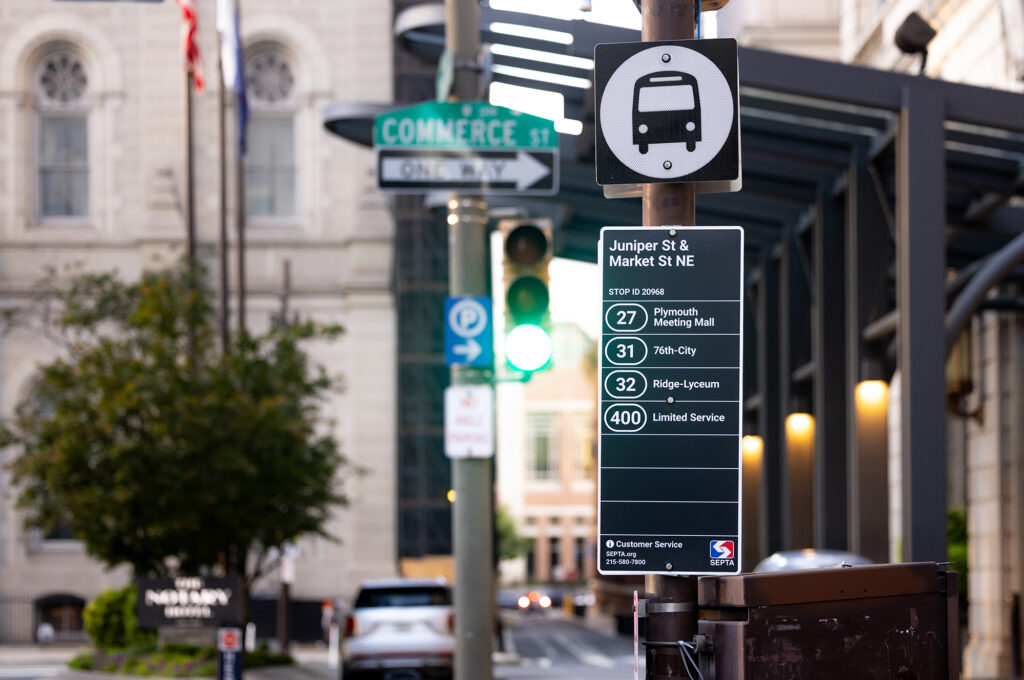
The new signs should be a fixture of the SEPTA system for years to come. Previous SEPTA bus signage degraded to the point of necessary replacement in 1.5 to 3.5 years—the new signs are designed to last 10. The material used is resistant to vandalism and easily cleaned without degradation.
The redesign aligns with SEPTA’s goal of providing a safe and reliable experience for customers and employees. The height placement of the signs has been standardized across the system to prioritize accessibility. Bus drivers and motorists will be able to clearly see the reflective bus signs and recognize that pedestrians could be populating the stop area at any given hour.
“With clear and lasting imagery on the streets, customers should feel confident that service will be clean, safe, and comfortable,” said Herzog.
Over the last few years, SEPTA implemented major changes to its wayfinding. New SEPTA Metro iconography was introduced in 2024 to match colors and letters to specific SEPTA routes.
“The new bus signs are just part of a larger effort to transform the customer experience and make the system easier to understand for riders,” said Powers. “The overall goal is to make the buses a more connected and conspicuous part of the system.”