Common Goals, Shared Commitments, Drive Regional Rail Projects
7/8/2026
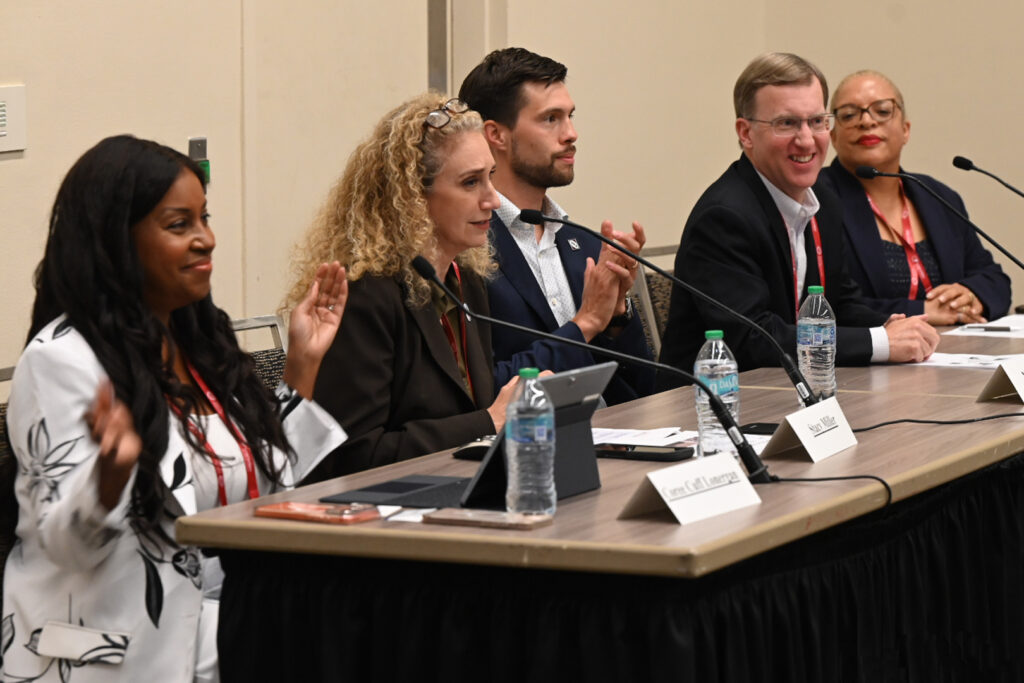
Regional rail projects are fostering cross-boundary partnerships to create bigger and better transportation systems. Two such high-complexity, high-reward ventures were featured at APTA’s 2026 Rail Conference in the “Beyond Borders: Building Regional Rail Together” panel, moderated by Kimberly Slaughter, SVP, Transportation Leader for North America, TYLIN and sponsored by Arup.
In South Florida, where Miami-Dade, Broward, and Palm Beach counties want to bring commuter rail to the state’s east coast, success involves “collaboration and coordination.” Stacy Miller, director/CEO of Miami-Dade DOT & Public Works, explained that everyone came to the planning table with Florida DOT, and worked to “make sure that we were all on the same page when it came to providing a one-seat ride for our users.”
Miami-Dade is expanding a privately owned system across 14 rail miles in a $930 million effort; Broward is a “subtenant” railroad on existing Brightline tracks, working to develop 11 miles at an estimated $712 million, said Coree Cuff Lonergan, CEO/general manager at Broward County Transportation Department. Palm Beach is a planning partner helping to set system standards.
Miller called the long-awaited project “a trust-building exercise.” Lonergan said, “Trust is the best part of the equation here,” adding that she is happy to have such respected partners, because “cooperation drives success.”
In the Washington, DC area, conference host Maryland Transit Administration (MTA) and Virginia Railway Express (VRE) are pursuing what Nicolas Ruiz, planning program manager at VRE, calls a “generational opportunity to expand.” Among their goals are creating a Purple Line light rail system, extending MTA’s MARC train service further into Maryland and Virginia, and increased VRE passenger rail frequency and connections throughout the system.
Their collaboration has been remarkable—in separate planning processes, the different agencies aligned closely, down to the keywords: “grow,” “connection,” and “meaningful.” MTA, a 1970s-era multi-modal system, runs 96 trains daily, with about 35 percent commuter traffic. VRE, a 1992 project of two transportation commissions, with an operating board representing nine jurisdictions, runs 32 trains on weekdays only, with about 74 percent of its commuters representing the federal workforce.
It’s unusual, says Darrell J. Smith, director of statewide project development at MTA, “that we planned the services first and then figured out the infrastructure that would be needed to support them.”
While project partners all had different origins, governance, planning processes, and funding, each shared a commitment to align their goals with partners and to deliver a great rider experience.