APTA Member Profile: Scott Drainville
5/20/2026
Chief Executive Officer
Hillsborough Transit Authority (HART)
Tampa, FL

Describe your organization’s mission and current operations.
HART is the regional public transportation provider for Hillsborough County and the Tampa region, with a mission to take people to places that enhance their lives. Since its creation in 1979, HART has served a large and growing community through fixed-route bus service, paratransit, FLEX service, and the TECO Line Streetcar. Our work connects people to jobs, education, healthcare, and the everyday destinations that keep a community moving.
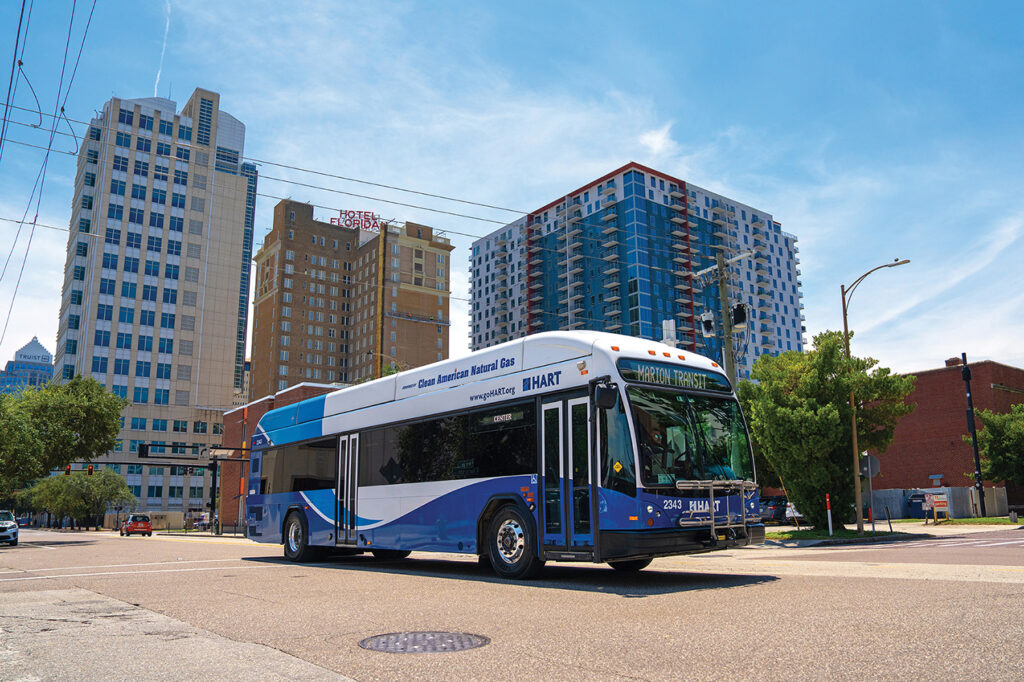
The agency is in a period of significant transformation. 2025 was a rebuilding year focused on financial stability, operational modernization, workforce capacity, service reliability, and restoring public trust. HART secured more than $72 million in federal funding, including a $32 million Low/No Emission grant to replace 33 aging diesel buses with low-emission CNG vehicles, and a $23.3 million BUILD grant to advance the first phase of the Heavy Maintenance Facility and Integrated Services Campus. These investments support a broader strategy: modernize the fleet, strengthen maintenance capacity, improve reliability, and build a stronger foundation for the future.

What are some of HART’s workforce development strategies?
Workforce development is central to building a strong foundation. Transit is a people-driven service. Our success depends on hiring, training, supporting, and retaining employees, especially drivers, maintenance staff, supervisors, and frontline leaders. In 2025, HART welcomed 129 new drivers, expanded training capacity, and strengthened labor stability through agreements with ATU and Teamsters.
We are taking a more intentional approach to understanding what makes employees successful. One initiative we are launching is a Predictive Index-style program that studies long-tenured bus drivers with strong customer commendations, safe performance, and reliable attendance. The goal is to identify the traits that contribute to success and apply those insights to hiring, coaching, mentoring, and retention.
What challenges and opportunities does public transit face in your community and how is HART addressing them?
The challenges and opportunities in our region are closely connected. We are addressing aging fleet and facility needs, driver availability, traffic congestion, on-time performance, customer information, and the demand for more frequent, reliable service. Our Heavy Maintenance Facility is a top priority because reliability begins long before a bus reaches the street.
At the same time, we are listening more closely to our riders and the community. If customers consistently tell us that frequency is the most important factor, then we need to validate that with data and align service planning, resources, and investments accordingly. The goal is to focus on what matters most to the people we serve.
I believe the transit industry is entering a period that requires greater discipline, transparency, and customer focus. Transit can no longer assume its value is understood. We have to demonstrate value through reliable service, safe and clean vehicles, clear communication, strong partnerships, and measurable results. The opportunity is significant, as transit plays a critical role in affordability, workforce mobility, regional growth, sustainability, and access. The agencies that succeed will be those that pair vision with execution.
What attracted you to the public transportation industry?
My connection to public transportation is personal. I grew up in this industry, starting right out of high school on the Rhode Island Public Transit Authority maintenance shop floor. That experience shaped how I view the work today and gave me a deep respect for the people behind the service, the mechanics, drivers, dispatchers, road supervisors, customer service teams, planners, and support staff who keep the system operating every day.
What is a less-known element of your role?
How much it involves connecting those different services. Effective transit service is not created by one department. It requires coordination among operations, maintenance, finance, capital planning, technology, safety, human resources, communications, and community engagement. What I like most is that the work matters. When we succeed, people get to work, students get to school, seniors remain independent, and communities become more connected.
What is unique about your organization?
What makes HART unique is that we are modernizing while rebuilding trust. We are strengthening finances, replacing buses, advancing major facilities, improving shelters, enhancing customer technology, expanding driver and maintenance hiring, and using a clearer scorecard to measure progress.
Readers might be surprised by how much transformation is happening at once. The common thread is accountability: HART is focused on what customers, employees, and the community value most, and we are building a modern transit system around those priorities.