APTA Committee Profile: Bus Technical Maintenance
5/19/2026
BUS TECHNICAL MAINTENANCE COMMITTEE | 311 members

Obed Mejia, Chair
Senior Bus Equipment Maintenance Instructor
Los Angeles County Metropolitan Transportation Authority (LA Metro)
Los Angeles, CA
APTA Staff Advisor: Tdisho Pendleton, Senior Program Manager, Technical Services & Innovation
What attracted you to the industry and to your agency?
For me, the transportation industry was a great career choice with good pay and benefits. When I joined LA Metro, I began to appreciate the vital role our industry plays in connecting people to goods, work, and entertainment.
LA Metro as a local transportation authority creates policies and builds infrastructure to keep communities connected and businesses operating efficiently. Being part of the agency and the public transportation industry that directly moves people, supports economic growth, and improves quality of life is something I find meaningful and rewarding.
What’s your role at the agency?
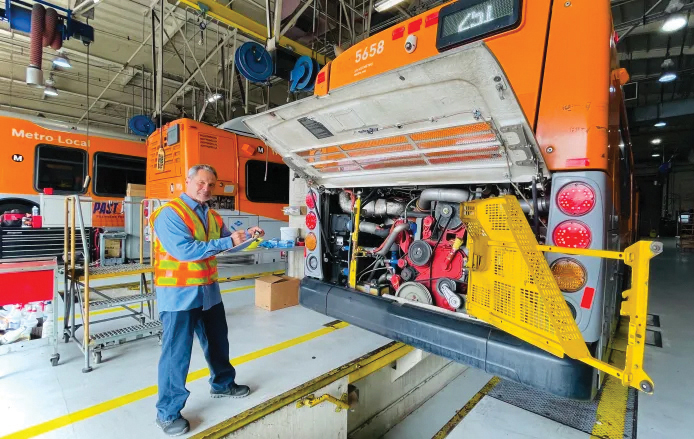
As senior equipment maintenance instructor, I ensure that employees are well-prepared, knowledgeable, and compliant with industry standards as they relate to bus maintenance.
I manage the development, implementation, and oversight of training programs that support both new hires and existing staff. This includes identifying skill gaps, creating instructional materials, and coordinating training sessions that align with organizational goals and regulatory requirements.
Additionally, I collaborate with local agencies, colleges, and the California Transit Training Consortium to ensure that training aligns with and supports the industry’s overall operational needs.
What is the committee’s role for APTA and the industry as a whole?
The Bus Technical Maintenance Committee plays an important role in supporting APTA and the public transportation industry by developing standards, best practices, and technical guidance related to maintenance. Its primary role is to bring together industry experts to collaborate on improving how buses are maintained throughout their lifecycle.
Additionally, the committee helps address emerging challenges by developing updated maintenance approaches that keep pace with evolving technologies.
How is the work of the committee reflected in your own agency?
It is reflected in the implementation of updated policies, work processes, and safety guidelines using committee recommendations. Overall, the committee’s work helps make our bus maintenance program more organized and better supports both staff and organizational goals.
Can you describe some practices adopted by the industry that are a result of the work of the committee?
Many practices adopted by the industry are directly influenced by the work of the committee, particularly in areas such as safety and maintenance. One key example is the introduction of brake maintenance standards for bus air and brake system maintenance and diagnosis. Another example is the zero-emission bus training recommended guidelines, which provide best practices for training staff on high-voltage systems as we transition into this type of fleet.
What are the committee’s top priorities for the year?
This year we are focusing on zero-emission bus preventive maintenance practices and diagnostic procedures. We created two working groups to develop recommendations on best approaches in these two areas. At the moment, the technology is evolving and development of processes is quite challenging.
How does the committee engage its members in these priorities?
The committee engages its members through meetings, webpage communications, annual surveys, training webinars, and maintenance workshops to keep members up to date on best practices, new technologies, and safety standards.
What do you see as major challenges, priorities, or opportunities facing the industry over the next few years?
Over the next few years, there is a mix of challenges and strategic opportunities that span funding, workforce development, evolving technology, resilience, and shifting ridership demands. As it pertains to bus maintenance, there is a shortage of mechanics and maintenance staff. Recruitment and retention remain difficult due to wages, 24-hour operations, and working conditions. Another challenge is aging infrastructure and modernization needs; garages must be modernized and updated to meet the needs of zero-emission fleets.
Finally, LA Metro is proud to foster an equitable and inclusive work environment, with a strong and growing presence of women in our mechanic and bus service job classifications. As an industry, we must continue moving forward on this important path by actively increasing opportunities and encouraging more women to join and thrive in maintenance careers.
How can an individual’s service on this committee add value to their career?
Committee participation creates collaboration with peers from different agencies and organizations, allowing individuals to build a strong professional network and be exposed to different perspectives. Serving on the committee also shows that you care!