Transit Leaders Pair Data with Partnerships to Strengthen Safety
10/13/2026
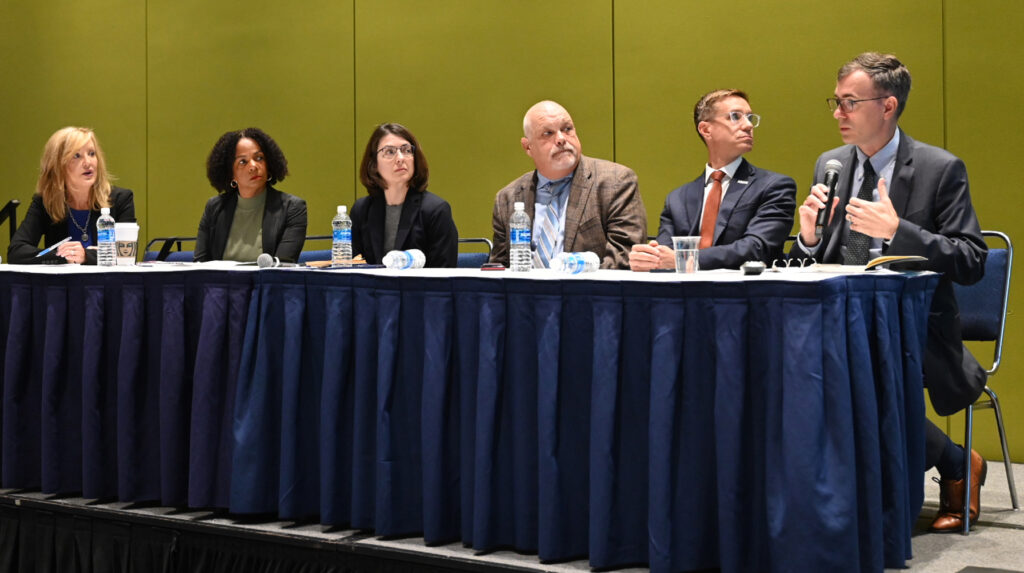
Public transit agencies are using data, visible security, employee training, and community partnerships to improve safety—and to counter perceptions that transit is unsafe, panelists said during the 2026 APTA TRANSform session Preparing for More Transparency – FTA’s Transit Moves America Online Tool.
Chris Wendell, acting director of FTA’s Office of Strategic Planning and Analysis, demonstrated the agency’s online tool—Transit Moves America—which draws from the National Transit Database to present monthly safety and security trends for large urban transit agencies. The tool allows users to examine bus and rail data across the categories of safety (e.g., collisions, derailments, fires), security (e.g., homicides), and suicide and trespass.
The data highlights the national rate and what it means. For example, the national rate of passenger security events for bus is currently 0.15: “That means that out of 1 million transit trips, fewer than one trip involved a federally reportable major security event.” Wendell described the tool as version 1.0 and said FTA is open to adding other metrics.
Moderator MJ Maynard-Carey, CEO of the Regional Transportation Commission of Southern Nevada, said transit is a microcosm of a community and one bad story can paint a system as unsafe. Agency leaders discussed how their safety and security approaches are tailored to local conditions.
Denver Regional Transportation District (RTD) CEO Debra Johnson cited increased transit police presence and integrated mental health support, along with a 20 percent decrease in emergency support calls from 2024 to 2025, a 66 percent reduction in reports of drug use, and an increase—from 46 percent to 71 percent—in the share of people who feel safe on transit. Minneapolis’s Metro Transit General Manager Lesley Kandaras described a layered strategy that places security personnel where ridership is high, monitors cameras in real time, invests in employee training, and engages customers and community partners.
Monterey-Salinas Transit General Manager/CEO Carl Sedoryk discussed the challenges facing smaller urban and rural operators without their own public safety departments, emphasizing cooperation with local police and the value of peer comparisons. Andrew Aiello, CEO of Southwest Ohio Regional Transit Authority, described changes at Cincinnati transit centers that combined enforcement, outreach, and coordination with local government.
Maynard-Carey stressed that each agency operates in a different context. Panelists agreed that transit systems often reflect broader challenges involving housing, mental health, and substance use, and cannot solve those issues alone.
The speakers urged agencies to challenge negative narratives with transparent data and firsthand experience. Transit remains one of the last true public spaces, they noted, making partnerships—and continued investment in safety—essential.