Sensors, AI Offer New Tools for Public Transit
6/5/2026
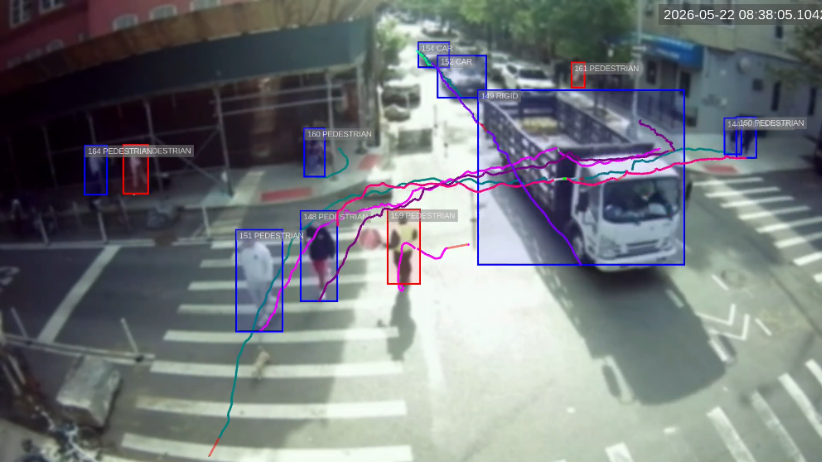
Public transit agencies are increasingly turning to sensors and artificial intelligence to better understand how vehicles, riders, and infrastructure are performing in real time—and to make service safer, more reliable, and more efficient. A new deployment in New York highlights how those tools can support better planning and operations across the transportation network.
Viva recently announced that it is providing privacy-protective street activity sensors for the that count buses, cyclists, vehicles, and pedestrians and analyze how they move through intersections and corridors. For public transit agencies, that kind of data can help identify where bus access can be improved, where transit priority treatments may be needed, and how street design changes affect transit operations and rider safety.
NYC DOT’s sensors were piloted at 20 intersections and are now expanding to about 100 locations citywide. Because the system continuously collects anonymous data rather than relying on short-term manual counts, it can give agencies a more complete picture of travel patterns by time of day, season, and street design—insight that can be useful in improving transit access and overall street safety.
APTA’s Artificial Intelligence and Machine Learning in Public Transit primer notes that agencies are already using AI and machine learning in a range of applications tied to sensor and operational data, especially in maintenance and safety. The primer cites examples including the New York Metropolitan Transportation Authority’s use of bus sensor data to support predictive maintenance and a pilot using sound and vibration data to identify track defects.
Learn more from APTA on “Artificial Intelligence and Machine Learning in Public Transit.”