Metra Rehab Program Saves Taxpayers Millions
7/8/2026
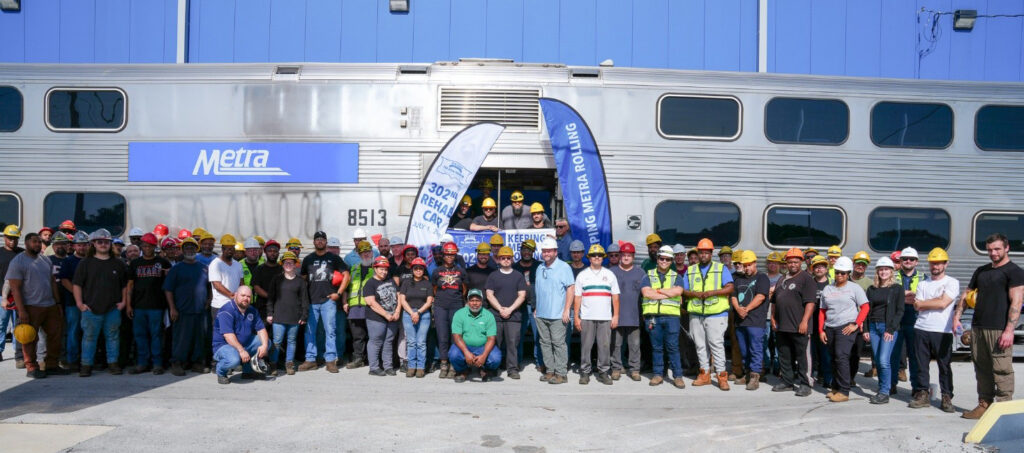

Metra, Chicago, IL, is demonstrating how in-house expertise can extend the life of transit assets while delivering significant savings for taxpayers. The commuter railroad recently completed a multiyear effort to fully rehabilitate 302 passenger railcars at its 49th Street shops in Chicago, a program the agency says saved more than $100 million compared with outsourcing the work.
Rather than replacing aging railcars or sending them to outside contractors, Metra’s skilled workforce strips each car to its frame and rebuilds it to like-new condition in approximately four weeks. The work costs about $850,000 per railcar—substantially less than purchasing new equipment and below the cost of outsourcing comparable rehabilitation services.
“Metra is extremely proud of its rehab programs and the dedicated workers who are its heart and soul,” said Executive Director/CEO Jim Derwinski. “We are not only saving regional taxpayers and our riders money, but we are turning out quality rehabs that ensure our riders will travel in safety and comfort for many years to come.”
The recently completed project builds on a long-running commitment to in-house asset management. Metra launched its railcar rehabilitation program in 2010, completing its first phase in 2017 after overhauling 176 railcars built by Amerail (originally Morrison Knudson) and delivered between 1995 and 1998. The second phase focused on 302 railcars manufactured by Nippon Sharyo and delivered between 2002 and 2008.
Each rehabilitated railcar receives extensive structural, mechanical, and passenger amenity upgrades. Improvements include new electrical outlets for charging personal devices, sensitive-edge exterior doors designed to improve passenger safety, LED information displays, upgraded restroom facilities, wheelchair lifts, new flooring and seating, overhauled air-conditioning systems, enhanced battery chargers for emergency lighting, onboard camera systems, and hardware supporting Positive Train Control. The comprehensive overhaul is expected to extend each railcars service life by an additional 12 to 15 years.
The railcar program is part of a broader in-house rehabilitation strategy at Metra. The agency has rebuilt locomotives internally for decades and also operates a program to rehabilitate the electric multiple-unit cars used on the Metra Electric Line.
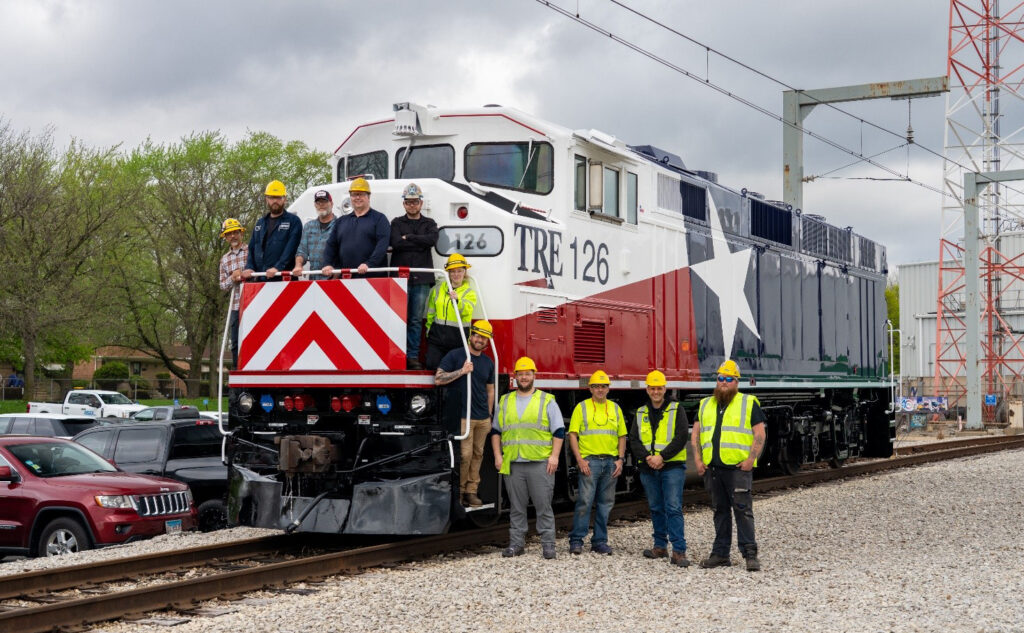
Metra is also expanding its expertise beyond its own fleet. The agency recently began painting and performing minor locomotive repairs for Trinity Railway Express in the Dallas-Fort Worth region, marking the first external partnership of its kind and a potential model for future collaborations with other commuter and passenger rail operators.
“With our in-house talent, knowledge, and expertise, it makes sense for us to assist other railroads that need to extend the life of their railcars and locomotives,” Derwinski said.
By combining workforce expertise with strategic asset management, Metra’s rehabilitation programs illustrate how transit agencies can maximize the value of existing fleets, extend the useful life of critical equipment, and deliver long-term savings while continuing to improve the passenger experience.