Lessons from the West: How Phased Passenger Rail Can Support Regional Growth
By Lisa Sakata | 10/30/2026
LISA SAKATA
Senior Project Manager
HNTB

As communities across the United States look for ways to address growing congestion, connect expanding population centers, and provide more transportation choices, passenger rail is gaining renewed attention as part of a mobility future. Across the West, emerging and established systems offer examples of how regions can turn that vision into action. Colorado’s phased approach to Front Range Passenger Rail, alongside lessons from Utah and California, illustrates how passenger rail can respond to today’s travel needs while laying the groundwork for long-term regional growth.
Developing a successful passenger rail system takes time, coordination, and sustained investment. Colorado’s Front Range Passenger Rail program illustrates how regions can move from planning toward implementation in phases, building on existing infrastructure and partnerships while preparing for future expansion. Colorado Connector Starter Service between Denver and Fort Collins is targeted to begin in 2029, building on years of planning, collaboration, and investment. Future phases are designed to extend service south to Colorado Springs and Pueblo and increase service over time as infrastructure, funding, and agreements allow. Dedicated, predictable funding can help support that progression by giving regions a clearer path to sequence improvements and expand service over time.
For residents and businesses, the benefits are practical and meaningful. Passenger rail can provide a reliable, comfortable travel option between major employment centers, colleges, healthcare facilities, entertainment destinations, and neighboring communities. As travel demand increases in growing regions, passenger rail can complement existing transportation networks and give people greater flexibility in how they move about.
The benefits extend beyond the train itself. Rail stations can serve as connections to broader local transportation networks, linking passengers with transit, sidewalks, bicycle routes, and other ways to reach their destinations. Through the Front Range Passenger Rail District’s Local Return Program, participating station communities could receive funding for locally determined priorities such as transit connections, pedestrian and bicycle access, parking, station-area planning, and other community improvements. This kind of locally directed investment can help improve connectivity, support community priorities, and strengthen the role passenger rail plays in broader transportation and economic development strategies.
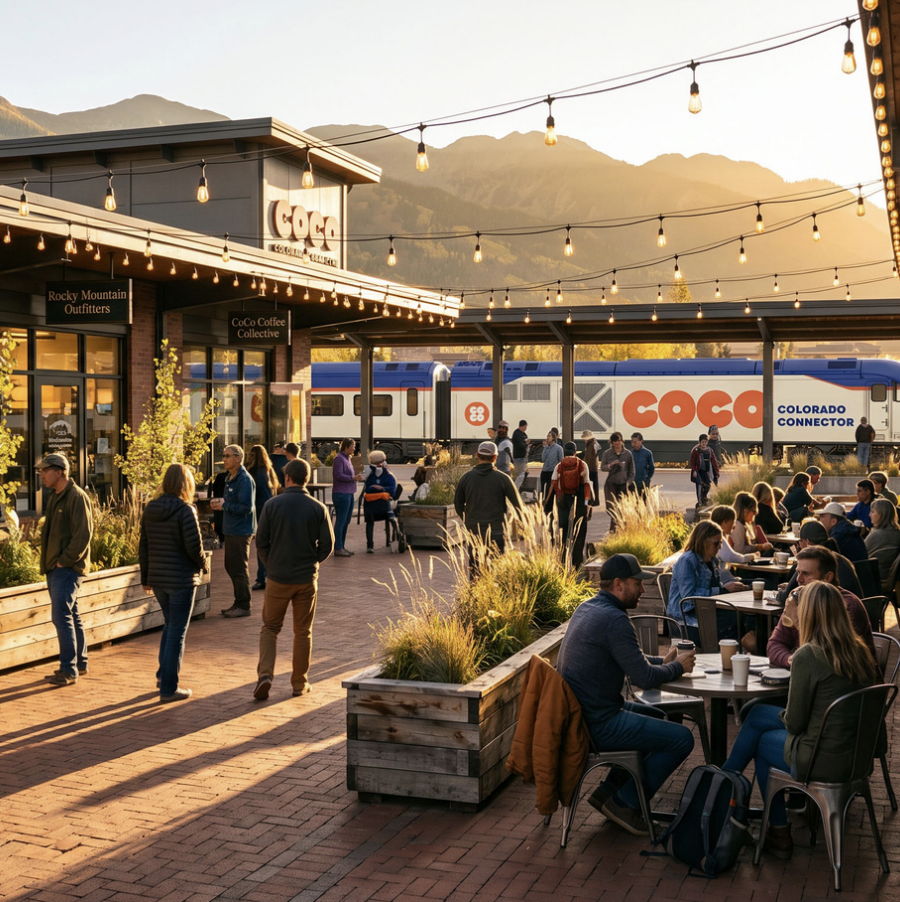
This approach also gives communities greater influence over how passenger rail integrates with their transportation systems, development goals, and long-term priorities. Successful transportation networks move people between destinations and help them conveniently reach jobs, schools, businesses, and services once they arrive.
Making use of existing rail infrastructure can also help regions advance passenger service. Colorado Connector is designed to use existing rail corridors wherever possible, reducing the need for new right-of-way acquisition and allowing investments to focus on infrastructure improvements that support passenger service. The state has signed a term sheet with BNSF establishing key terms for a 25-year access agreement between Denver and Fort Collins. The Regional Transportation District owns the corridor between Denver and Westminster, making it an essential partner in implementing Joint Service, and the plan identifies Amtrak as the initial operator.
Other Western passenger rail systems offer useful examples of how service can evolve over time. Utah’s FrontRunner commuter rail system connects communities from Ogden to Provo and recorded more than four million passenger boardings in 2025. Today, Utah continues investing in the service through FrontRunner Forward and FrontRunner 2X, expanding capacity and preparing for future growth.
California’s Capitol Corridor provides another example of incremental growth. What began as a limited intercity passenger rail service gradually expanded as infrastructure, partnerships, and demand grew, becoming an important transportation link between major population and employment centers. Together, these systems offer useful reference points for regions across the country: long-term success requires a service model suited to local needs, supported by sustained investment and adapted as conditions evolve.
Colorado’s phased approach reflects this broader pattern. The Colorado Connector Delivery Plan includes Starter Service for 2029, with three daily round trips and eight stations between Denver and Fort Collins. Subsequent phases are designed to extend service south to Colorado Springs and Pueblo, serve additional stations, and increase frequency over time as dedicated funding, infrastructure improvements, ridership, and agreements with host railroads allow. The program provides a case study in how regions can define an initial service, identify the partnerships and resources needed to deliver it, and establish a path for future expansion.
Passenger rail development is not a one-size-fits-all undertaking. Each region must align its service plans with local travel needs, available infrastructure, funding, operating arrangements, and long-term growth. Examples from Utah and California, alongside Colorado’s emerging system, offer a practical reminder that durable passenger rail networks are built incrementally through partnerships and sustained investment. As more regions evaluate how to connect growing communities, these lessons can help inform decisions about where passenger rail fits within a broader transportation strategy.