The Leaders We Already Have: Building Transit’s Next Generation
By Kevin Fleischman | 10/8/2026
KEVIN FLEISCHMAN
Senior Operations Communications Representative
Valley Metro, Phoenix, AZ
Mineta Transportation Institute at San José State University

Every transit agency eventually faces the same question: Who is ready to lead when today’s supervisors and managers retire?
That question is becoming increasingly urgent as transit agencies confront workforce shortages and a wave of retirements. According to APTA’s 2022 Transit Workforce Shortage study, 96 percent of agencies surveyed reported experiencing a workforce shortage. Research from the Transit Workforce Center also shows that the average age of workers in the bus service and urban transit sector is 52.4 years—about a decade older than the average U.S. worker.
While much attention has focused on recruiting frontline employees, transit leaders say an equally important challenge is preparing the next generation of supervisors and managers.
A Leadership Pipeline Under Pressure
For decades, transit agencies have relied on promoting from within, particularly in operations. While this approach preserves institutional knowledge, it can limit organizational growth when agencies fail to invest deliberately in leadership development.
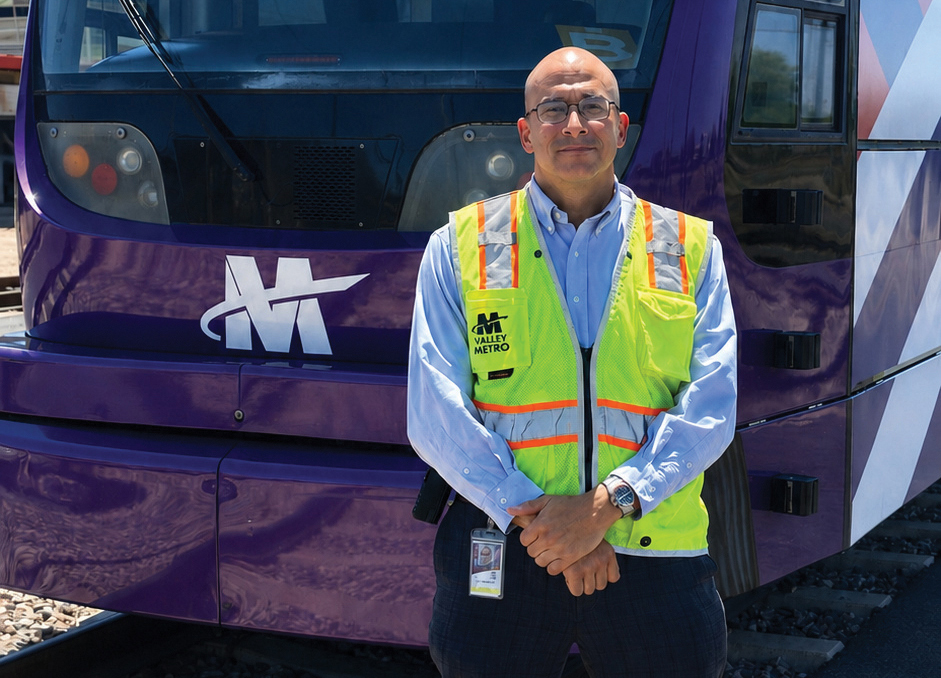
Eric Mercado, superintendent of operations at Alternate Concepts and a former New York City Transit leader, has seen that challenge throughout his career. “When you promote people, eventually employees become supervisors, supervisors become managers, and so on,” he said. “But they’re developed one way, and they only have one way of looking at things.”
Michael Greenwood, chief operating officer of Access Services in Los Angeles County, believes career advancement also depends on individual initiative. “Two barriers I have seen are bad management and people who don’t want to work hard to advance,” he said.
Although Mercado and Greenwood emphasize different aspects of leadership development, they reach the same conclusion: preparing future leaders is not simply a hiring challenge, it is an organizational strategy. Agencies must create opportunities for growth, while employees take ownership of their own professional development.
The Gap Between Technical Expertise and Leadership
Transit agencies employ highly skilled operators, dispatchers, maintenance technicians, rail controllers, and other frontline professionals. Yet technical expertise alone does not prepare someone to lead people.

Leadership requires communication, coaching, conflict resolution, emotional intelligence, and strategic thinking—skills that often receive less attention than operational training. As transit organizations become increasingly complex, successful leaders must be able to guide employees, build trust, and collaborate across departments.
Ayeola Williams, deputy general counsel at Capital Metro and a graduate of APTA’s Emerging Leaders Program, believes emotional intelligence has become essential to effective leadership. “Transit is about people. If you cannot connect with them—both your customers and your workforce—you cannot have a successful system,” she said.
Williams also emphasizes the importance of building relationships with elected officials, community stakeholders, and private partners. Without those skills, newly promoted supervisors can struggle despite strong operational backgrounds. Eric Mercado argues leadership development should include communication, writing, and interpersonal skills long before employees move into management.
Contractors as a Hidden Talent Pipeline
As transit agencies increasingly rely on contracted service models, contractors are becoming an important source of future leaders.

Michael Greenwood believes contracted operations expose employees to a broader range of experiences than many traditional career paths. “A contracted service model can expose the team to multiple opportunities to learn and expand networks. Employees are exposed to both the agency and the contracting company,” he said.
Unlike employees who spend their careers within a single organization, those working in contracted environments gain experience with agency oversight, contract performance, customer expectations, and private-sector management practices. That broader perspective can strengthen leadership readiness and introduce new ideas across organizations.
Mercado argues that outside expertise creates lasting value only when organizations intentionally transfer knowledge to future leaders. Leadership development cannot depend on chance. Agencies must deliberately capture institutional knowledge and prepare employees before today’s expertise is lost.
From Reactive to Intentional Development
Building a stronger leadership pipeline requires agencies to move beyond reactive promotions and adopt a deliberate approach to workforce development. Structured training, mentorship, and succession planning help identify future leaders before vacancies occur.
Greenwood encourages managers to think about succession long before positions become vacant by identifying employees who demonstrate leadership potential and investing in their growth.
Ayeola Williams believes agencies should recognize leadership potential before employees enter management roles. “Identify leaders based on those that take initiative, solve problems collaboratively, are smart and emotionally intelligent, and demonstrate a commitment to the agency’s mission. Then provide development programs to those leaders. You have to water the seed for it to grow,” she said.
Leaders who mentor, coach, and challenge their teams create cultures where employees continue to grow. Across each interview, one message remained consistent: developing future transit leaders requires sustained commitment—not one-time initiatives.
The Path Forward
The future of public transportation will depend as much on people as it does on infrastructure and technology. The next generation of transit leaders is already working within the industry—operating service, managing real-time operations, maintaining fleets, and supporting customers every day. The challenge is not finding future leaders but recognizing their potential and developing it.
Agencies that invest in structured leadership development, foster collaboration, and rethink traditional career pathways will be better positioned for the future. Those that do not risk losing both talent and institutional knowledge.
Leadership development deserves the same long-term commitment agencies apply to capital investments. The people and systems developed today will determine the quality of transit service tomorrow. Because in transit, leadership is not built overnight. It is developed—intentionally, consistently, and over time.
Sources
American Public Transportation Association, Transit Workforce Shortage: Root Causes, Potential Solutions, and the Road Ahead -(October 2022), pp. 1, 4, https://www.apta.com/wp-content/uploads/2026/03/APTA-Transit-Workforce-Shortage-Report.pdf.
Transit Workforce Center, “Research Roundup: Transit Workforce -Shortage,” citing U.S. Bureau of Labor Statistics data, accessed August 27, 2026, https://www.transitworkforce.org/research-roundup-transit-workforce-shortage-2/.