Get Involved: Standardizing Track Access and Roadway Worker Protection
7/24/2026
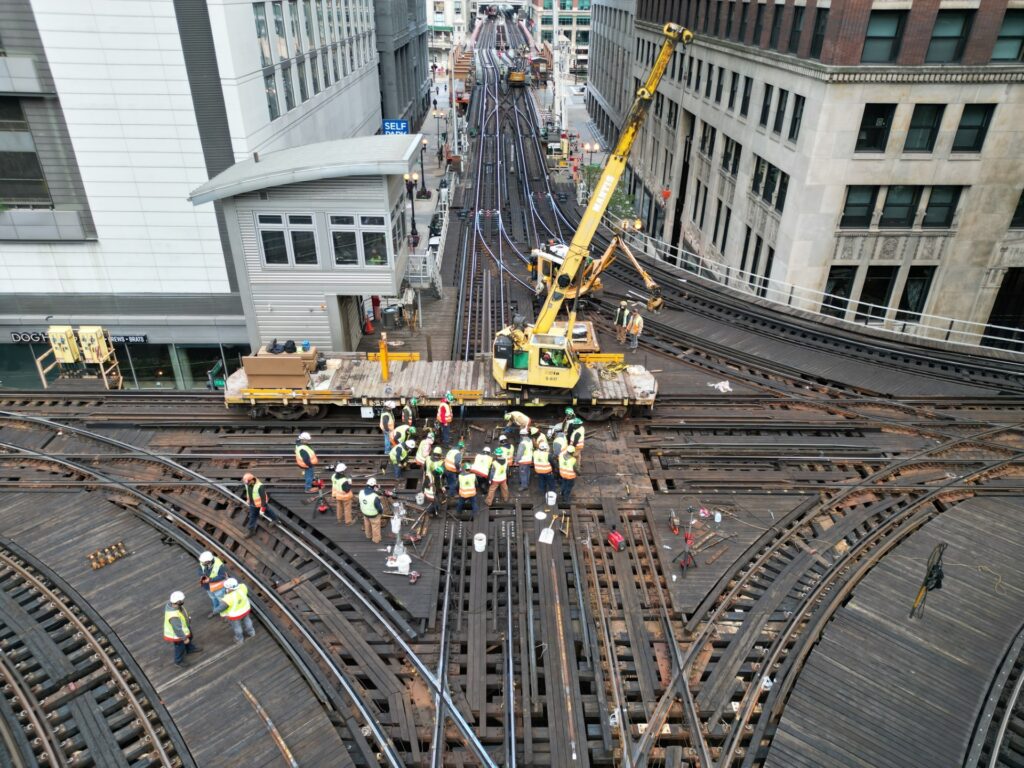
Every day, thousands of workers step onto or alongside live rail rights-of-way to inspect, maintain, test, and build the systems that keep transit moving. Protecting them, while keeping trains running, is one of the industry’s most safety-critical challenges, yet the way agencies manage track access and roadway worker protection is anything but consistent. Practices differ by host railroad, region, and operating environment, and separate federal roadway worker protection codes add another layer of complexity. The result is a patchwork that makes it harder to stay compliant and harder to learn from one another.
That is a gap that APTA’s newest group is setting out to close. The Track Access Roadway Worker Protection Technical Advisory Group (TAG) is forming, chaired by Duane Sayers, director of operations – rail at the Utah Transit Authority. APTA is appealing for interested members to join TAG.
The Case for a Common Framework
Shared-use corridors, expanding commuter operations, multimodal agencies, and growing interaction between passenger and freight rail have all raised the stakes for how track access is managed. Today, much of that work relies on railroad-specific agreements and local practice, which means the same task can carry very different expectations depending on where it happens. When there is no shared baseline, agencies end up reinventing procedures, safety expectations vary from one property to the next, and hard-won lessons stay siloed instead of spreading across the industry.
TAG’s central concept is a Track Access Management System (TAMS). Rather than treating track allocation and roadway worker protection as separate programs, TAMS looks at the full lifecycle of a single track access event, from planning and authorization through protection, monitoring, and closeout, and manages it as one integrated process. The goal is a consistent, national approach that keeps unauthorized people off the track, protects roadway workers and train operations, reduces operational conflicts, builds Safety Management System principles into every access decision, and holds up against FTA and FRA requirements.
What TAG Will Do
Early areas of focus include:
- Standardized terminology and definitions for track access authority and roadway worker protection
- Recommended practices for maintenance windows, foul time procedures, dispatch coordination, and contractor access
- Integrating Positive Train Control (PTC) environments into track access operations
- Incident command coordination during emergencies and service disruptions
- Data sharing and benchmarking on near misses, access delays, and operational conflicts
- Training, certification, and workforce development tied to rail access safety and efficiency
Why Agency Voices Matter
Like all of APTA’s standards work, this effort is consensus-based, which means it will only be as strong as the range of perspectives that shape it. Track access looks different on a busy light rail line than it does on a commuter railroad sharing track with freight, and both viewpoints need to be in the room. The agencies living with these challenges every day are exactly the ones whose experience should shape the guidance, and TAG ensures that happens from the beginning rather than after the fact.
Get Involved
TAG plans to hold its first meeting this fall. Learn more about how to get involved. For questions, contact Tytus Suchotinunt, senior program manager-standards, at tsuchotinunt@apta.com.