Get Involved in APTA’s Standards Program
10/7/2026
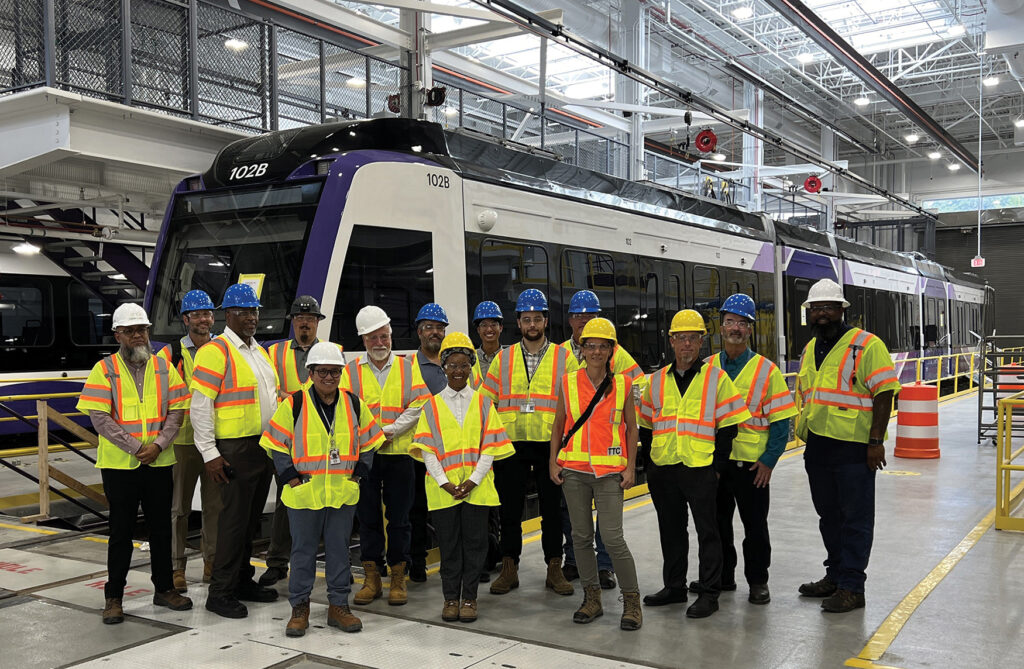
Public transportation runs on a shared understanding of how things should be done: how a vehicle is inspected, how an operator handles a distraction, how an agency plans for an emergency, how a rider with a disability moves through the system. Those shared understandings do not write themselves. Practitioners sit down together and build them. That is the APTA Standards Program at work.
As the standards development organization for the public transportation industry, APTA fills a role no one else does. Where there is no existing standard and no other body stepping in, APTA convenes the people doing the work and helps them build the guidance the industry needs. The program produces and maintains more than 350 free standards, recommended practices, guidelines, and white papers across seven distinct program areas, spanning bus, rail transit, commuter rail, procurement, sustainability and urban design, security and emergency management, and technology. These are practical tools built from the operational experience of the people using them, and they are available to any organization that needs them.
For a multimodal audience like the one gathered at TRANSform, the breadth of the work matters. Here is a look at areas where that work is especially active right now.
Vehicle Inspection and Maintenance
The Vehicle Inspection and Maintenance Working Group develops the standards that keep rail transit vehicles safe and in service, covering the systems that matter most, including doors, brakes, trucks, and propulsion. Right now, the group’s attention is on collision avoidance systems for light rail vehicles. The group will meet in-person October 27-29 at Pittsburgh Regional Transit offices to move the work forward.
Operating Practices
The Operating Practices Working Group develops and revises the standards behind rail transit operations. A major focus is the revision of the group’s standard on roadway worker protection program requirements, which governs how workers stay safe in and around the right-of-way.
Security and Emergency Management
The Security and Emergency Management Working Group develops standards addressing transit security operations, emergency communications, special event planning, and disaster recovery. Agencies rely on these documents to prepare for, respond to, and recover from everything from everyday incidents to large-scale events.
Accessibility
The newest addition to the standards lineup is the Accessibility Working Group, which enhances public transportation opportunities by creating guidelines that advance safety and consistency for persons with disabilities and others with mobility-related needs across every mode of the transit journey. Accessibility touches every part of the system, making broad, cross-modal participation in this group especially important.
Bus Safety
The Bus Safety Working Group is about to begin the publication process for a significant revision of a standard on transit bus operator training, which lays out optimal approaches for the safety and training of bus operators.
The working group has also collaborated with the Zero Emission Bus Technical Advisory Group to publish a recommended practice on “Out-of-Service Storage of Vehicles with High-Voltage Lithium-Ion Energy Storage Systems.” Highly utilized throughout the transit industry, the document provides best practices for the storage of battery-electric buses.
Getting Involved
APTA provides reimbursement for travel expenses associated with in-person working group meetings, including airfare, hotel accommodations, and per diem costs for representatives of APTA member agencies.
There is also significant value in the working group experience itself. These are small, focused groups of people working through the same technical and operational challenges. The collaborative environment fosters meaningful discussions, knowledge sharing, and the development of professional relationships that often extend well beyond the meetings themselves.
Agency staff and others interested in getting involved can learn more at www.apta.com/standards/process/get-involved or contact Bryan Sooter, senior director of standards and rail engineering, at bsooter@apta.com or Tytus Suchotinunt, senior program manager of standards, at tsuchotinunt@apta.com.