APTA Committee Profile: Martin Ritter
7/1/2026

Martin Ritter
President and Chief Executive Officer
Stadler Division North America
Salt Lake City, UT

Describe your organization’s history, mission, and priorities.
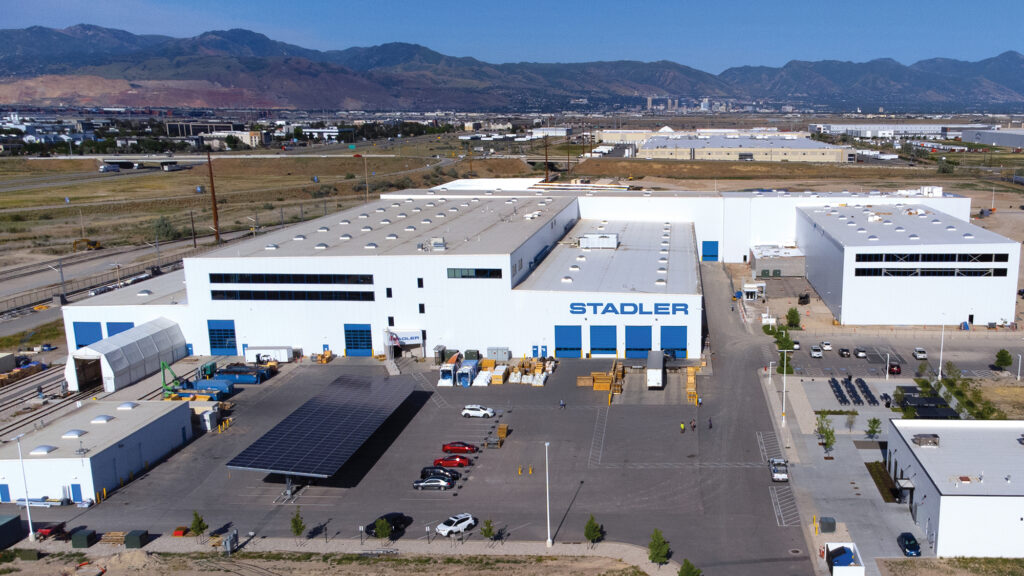
Stadler US has been building passenger trains in the United States since 2016. Headquartered in Bussnang, Switzerland, Stadler has more than 85 years of experience in rail vehicle manufacturing. The company established its U.S. presence to support Buy America-compliant projects and has since invested in a state-of-the-art manufacturing facility in Salt Lake City, UT, where it is celebrating its 10-year anniversary. Stadler aims to deliver innovative, reliable, and sustainable rail solutions, with a strong focus on advancing clean transportation and supporting local economies.
What are some of your workforce development strategies?
Stadler places a strong emphasis on knowledge transfer from its European operations by maintaining close collaboration and facilitating in-person exchange programs with experts across its global network. In addition, Stadler has played a key role in establishing a Swiss-style youth apprenticeship program in Utah. This program develops the next generation of manufacturing talent in fields such as mechanical and electrical technology and welding, providing hands-on training and career opportunities.
What challenges does public transit face in your community, and how is your organization addressing them?
Many communities, including Salt Lake City, face significant challenges related to air quality and traffic congestion. Stadler helps address these issues by developing and delivering energy-efficient and zero-emission passenger rail technologies. These solutions can provide sustainable transportation alternatives that help reduce emissions, improve mobility, and enhance quality of life in growing urban areas.
What impact does Stadler have on the U.S. economy in terms of job creation, contracts for parts and suppliers, etc.
Stadler’s projects create broad economic benefits across the United States. In addition to generating direct employment, the company prioritizes sourcing from local suppliers whenever possible and engages local service teams for maintenance contracts at customer sites. As Stadler expands its U.S. operations, it continues to invest in and grow a skilled local workforce, contributing to long-term economic development.
Which U.S. agencies/projects is Stadler building trains for?
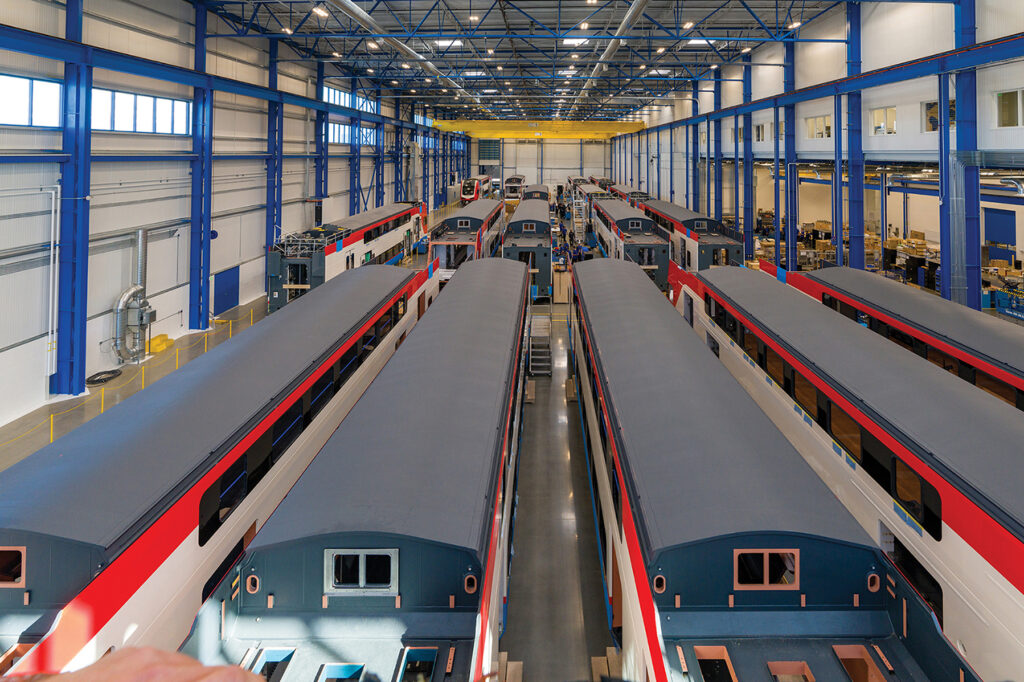
Currently, Stadler is building trains for Caltrain, Trinity Metro, Metra, Metropolitan Atlanta Rapid Transit Authority, Utah Transit Authority, and Caltrans/CalSta. Stadler produces a wide range of multiple-unit passenger trains. Current U.S. projects include bi-level electric trains, metro vehicles, light rail vehicles, and single-level commuter trains based on the FLIRT (Fast Light Innovative Regional Train) platform. These vehicles incorporate advanced propulsion technologies, including battery-electric and hydrogen-powered systems, reflecting Stadler’s commitment to innovation and sustainability.
What attracted you to work in the industry?
I spent my entire career in this industry, attracted by building something tangible. The fact that we can change people’s lives and communities with our products is a big motivation, as are the people serving in our industry. Transit is a small and very personal industry.
Describe your role and the most rewarding part of it.
As President and CEO of Stadler North America, I lead the company’s U.S. operations and strategic growth. It has been especially rewarding to witness the organization’s development—from a single employee at the outset to a team of more than 700 today. Seeing our employees grow in expertise and come together to successfully deliver complex projects is a shared accomplishment and a source of great pride.
What is a less-known element of your role?
Interestingly, building trains has become a smaller part of my day-to-day work. Today, my focus is much more on shaping the environment that enables us to transform the industry. This involves, on one hand, driving workforce development and ensuring the right capabilities are in place, and on the other, helping the industry become more open and receptive to state-of-the-art technologies.
What is unique about your organization?
Stadler US is unique within the global Stadler network in that it produces a vast portfolio of Stadler vehicles. While most international facilities specialize in specific product lines, the U.S. operation has developed the capability to build a wide variety of train types to meet diverse customer needs here in North America.
Additionally, Stadler has introduced new rail technologies to the United States that were not previously available in this form. We are also proud to have helped establish Utah’s first successful Swiss-style youth apprenticeship system in partnership with the Governor’s Office—an accredited, zero-debt program that creates meaningful career pathways for students.