PRT Hosts APTA Standards Working Group for Collision Avoidance Demonstrations
11/9/2026
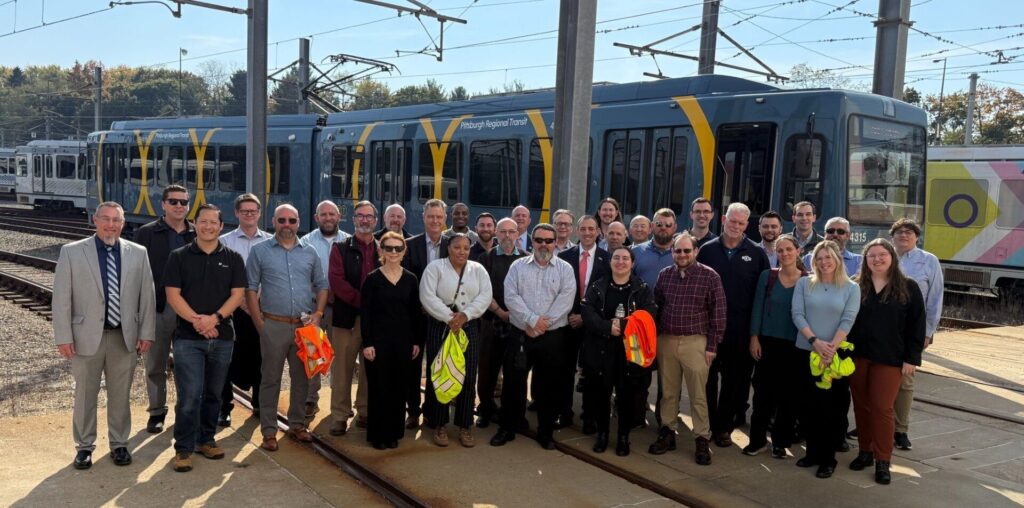
Pittsburgh Regional Transit (PRT) hosted APTA’s Vehicle Inspection and Maintenance (VIM) Working Group October 27–29 in Pittsburgh, PA, as the group works to develop a collision avoidance standard for light rail vehicles and streetcars.
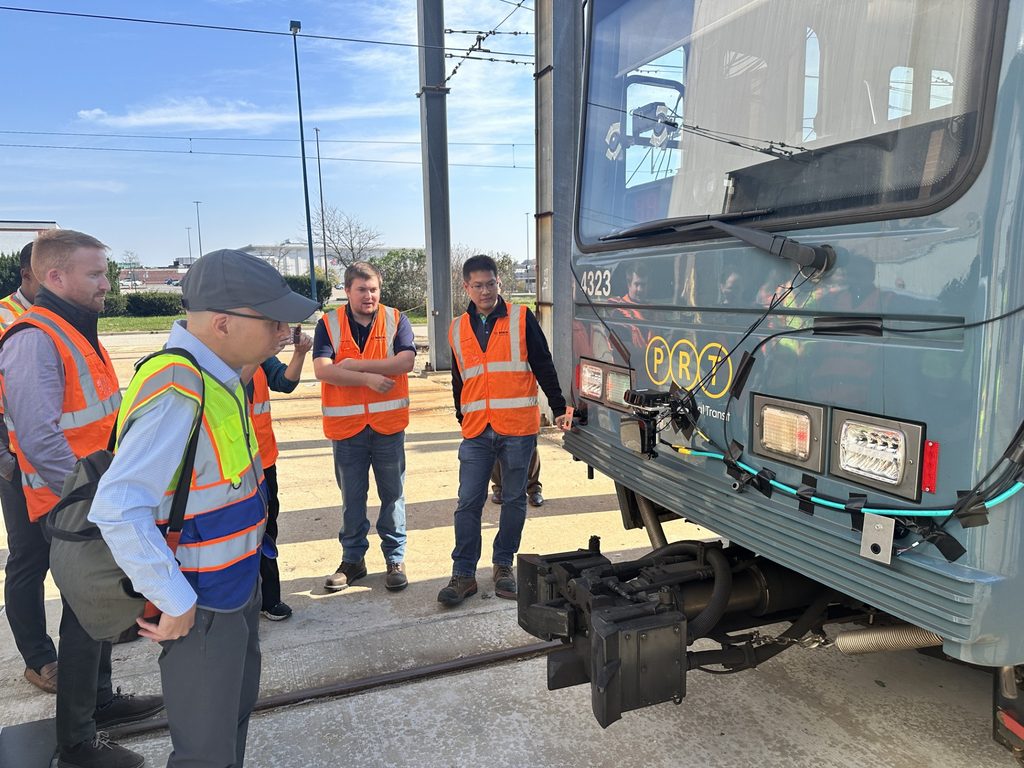
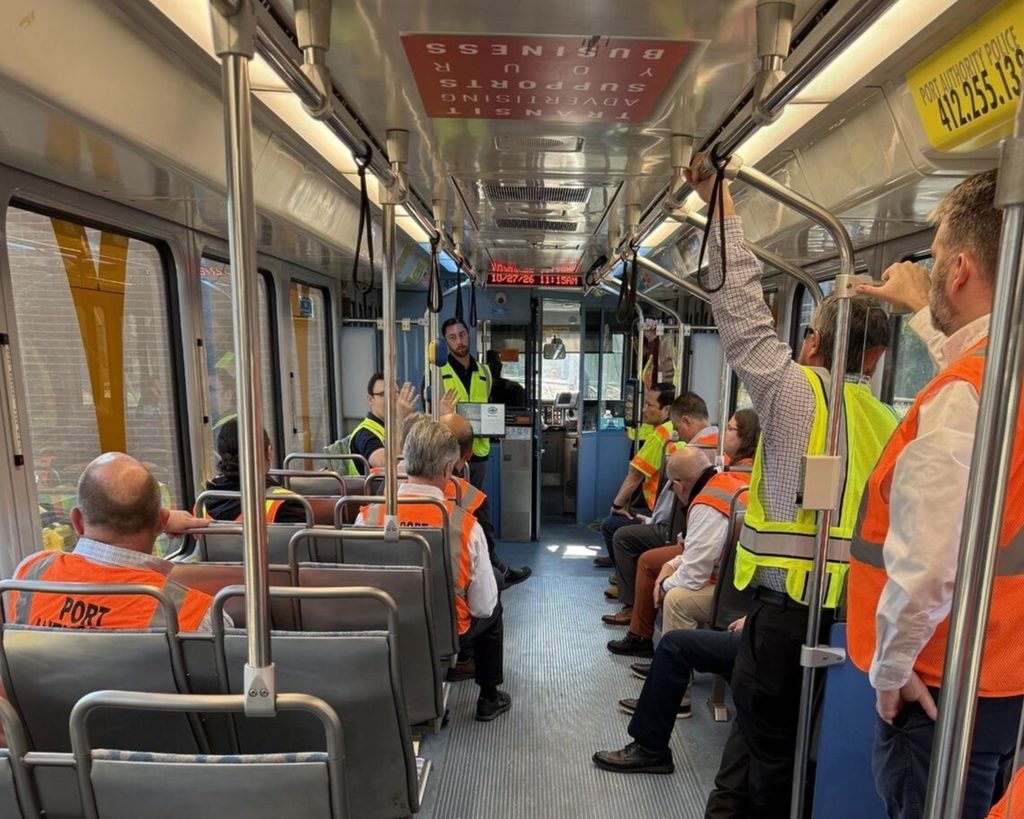
Working group members toured PRT’s South Hills Village Rail Center and watched demonstrations of two collision avoidance systems deployed on the agency’s light rail vehicles. The demonstrations gave members and PRT staff a chance to see how the equipment was installed and how its features worked on the agency’s tracks.
Michael Kunkle, PRT’s assistant director of engineering, railcar programs, and VIM working group chair since 2020, coordinated the visit with PRT staff from operations, maintenance, legal, engineering, system safety, road operations, and development departments. “This working group brings a lot of different perspectives together,” he said.
The collision avoidance project is supported by FTA and responds to a National Transportation Safety Board recommendation calling for performance standards for forward collision avoidance systems on light rail vehicles operating on city streets. The group will draw on what members observed in Pittsburgh as it drafts the new standard.
APTA Standards Program
As the standards development organization for the public transportation industry, APTA fills a unique role. Where there is no existing standard and no other organization stepping in, APTA convenes the people doing the work and helps them build the guidance the industry needs. The program produces and maintains more than 350 standards, recommended practices, guidelines, and white papers across seven distinct program areas, spanning bus, rail transit, commuter rail, procurement, sustainability and urban design, security and emergency management, and technology. These are practical tools built from the operational experience of the people using them, and they are available, for free, to any organization that needs them.
Within the APTA Standards program, the VIM Working Group brings together transit maintenance and engineering professionals to develop the standards that keep rail transit vehicles safe and in service, covering the systems that matter most, including doors, brakes, trucks, and propulsion. Transit agencies can use these documents to develop inspection, testing, and maintenance procedures suited to their fleets.