NYMTA Begins Largest Subway Signal Modernization, Funded Through Congestion Pricing
10/27/2026
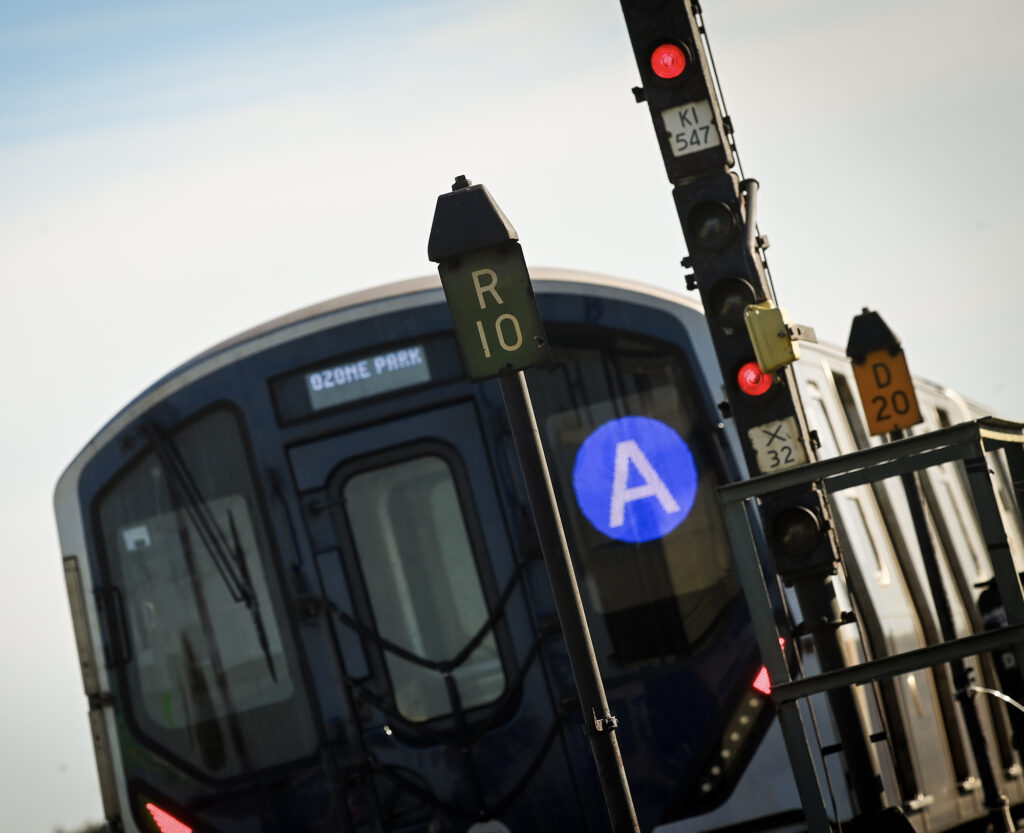
The New York Metropolitan Transportation Authority (NYMTA) is starting the largest signal and track replacement project in its history using funds from congestion pricing. The agency will replace 1930s-era signals on A and C lines in Brooklyn and Queens with modern communications-based train control (CBTC), which will facilitate safer and faster subway service.
NYMTA says that signal issues are the leading cause of subway delays. The existing signal system divides tracks into fixed sections and identifies whether a train occupies each section. CBTC provides a more precise picture of train locations and speeds, allowing trains to safely operate closer together, which supports more frequent service. The modern equipment is also less expensive and easier to maintain.
The agency has seen improvements where CBTC is already in operation. On one line, following signal modernization, on-time performance jumped from 68 percent to 91 percent. On another line, train speeds increased by approximately 10 percent.
NYC Transit President Demetrius Crichlow said, “Communication-based train control has proven to improve service for riders with faster, smoother, and more reliable trips. I’m thrilled that A and C riders can look forward to experiencing a modern system that they can rely on for decades to come.”
To reduce project costs, NYMTA will use a design-build contracting model that’s been shown to reduce signal modernization costs per mile by 33 percent compared with the average for prior CBTC projects. In addition, the agency is focusing solely on installing the CBTC technology, foregoing the costly maintenance of legacy signaling during the transition, reducing the need for expensive equipment along tracks and maximizing scheduled service outages.
NYMTA Construction and Development President Jamie Torres‑Springer said, “By using new construction methods that cut our per‑mile costs by a third, we’re proving that we can modernize the system better, faster, and cheaper than ever before.”
The project will also include infrastructure to support future cell service for riders and work to keep existing infrastructure in a state of good repair. Completion is expected in the second quarter of 2032.