Accessibility, Properly Understood, Improves Transit for Everyone
10/15/2026
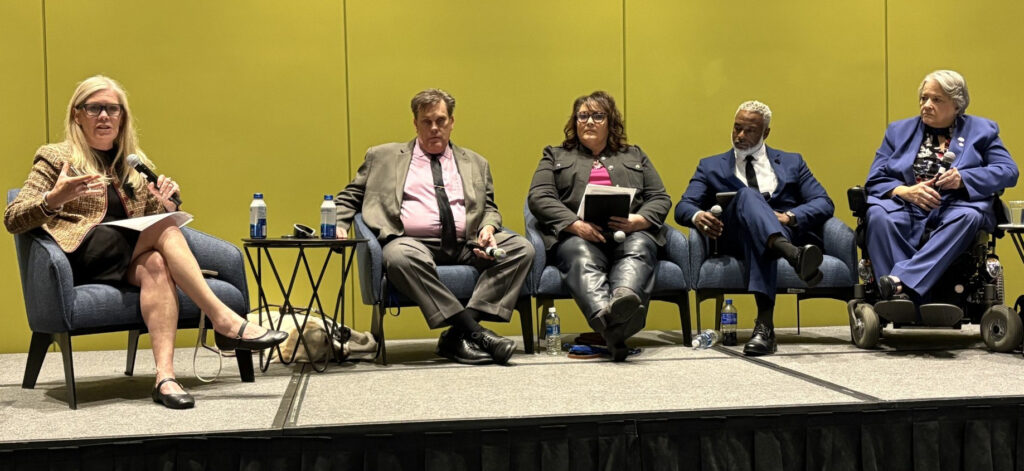

Considering accessibility at the 2026 APTA TRANSform in Chicago, IL, Denise Figueroa, newly appointed APTA chair and board member, Capital District Transportation Authority, Albany, NY, and Leanne Redden, APTA immediate past chair and outgoing executive director, Chicago Regional Transportation Authority, discussed accessibility and how it ultimately benefits everyone.
Panelists in the Charting an Accessible Future session also defined accessibility by what it is not. It is not the same as ADA compliance. It is not a separate element of transit, or an afterthought. And it is definitely not simply the blanket provision of ramps and elevators.
“You have to not only consider how a person gets from the street to the platform, but every turn and twist on the way to get there,” said Demetrius Crichlow, president, MTA New York City Transit, which is working aggressively to make one in every two stations in the system accessible. The agency will spend $7 billion on accessibility improvements by 2029, Crichlow added.
Accessibility needs to include getting to the station, said Ron Brooks, senior director of Policy & Partnerships, at on-demand paratransit company UZURV, since nearly all transit trips “begin and end in the pedestrian environment.” Without safe sidewalks and clear wayfinding, he said, “the service isn’t really accessible, at least not for everybody.”
The Tri-County Metropolitan Transportation District of Oregon (TriMet) takes a holistic approach to accessibility, said Eileen Collins, director, Accessible Transportation Programs. The agency look beyond structural improvements to include adaptive technology, fare affordability, safety and security, language accessibility, and “all the intersectionalities of how people show up to ride our service.”
On the challenges and opportunities in accessibility, panelists agreed that the eligibility determination process for paratransit use is problematic. Some assessment tools do not work for people who have dementia or are neurodivergent, said Collins. “We don’t have tools to assess (them)… We are using a 1990 model to assess for problems that we didn’t assess for then.”
Figueroa added that “The real purpose of the ADA was… to get people access to everything that everyone else has access to. No one else has to go through proving that they’re capable or not of getting on a bus …. We are subjected to very demeaning eligibility criteria for many programs.”
Another challenge is lack of industry representation. Brooks found that when people with disabilities hold transit leadership roles, “accessibility actually isn’t all that hard because the folks with lived experience know how to do it.”
Regarding opportunities, Brooks saw partnerships in infrastructure, technology, and microtransit providers as creating real progress. Crichlow was excited about MTA’s work with a paratransit advisory committee, to make accessibility for everyone and “provide better service for our customers, who can come from any landscape.”