Households That Ride Public Transit Can Save $14,100 Annually
10/14/2026
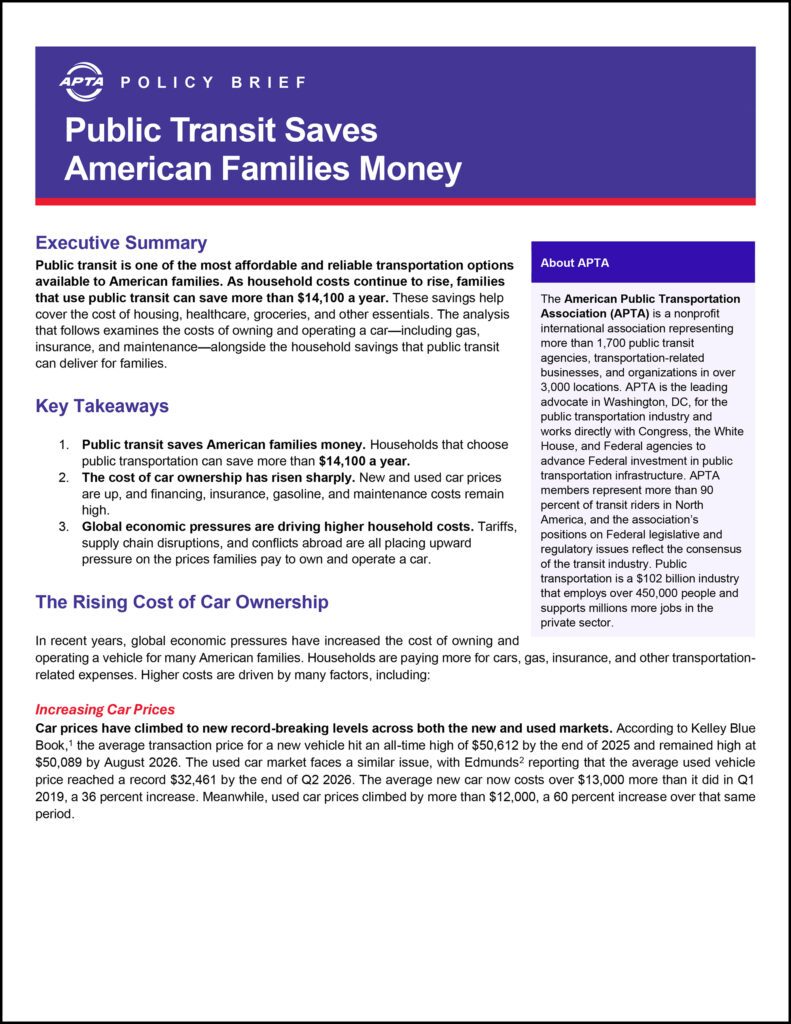
A household that owns one fewer vehicle and rides public transportation instead of driving can save an average of $14,100 a year, according to a new APTA report, Public Transit Saves American Families Money. This equates to approximately $1,200 a month staying in family budgets.
The APTA report compares the cost of a monthly public transit pass with the full cost of owning and operating a car, including gas, insurance, maintenance, and parking. Factors considered include the national and state average gasoline price per gallon as reported by AAA.
According to APTA’s 2025 Fare Database, monthly public transit fare prices at most agencies have not increased since 2022. Over the same period, families have faced record car prices, high financing costs, and rising gas prices, while public transit riders have kept more predictable monthly cost.
“Using public transportation is one of the simplest ways families can save money every month,” said APTA President and CEO Paul P. Skoutelas. “When you add up gas, insurance, repairs, and parking, the savings can be significant. That is money that can go toward rent, groceries, healthcare, and other things families need.”
According to Kelley Blue Book, the average price of a new vehicle reached $50,089 by August 2026, more than $13,000 higher (36 percent) than in early 2019. For used cars, Edmunds reports that the average used vehicle price hit a record $32,461 in the second quarter of 2026, an increase of more than $12,000 (60 percent) over the same period. Tariffs, supply chain disruptions, and a chip shortage tied to demand from AI data centers are all keeping vehicle prices high.
Gas prices are also having an impact. After falling to $2.91 per gallon in January 2025, the national average climbed to $4.61 per gallon as of late September 2026, according to the U.S. Energy Information Administration.
“With so many costs outside a family’s control, taking public transportation can help cut monthly transportation expenses. Whether it’s commuting to work, running errands, or keeping appointments, public transit is a practical and budget-friendly choice,” said Skoutelas. “Sustained federal investment in public transportation helps make sure that option is there for the families who count on it.”
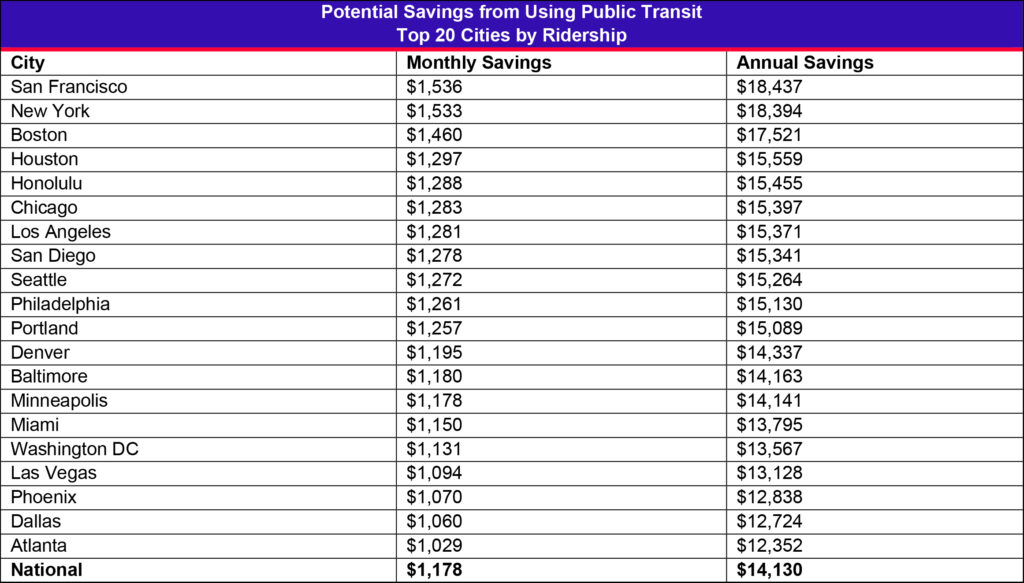
The table below compares public transit fares across 20 cities against the full cost of owning and operating a vehicle, based on AAA’s “Your Cost of Driving 2026” report and downtown parking data. Depending on the city, public transit riders can save anywhere from $12,000 to more than $18,400 a year.