Sound Transit Aims to Boost Safety, Revenue with Fare Gate Program
8/31/2026
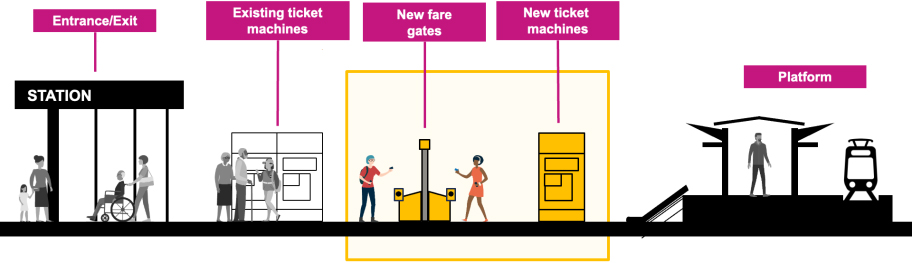

Sound Transit will install and test fare gates at up to 14 Link light rail stations through a new pilot program. The effort is intended to improve fare compliance and farebox recovery as the Link system continues to expand. The program reflects the changing needs of the light rail network that has grown to more than 60 miles and 50 stations, and has plans to expand to West Seattle, Everett, Tacoma, Ballard, and Issaquah in Washington State.
Link stations were originally built without fare gates, relying on a proof-of-payment system. This made sense when Link was smaller, as studies found that fare gates would cost more to install than they would recover in fare revenue.
However, given the system’s expansion, a new study says, “in all three scenarios modeled, 13 of the 14 stations achieve satisfactory returns on investment. In one scenario, the project breaks even in less than two years, while the other two scenarios break even in less than three years.” In addition, fare gates could eventually increase net fare revenue by upwards of $82 million annually.
Sound Transit aims to recover 22 percent of Link light rail operating costs from farebox revenue. The agency notes that other transit systems—including Southeastern Pennsylvania Transportation Authority, Bay Area Rapid Transit, Los Angeles County Metropolitan Transportation Authority, and New York Metropolitan Transportation Authority—have implemented fare gates in response to declines in fare compliance. In addition to improved fare recovery rates, benefits include increased safety and cleanliness, clearer wayfinding, and crowd management.
During the first phase of the pilot, Sound Transit will evaluate fare gate designs and address issues including ADA compliance and options for passage for youth and those eligible for reduced fare. The agency will develop public engagement strategies and create goals and metrics to determine whether to continue, modify, or expand the pilot. Installation of the fare gates is targeted for 2029–2030.