New Voices Join Engagement Conversation at APTA Mobility Conference
5/21/2026
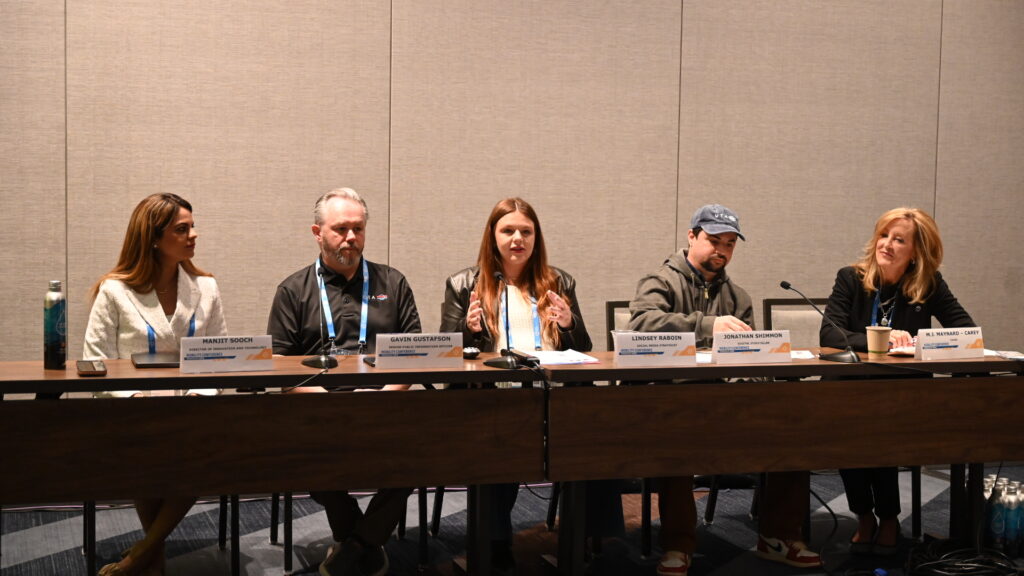
Highlighting the work of APTA’s Strategic Engagement Council (SEC) at the Mobility Conference, the “A Broader Lens: Focusing On Innovative Programs, Perspectives, & People” session at the 2026 Mobility Conference showcased not just the successful rider engagement projects of two agencies, but also the new voices in the engagement conversation.
MJ Maynard-Carey, APTA immediate past chair and CEO, Regional Transportation Commission of Southern Nevada, introduced the session. Also the SEC chair, Maynard-Carey emphasized the importance of working to “ensure that everybody is seen, heard, and valued,” and the session, she said, “is about engagement not only within APTA but also engaging with our public.”
At conference host agency the Utah Transit Authority (UTA), staff members are taking a three-pronged approach to engagement, which starts with what Gavin Gustafson, senior public information officer, calls “edutainment… through entertaining and fun content,” including videos and stories that bring people behind the scenes at UTA.
UTA social media strategist Lindsey Raboin said each public campaign gets three pieces of content, “The first piece is entertainment, the next piece is to educate, and the last piece is … the call to action.”
Digital storyteller for UTA, Jonathan Shimmon, explained how stories are defined. The agency wanted to feature innovations, organizational strategies, and employee suggestions. “Is there something we’re doing that’s ordinary to us, but extraordinary to the public?”
The results have been positive boosts in online responses, and one campaign, “Trains Don’t Swerve” has earned social media awards, said Gustafson.
For the Alameda Contra-Costa Transit District (AC Transit), Oakland, CA, engagement started internally. Dr. Manjit Sooch, chair, APTA Innovation Peer Exchange & Data Governance Subcommittee; and director of innovation & technology, AC Transit, had frustrated software developers, tired of supporting purchased solutions. They wanted to build their own app, she said, and did, after getting buy-in from marketing, communications, accessibility, and other teams. From a simple restroom-finder app for drivers, the agency expanded the project into a rider app that went live last October.
Extensive testing, and a focus on data governance were also part of the process, Sooch said, “And when they developed it, we were so impressed and we felt like mission accomplished.” At least until the next release, built with AI tools, comes out.
View more images from the Mobility Conference and International Bus Roadeo.