When the Lights Must Work: Choosing the Right Battery Chemistry for Tunnel Emergency Lighting
By Daniel Lax | 4/20/2026
DANIEL LAX
CEO
Clear-Vu Lighting

A tunnel emergency light has one job: turn on instantly when everything else fails. It may sit dormant for years in extreme heat and vibration, with crews unable to access it for routine checks. Then, in a crisis, it must work.
The core issue is straightforward: when a battery fails deep inside a tunnel, the way it fails matters enormously. Nickel-Metal Hydride (NiMH) batteries degrade gradually and predictably. Lithium-ion batteries, under certain fault conditions, can experience thermal runaway, producing heat, smoke, and toxic gases[4,5,6]—consequences that are far more serious in a confined space where evacuation is difficult and ventilation is limited.
What Transit Leaders Need to Know
Underground, consequences are amplified. Smoke, toxic gases, and limited access that would be manageable on the surface become serious hazards in a tunnel. Simpler systems mean fewer failure points. NiMH requires less complex monitoring electronics than lithium-ion, which depends on battery management systems to prevent unsafe conditions[8]. Legacy Nickel-Cadmium (NiCd) batteries work, but carry disposal liability. Cadmium toxicity creates end-of-life complications that newer chemistries avoid[9].
Why Tunnels Are Different
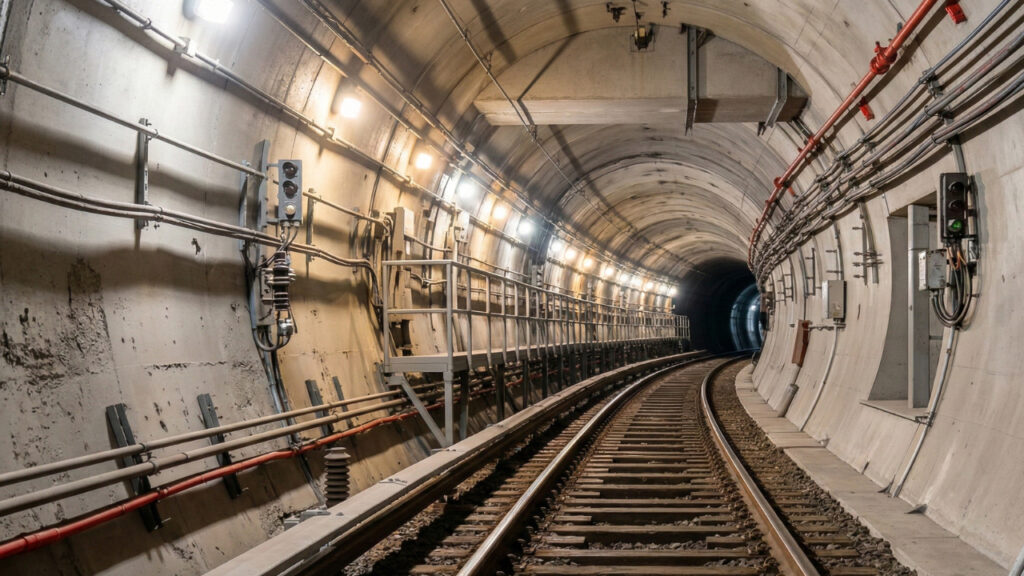
Emergency lighting is governed by NFPA 130 and related fire-life-safety standards[1]. But tunnels present a unique combination of challenges that are not fully captured by surface-level specifications:
Batteries in tunnels endure sustained elevated temperatures (often 90°F+ year-round), constant vibration from passing trains, and extended periods on float charge with minimal cycling. Maintenance access may be limited to a few hours per week during overnight shutdowns.
The question is not simply which battery has the best specifications on paper. It is which chemistry will still perform reliably—and fail safely—after a decade in these conditions.
- Heat accelerates aging. Elevated temperatures speed capacity loss and stress charging electronics.
- Limited access raises the stakes. Long replacement intervals and predictable end-of-life behavior become essential when maintenance windows are measured in hours per week.
- Failure consequences are magnified. Smoke and off-gassing that would dissipate on the surface become hazardous in confined tunnels with limited evacuation routes.
What “Industrial-Grade” Really Means
The term “industrial-grade” is often used loosely. In the context of standby lighting, it has a specific meaning: an NiMH battery pack engineered for harsh environments and validated against recognized standards such as IEC 61951-2[3].
This pedigree matters. NiMH technology has been proven at scale in demanding transportation applications. As the National Renewable Energy Laboratory (NREL) has noted, lithium-ion systems are more sensitive to overheating, overcharging, and thermal runaway than the nickel-metal hydride technology used in conventional hybrid vehicles[7].
How the Three Main Battery Chemistries Compare for Tunnel Applications
The table below compares NiMH and NiCd against Lithium Iron Phosphate (LFP), the most thermally stable lithium-ion chemistry and therefore the most relevant lithium variant for safety-critical tunnel applications.
| Consideration | NiMH (Nickel-Metal Hydride) | NiCd (Nickel-Cadmium) | LFP (Lithium Iron Phosphate) |
| How it handles heat | Stable; predictable aging | Robust but legacy technology | More stable than other lithium types, but requires active thermal management |
| What happens when it fails | Gradual capacity loss; provides warning signs | Gradual degradation; cadmium disposal adds complexity | Thermal runaway possible under fault conditions; may produce smoke and toxic gases |
| System complexity | Simpler charging; monitoring optional | Simple charging; periodic conditioning | Requires battery management system (BMS) for safe operation[8] |
| End-of-life considerations | No toxic heavy metals | Cadmium handling and disposal requirements[9] | No cadmium; regulations vary by jurisdiction |
| Best suited for | Long-life standby where safety margins matter most | Existing installations; declining preference for new projects | Applications where energy density is critical and full safety systems are in place |

The Underground Difference: Why Lithium Risk Requires Extra Scrutiny
To be clear: lithium-ion batteries can be used safely in many applications, including transit. The issue is that their failure mode—thermal runaway—has consequences that are particularly serious underground.
Thermal runaway can produce intense heat, smoke, and toxic gases[5]. On the surface, these hazards can often be managed. Inside a tunnel, they interact with confined geometry, limited ventilation, and evacuation constraints to create a more challenging scenario.
NFPA educational materials address lithium-ion hazards and safety considerations[4], and emissions research has documented the toxicity of gases and particulates released during thermal runaway events[6].
NiCd: The Proven Incumbent with a Disposal Challenge
Nickel-Cadmium (NiCd) batteries have decades of reliable service in industrial standby applications, and many transit systems still operate NiCd-powered emergency lighting.
However, cadmium is a regulated toxic metal with documented health effects[9]. While this does not affect in-service performance, it creates end-of-life complexity: specialized handling, disposal documentation, and regulatory compliance that NiMH avoids entirely. For new installations, this liability increasingly tips the decision toward cadmium-free alternatives.
Why NiMH Emerges as the Preferred Choice for Tunnel Applications
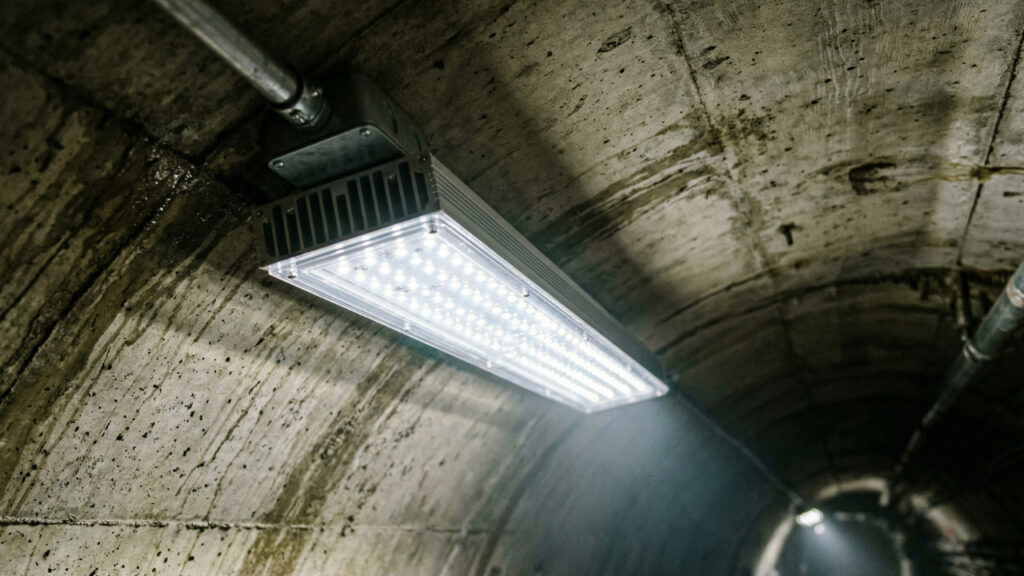
When the three chemistries are evaluated against the specific demands of tunnel emergency lighting—thermal stability, failure behavior, system complexity, and lifecycle considerations industrial-grade NiMH offers the most balanced risk profile.
NiCd delivers comparable robustness but introduces regulatory and disposal complexity that many agencies prefer to avoid in new installations. Lithium-ion technologies, even the most thermally stable variants like LFP, require additional safety architecture and carry a failure consequence profile that warrants careful evaluation in confined, difficult-to-access environments.
NiMH occupies a middle ground that aligns well with transit priorities: proven chemistry with predictable aging, graceful failure behavior that provides maintenance teams with warning rather than sudden events, simpler system architecture with fewer electronic dependencies, and no toxic heavy metals at end of life.
This does not mean NiMH is the right choice for every application. Where energy density is the primary constraint, or where robust safety monitoring systems are already in place, lithium-based solutions may be appropriate.
But for long-duration standby service in harsh underground environments—where the battery may sit for years before being called upon in an emergency—NiMH’s combination of stability, simplicity, and safe failure behavior makes it a compelling default.
Evaluating Current Systems and Future Procurements
The following questions can help frame conversations among engineering, maintenance, and procurement teams—whether assessing existing tunnel lighting systems or developing specifications for future projects.
For current installations:
- When were tunnel emergency lighting batteries last tested under full discharge conditions? Did they meet rated duration?
- What is the average ambient temperature in the tunnel segments, and how does the current battery chemistry perform at that temperature over time?
- Are maintenance teams spending disproportionate time on battery conditioning or replacement cycles that a different chemistry could reduce?
- For the longest tunnel segments, do current backup systems provide sufficient duration for complete passenger evacuation under worst-case conditions?
- If a thermal event occurred with current battery systems, what is the ventilation and emergency response capacity in that tunnel section?
For future procurements:
- Has the governing AHJ been confirmed, along with applicable standards (NFPA 130 for transit tunnels[1]; equipment commonly evaluated to UL 924[2])?
- Do specifications require validated battery chemistry (e.g., IEC 61951-2 compliance for NiMH)?
- Does the RFP require a clear maintenance plan, including self-test strategy, replacement interval assumptions, and realistic access scheduling?
- For any lithium-based option under consideration, is documented protection architecture required—covering BMS functions, fault detection, isolation strategy, and validation evidence?
- Have failure consequences—smoke and off-gas behavior under fault conditions—been evaluated against specific tunnel ventilation capacity and emergency response constraints?
- Are there upcoming tunnel rehabilitation, track, or signals projects where lighting upgrades could be bundled at minimal incremental cost?
References
[1] NFPA 130: https://www.nfpa.org/codes-and-standards/nfpa-130-standard-development/130
[2] UL Solutions (UL 924 context): https://www.ul.com/services/emergency-lighting-testing-and-certification
[3] IEC 61951-2 (NiMH): https://webstore.iec.ch/en/publication/27374
[4] NFPA lithium-ion safety: https://www.nfpa.org/education-and-research/home-fire-safety/lithium-Ion-batteries
[5] ATF FRL bulletin: https://www.atf.gov/file/205316/download
[6] TEEX emissions characterization (PDF): https://teex.org/wp-content/uploads/LITHIUM-ION-BATTERY-FIRES-AND-EMISSIONS-CHARACTERIZATION.pdf
[7] NREL safety note (Li-ion vs NiMH): https://www.nrel.gov/transportation/energy-storage-safety
[8] VDE BMS fact sheet (PDF): https://www.vde.com/resource/blob/2105544/731ed20695f9fbf2f66423407554d1c5/fact-sheet-battery-management-system-pdf-file-data.pdf
[9] OSHA cadmium health effects:https://www.osha.gov/cadmium/health-effects, accessed January 22, 2026.