Transit Leaders Convene in DC for Safety and Security Summit, Capitol Hill Advocacy
9/15/2026
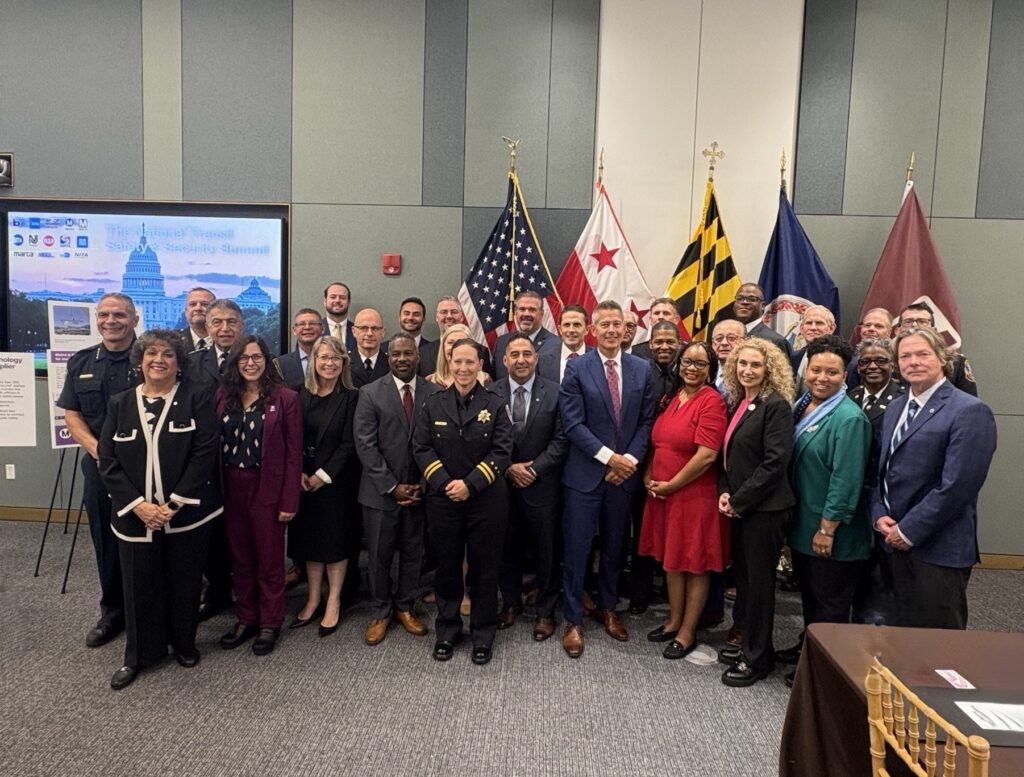
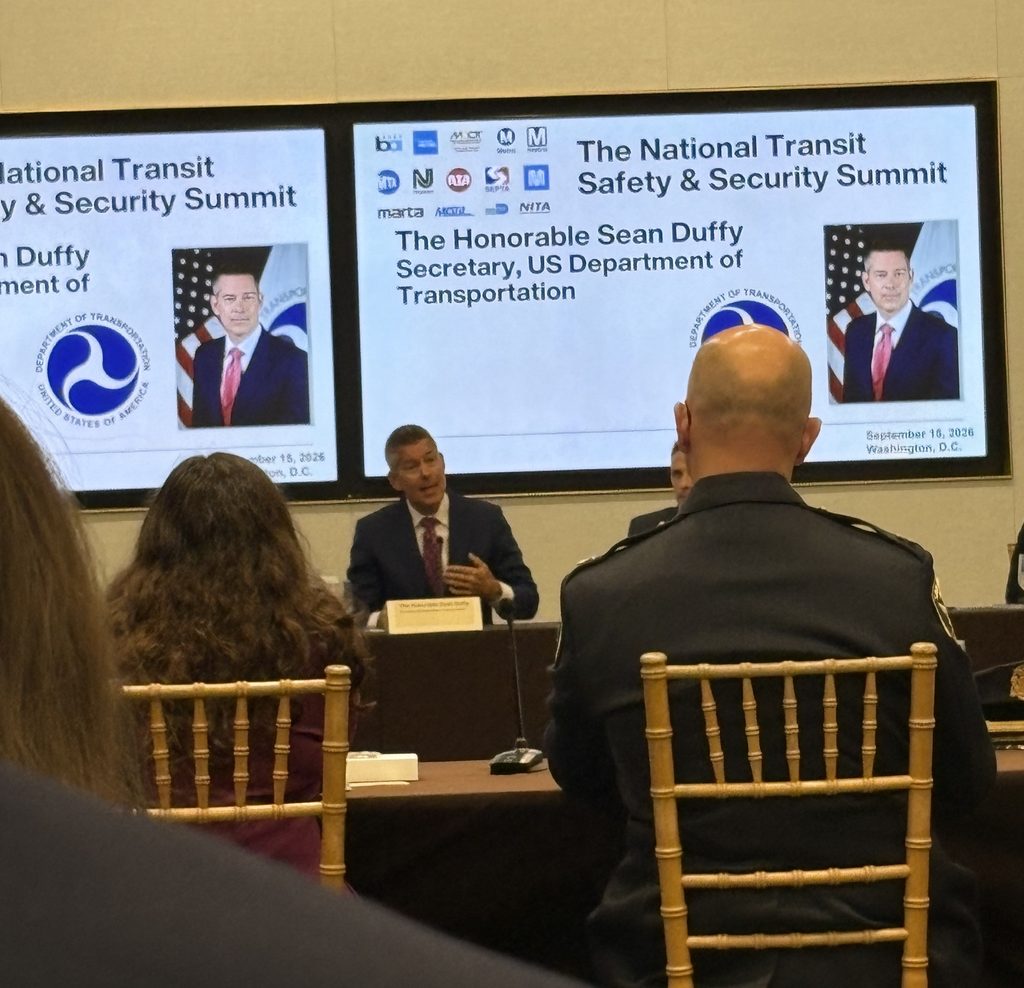
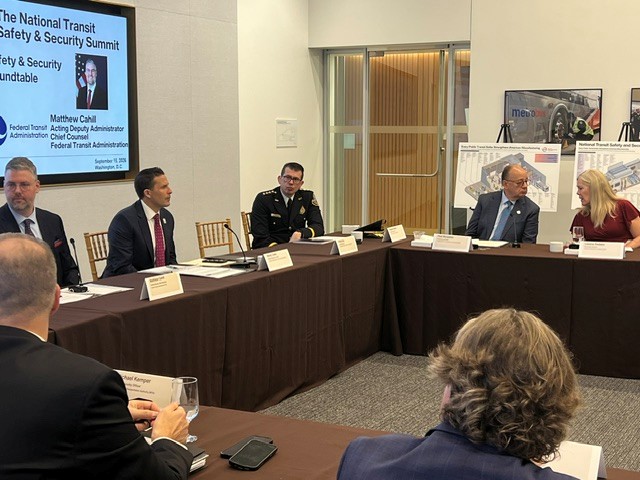
U.S. Transportation Secretary Sean Duffy, FTA Acting Deputy Administrator and Chief Counsel Matthew Cahill, chief executive officers and police chiefs from 15 of the largest public transit agencies in the U.S., and industry leaders including APTA President and CEO Paul P. Skoutelas and APTA Chair Leanne Redden gathered in Washington, DC, Sept. 15 for the National Transit Safety and Security Summit.
Co-hosted by the Washington Metropolitan Area Transit Authority (WMATA) and Los Angeles County Metropolitan Transportation Authority (LA Metro), the summit focused on strategies to reduce crime, protect transit workers, and improve the customer experience. Following the summit, transit CEOs and industry leaders met with Members of Congress to advocate for continued federal support for public transportation.
Transit agencies are reporting significant safety improvements. WMATA has achieved its lowest crime rate on record, while crime has declined 50 percent on the San Francisco Municipal Transportation Agency system since 2019, 31 percent on LA Metro since 2023, 41 percent on Bay Area Rapid Transit since 2025, and 21 percent on the Southeastern Pennsylvania Transportation Authority since 2025.
“Safety and security are our core values at Metro, and every customer and employee deserves to feel safe on our system,” said WMATA General Manager and CEO Randy Clarke. “We’ve reduced crime to historic lows, cut fare evasion, and achieved record customer satisfaction while safely transporting millions of customers to major events like America’s 250th celebration and a Grand Prix race.”
Clarke also called for predictable, reauthorized federal funding to support transit safety and security efforts.
Public transportation remains one of the safest ways to travel in the U.S. According to FTA data, major passenger security events occur at a rate of 0.15 incidents per million bus passenger trips and 0.29 incidents per million rail passenger trips.
At the summit, agency leaders shared approaches being used to improve safety and security, including modernized fare gates; regional partnerships among transit agencies and law enforcement; virtual patrol and real-time camera monitoring; increased security personnel and targeted enforcement; drones for emergency response and large events; and banning policies targeting repeat and egregious offenders.
“People across Los Angeles County are rediscovering the benefits of public transit, and a big part of that is confidence in feeling safe on our system,” said LA Metro CEO Stephanie Wiggins. “We’ve reimagined our public safety strategy around visibility, code-of-conduct enforcement, access control, and care-based approaches.”
Agencies also are deploying enclosed barriers and protective shields to reduce assaults on frontline employees, expanding camera networks and mobile safety technologies, and establishing crisis intervention and mental health response teams. Student safety initiatives, including school resource officers and truancy-reduction programs, also are being used to support young transit riders.
Skoutelas highlighted APTA’s Safety, Efficiency, and Cleanliness Task Force (SECURE), which was established to share effective practices and highlight ongoing efforts by transit agencies and businesses to provide safe, clean, and reliable public transportation.
“We know customers’ perceptions play a critical role in their decision to use transit, so the Task Force is telling success stories that show our commitment to this issue and boost public confidence,” Skoutelas said.
Transit leaders also emphasized the role of public transportation in supporting regional economies and safely moving millions of people during major events, including the 2026 World Cup, America’s 250th anniversary celebrations, and championship parades.
During their Capitol Hill meetings, transit CEOs again emphasized that public transportation is critical national infrastructure, connecting workers to jobs, supporting economic growth, and providing essential transportation during major events.
Wiggins said continued federal partnership is necessary to sustain safety gains, protect riders and employees, strengthen security operations, and support the economic vitality of communities served by transit.
Skoutelas also cited APTA’s Economic Impact of Public Transportation Investment report, which shows that sustained investment in public transportation and passenger rail creates jobs, supports businesses, and generates economic benefits for communities and taxpayers. “Federal investments in public transportation create jobs, grow businesses, and drive the national economy,” he said.