The Purple Line: A DC Legend Nears Completion
By Anna Lisi | 8/4/2026

ANNA LISI
Director, Publications and Senior Managing Editor, Passenger Transport
APTA
Anyone living in the Washington, DC, area for some time has no doubt heard of the “Purple Line.” If you’re anything like me (living under a rock in Northern Virginia), you may not know what it is and that it’s nearly complete.
Thanks to a recent tour of the Purple Line, courtesy of APTA’s 2026 Rail Conference and conference host, Maryland Transit Administration (MTA), I can hardly wait to see how it will transform the experience of getting around Maryland’s dense suburbs, many of which feel like their own bustling city.
The Truth Behind the Myth
No, the Purple Line is not a subway version of the capital beltway. It is also not owned or operated by Washington Metropolitan Area Transit Authority (WMATA/Metro).
It is a 16-mile light rail commuter train service owned by MTA with 21 stations connecting Prince George’s and Montogomery County, MD, on an east-west path just north of Washington, DC.
The project, which was initiated in 2002, is now 90 percent complete. Live wire testing began in 2025 and will continue across the route in eight-segment increments. Service is expected to begin at the end of 2027.
The first 14 years of the project consisted of surveys, studies, designs, and approvals, as well as litigation. Light rail wasn’t selected as the mode of transit until 2009. Construction began in 2016 and was delayed due to a contractor dispute. Eventually, a new contractor took over the project.
Then-MTA Administrator Holly Arnold speaks openly about the project and its history. She shared lessons learned at APTA’s 2026 Rail Conference in a session on “Finding the Path Forward for Rail Expansion.”
A Bus Tour of the LRT
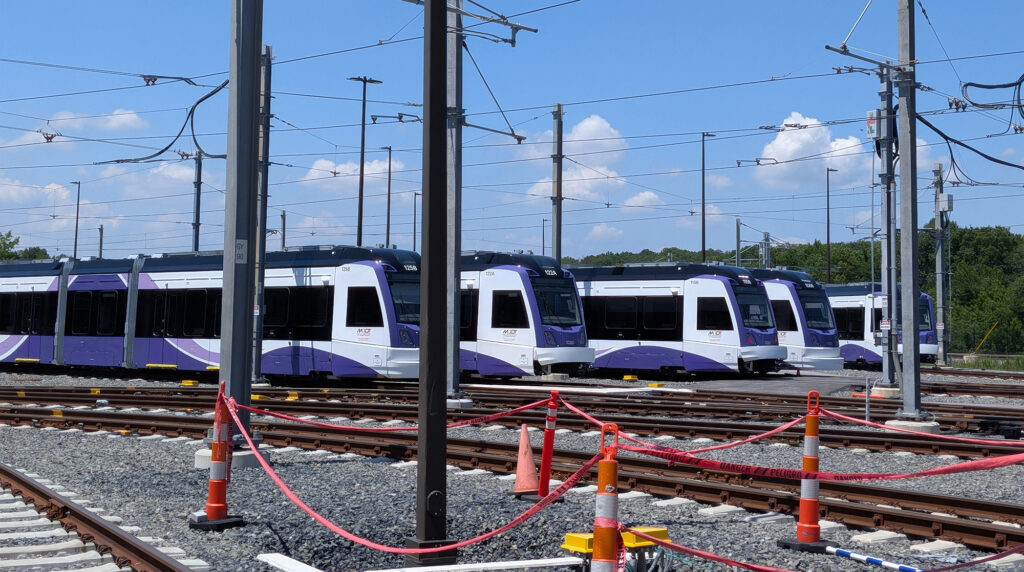
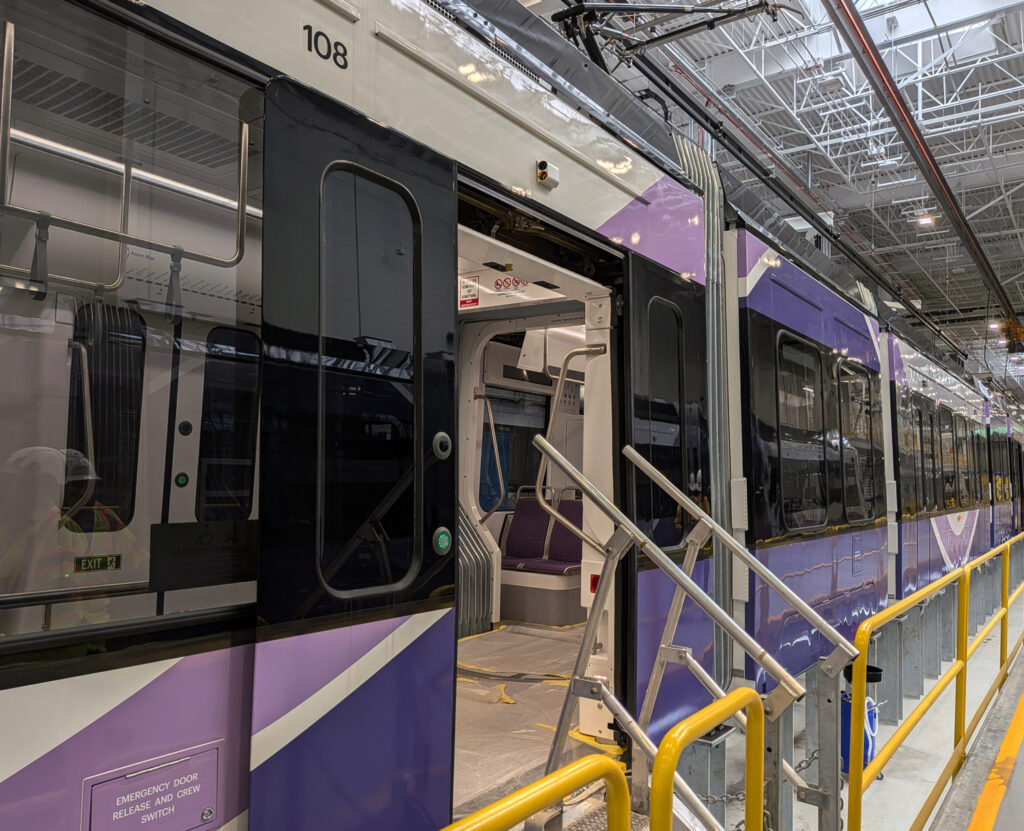
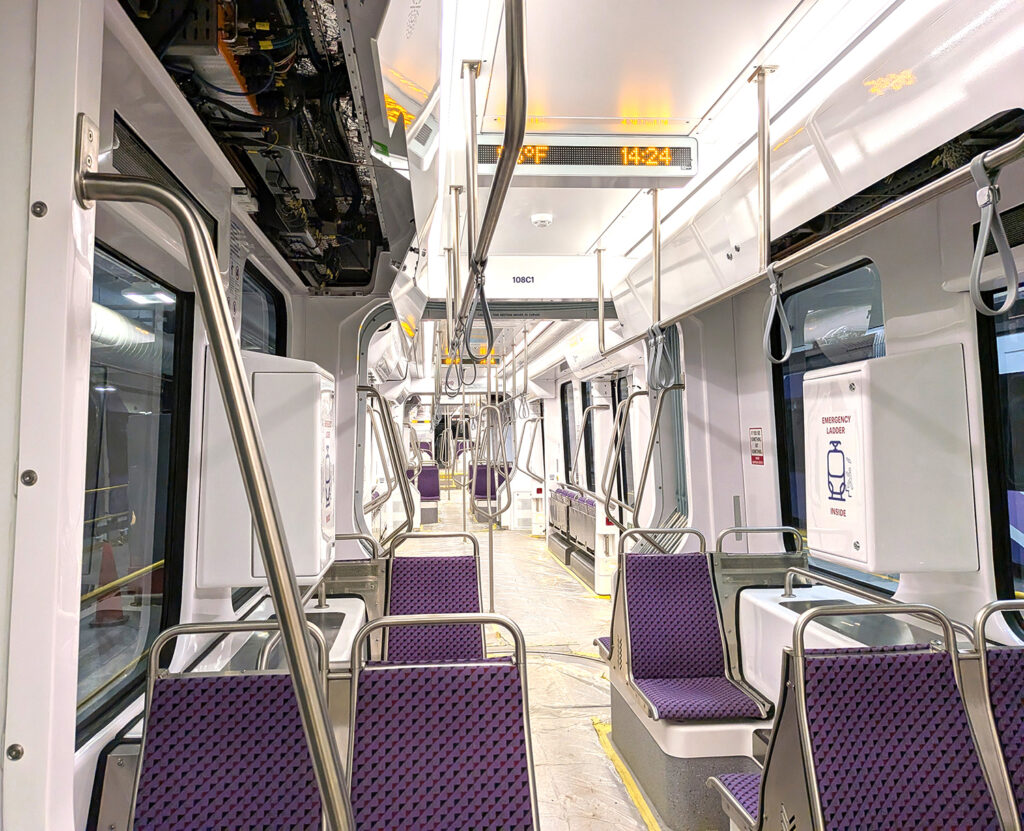
The Rail Conference Purple Line tour began at the operations and maintenance facility on the eastern end of the route. In the bright facility, we saw the newly manufactured trains lined up and ready for testing.
About a dozen of us on the tour travelled via MTA bus along the light rail transit route as best we could. The Purple Line track runs primarily on its own dedicated lane but also in traffic. It traverses approximately 50 intersections and 20 bridges and tunnels. It connects with four WMATA stations and dozens of hiking trails.
At the start of the tour, we passed newly constructed affordable housing units—the LRT will connect residents to services, jobs, shopping, and other necessities. Next, we traveled over the tracks that mix with traffic through the heart of the University of Maryland campus, where students will have the convenience of public transportation at their doorstep.
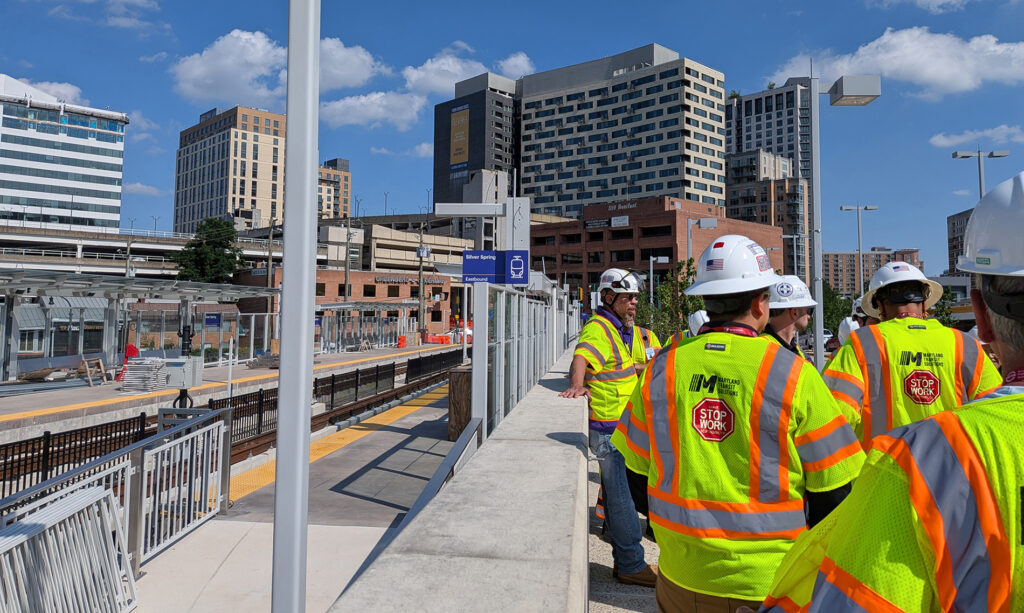
As we continued west, we saw the grandness of the project—newly built overpasses, street expansions, rail crossings and fencing. The start of the project was described as primarily a utility relocation and highway project. The density of the area made the project complicated but also reinforces its purpose: to decrease travel time in an area with lots of road congestion. As we made our way west to Silver Spring (our final tour destination), we arrived at a stop built into the public library.
From there, we’d need to travel 30 minutes in traffic to get to the end of the line in Bethesda—the trip should take seven minutes on the Purple Line.
Learn more about the Purple Line at: www.purplelinemd.com.