The Governance Dividend
By Essence Owens | 8/10/2026
Why Great Capital Projects Begin with Great Governance
ESSENCE OWENS
Director of Programs, Policies & Strategic Initiatives
Bi-State Development / Metro Transit
St. Louis, MO

Every transit agency has that project. The one that everyone remembers—not because it transformed service, or became a model of innovation, but because it became synonymous with delays, budget overruns, scope changes, or difficult public conversations.
Ironically, when those projects arediscussed, the conversation usually begins with funding.
“We didn’t have enough money.”
“The contractor fell behind.”
“Supply chain issues slowed everything down.”
“The technology wasn’t ready.”
Those challenges are real. Anyone working in capital delivery understands that today’s projects are more complex than ever before. Inflation, labor shortages, aging infrastructure, evolving federal requirements, cybersecurity concerns, and rapidly changing technology have fundamentally changed the way transit agencies deliver capital investments.
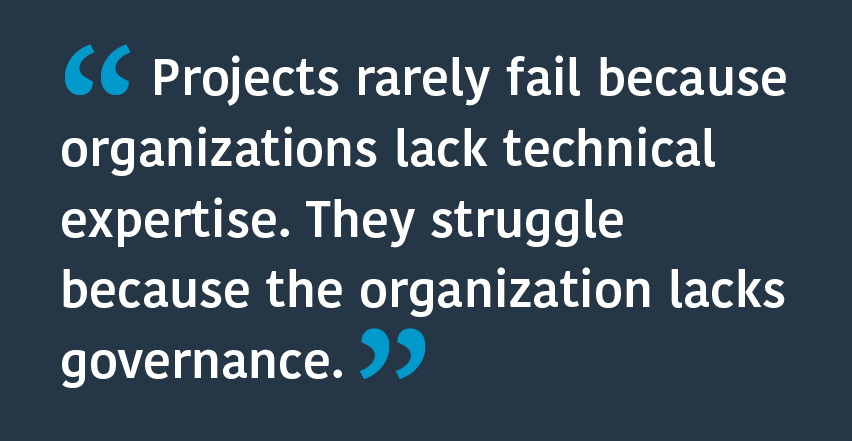
Yet, after nearly every project review, audit, or lessons-learned discussion, one truth continues to emerge: Projects rarely fail because organizations lack technical expertise. They struggle because the organization lacks governance.
Governance may not be the most exciting topic in project management, but it may be the most important. Unfortunately, it is one of the most misunderstood. Too often, governance is viewed as bureaucracy, a collection of meetings, approvals, policies, and reporting requirements that slow projects down.
In reality, effective governance does exactly the opposite. Good governance accelerates good decisions. It creates clarity before confusion has an opportunity to grow. It establishes accountability before problems become crises. It ensures that strategic priorities, not personalities or politics, drive decisions. Simply put, governance is not overhead. It is an investment. And like any good investment, it generates a return.
I call that the Governance Dividend.
Just as investors expect dividends from wisely invested capital, transit agencies experience measurable returns when they intentionally invest in governance. Those returns may not always appear on a balance sheet, but they are evident in project outcomes, organizational performance, and public trust.
The first is the Decision Dividend.
One of the greatest sources of project delay is not engineering complexity, it is decision ambiguity. When no one is certain who owns a decision, decisions simply don’t happen. Teams wait. Meetings multiply. Emails circulate. Problems linger.
Strong governance eliminates uncertainty by clearly defining decision rights, escalation paths, and accountability. Projects move faster because people know who is responsible for moving them forward.
The second is the Trust Dividend.
Transit agencies are entrusted with billions of public dollars. That trust is earned every day, not simply by completing projects, but by demonstrating transparency throughout the entire delivery process.
Boards want confidence. Funding partners want accountability. Employees want consistency. Communities want assurance that promises will be kept. Strong governance creates visibility into project performance before stakeholders ask for it. Transparency builds credibility, and credibility becomes one of an agency’s most valuable assets.
The third is the Performance Dividend.
Every agency has experienced projects that slowly drift away from their original purpose. Schedules change. Scope expands. Priorities shift. Without disciplined governance, organizations often find themselves managing activity instead of managing outcomes. Governance continually reconnects projects to organizational strategy.
It reminds leaders that success is not measured by the number of meetings held or reports generated, but by whether investments improve safety, reliability, customer experience, and operational performance.
The fourth is the People Dividend.
People perform best when expectations are clear. Governance removes unnecessary ambiguity and empowers employees to make decisions within defined responsibilities. Instead of assigning blame after problems occur, effective governance establishes ownership before work begins. That simple shift transforms accountability from something punitive into something empowering. The result is stronger collaboration, greater confidence, and higher-performing teams.
Finally, there is the Legacy Dividend.
Years from now, few people will remember the procurement method used on a project or the software selected to manage schedules. They will remember whether the agency delivered. They will remember whether leaders inspired confidence. They will remember whether promises became reality.
Governance is what transforms successful projects into lasting organizational credibility.
As our industry enters one of the largest periods of capital investment in its history, governance must become more than an administrative function. It must become a leadership discipline.
The agencies that consistently deliver transformative projects won’t necessarily be those with the largest budgets or the newest technology. They will be the agencies that make clear decisions, establish shared accountability, communicate transparently, and maintain unwavering alignment between strategy and execution.
The next time your leadership team gathers to review a capital project, resist the urge to begin with the schedule or the budget. Instead, ask a different question: Do we have the governance necessary to make this project successful?
Because when governance is strong, better decisions follow. When better decisions follow, better projects emerge. And when better projects emerge, public trust grows.
That’s the Governance Dividend.