St. Louis Metro Hosts APTA Sustainability / Operations Planning and Scheduling Workshop
8/14/2026
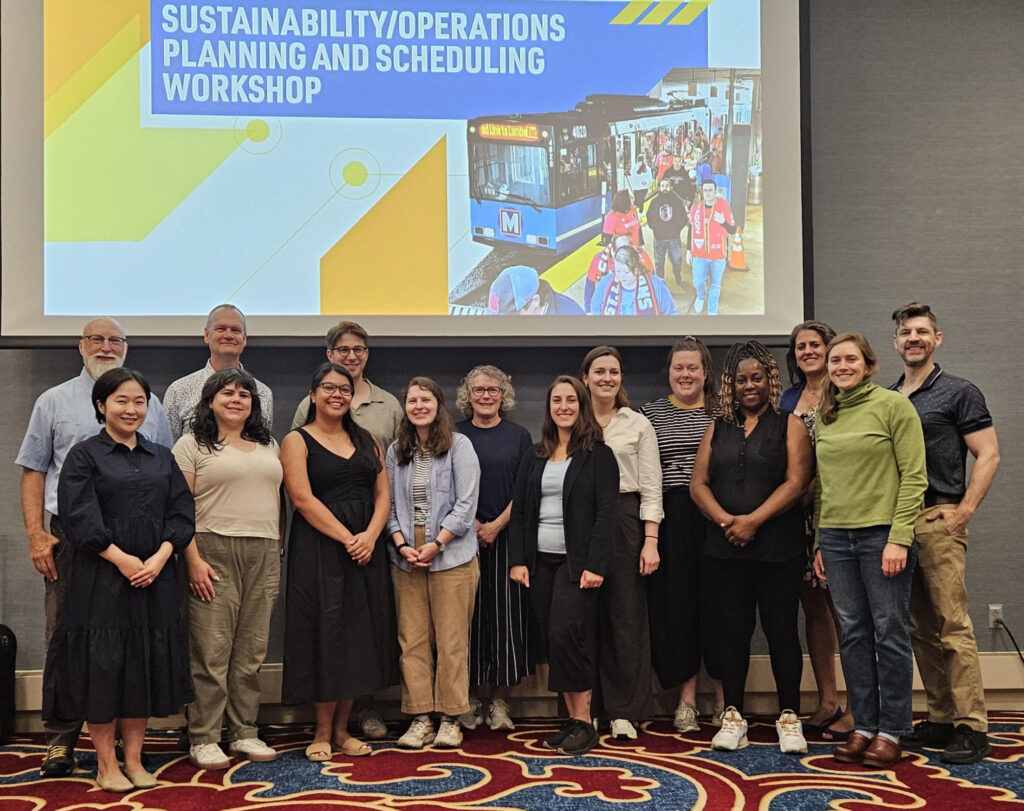
Over 250 transit professionals gathered in St. Louis August 9-12 for APTA’s 2026 Sustainability / Operations Planning and Scheduling Workshop. This co-located event convened transit practitioners focused on the “Sustainability Triple Bottom Line” (environmental / social / economic), along with the service planners and schedulers who design transit services.
The Sustainability track made the case for embedding sustainability across the entire transit organization and addressed the business case for investing in sustainable outcomes and cost-savings. To embed a sustainability approach, goals often start small as buy-in and cross-partner cooperation is established through a continuous improvement mindset.
Speakers shared examples of ways energy efficiencies can be achieved through fuel use and energy draw. Models for quantifying the regional economic and environmental value of transit corridors were presented. Sessions also covered cost and risk management, including a deep-dive into strategic energy market engagement alongside the life-cycle case for low-emission rail through renewable diesel and electrification. A green bonds success story showed how a sustainability strategy can translate into tangible financial outcomes. Other sessions looked at how external frameworks like Envision and LEED, along with the new ISO EMS standard, offer transit agencies a structured path forward.
A poster session gave presenters a chance to connect directly with individual attendees. Roundtable discussions offered good opportunities for networking, helping first-time attendees feel welcomed, while committee meetings strengthened the sense of community.
The Transit Operations Planning and Scheduling track addressed topics such as technical implementation of bus-only lanes; schedule writing to accommodate workforce needs; leveraging data to justify frequency versus coverage and to optimize headways; rider surveys; service standards; network design; and micro transit. Case studies were presented in each area. Presentations will be available on the APTA website to those who registered for the workshop.
The annual “Route Match Game” tested attendee knowledge of transit arcana. Teams participating in this fun and lighthearted event worked together to respond to moderator questions.
APTA thanks Sustainability Committee Chair Rob Borowski (Capital Metro) and Transit Operations and Scheduling Subcommittee Chair James Drake (Sacramento Regional Transit District) for their leadership in planning the event. APTA members are encouraged to become involved in these committees.