Public Transportation Fosters Energy Independence—on Earth Day and Every Day
4/22/2026
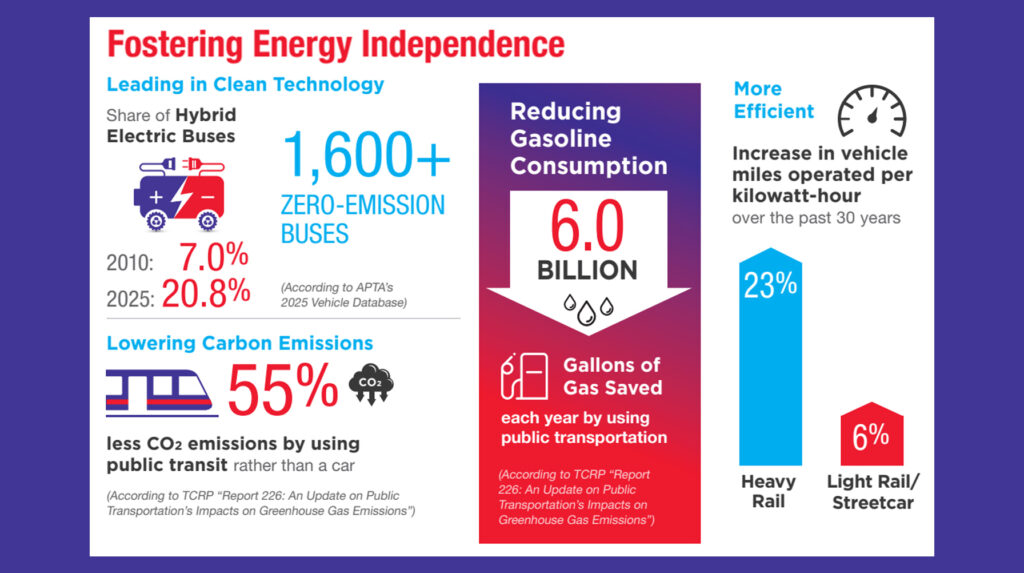

APTA’s recently released 2026 Public Transportation Fact Book shares good news for Earth Day. Compared to driving a car, riding public transit results in 55 percent less carbon emissions and reduces gasoline consumption by 6 billion gallons a year.
Transit agencies continue to transition to clean and zero-emission vehicles, including those powered by hydrogen and battery electric. As of 2025, there were over 1,600 zero-emission buses and the share of hybrid electric buses increased from 7 percent in 2010 to nearly 21 percent in 2025. Further, public transportation is increasing its own efficiency. Over the past 30 years, heavy rail is 23 percent more efficient while light rail is 6 percent more efficient.
Many agencies are offering free rides on Earth Day to entice more people to try transit. For example, in Maryland, all local bus, light rail, Metro subway, commuter bus, MARC train, and Mobility service will operate at no charge. “Earth Day is a reminder that how we choose to get around can have a big impact on our environment,” said Maryland Transit Administrator Holly Arnold.
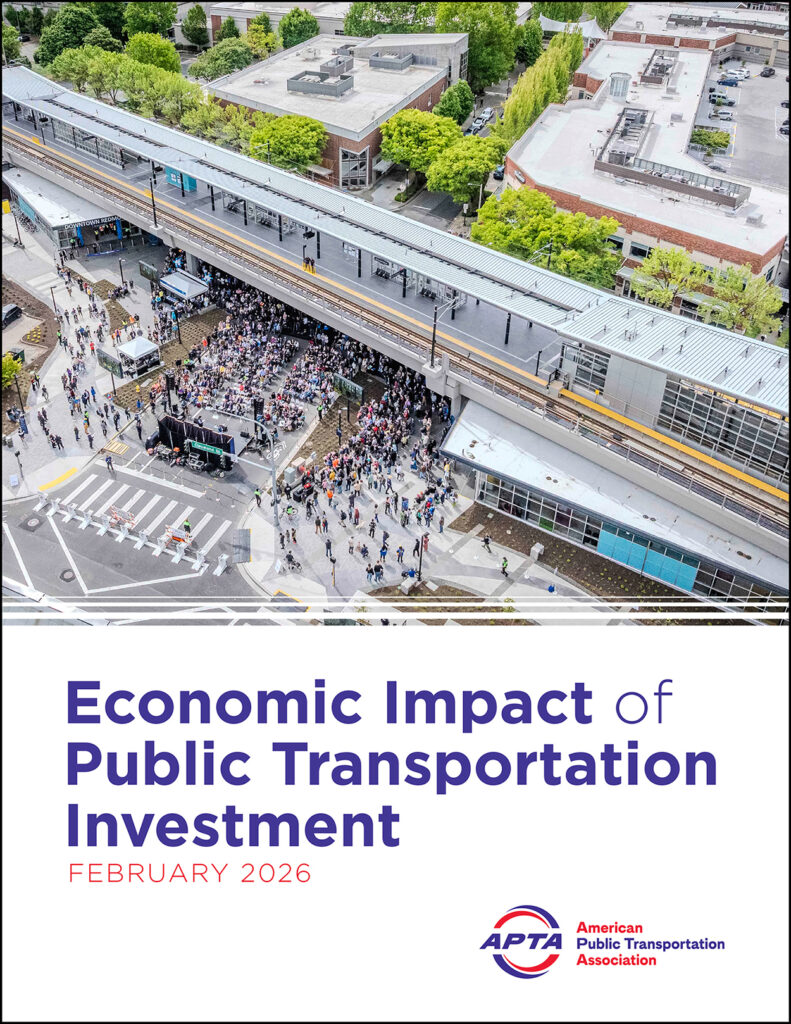
Investments in public transportation result not only in energy savings but cost savings. APTA’s Economic Impact of Public Transportation Investment report estimates savings as a result of APTA’s recommended funding levels for transit from:
- Reduced emissions – approximately $787 million annually
- Reduced road congestion – savings of approximately $1.2 billion annually
In addition, riding public transportation and owning one less car saves individuals about $13,000 per year. California’s Orange County Transportation Authority, which will have free rides on Earth Day, offers an online commute calculator to show riders how much they can save by choosing transit.
In Virginia, Hampton Roads Transit President and CEO William E. Harrell said, “Free travel on Earth Day is a way to thank our customers while encouraging new riders to leave their vehicles behind and try transit, especially with rising gas prices.”