Public Transit Goes the Distance for Fall Marathons
11/5/2026
From early-morning trains to extra service and station staffing, public transit agencies helped runners and spectators navigate fall marathons. The events showcased transit’s role in moving crowds to starting lines, connecting fans with viewing locations, and providing alternatives to driving amid widespread street closures.
In New York City, the New York Metropolitan Transportation Authority (NYMTA) reported an all-time Sunday subway ridership record on Nov. 1, the day of its marathon. Subways carried 3.14 million riders, surpassing the previous year’s marathon-day record.
NYC Transit operated additional subway service throughout the weekend and deployed extra personnel at stations near the finish line and other high-priority viewing locations to help customers travel to and from the race smoothly and safely.
“These record-breaking numbers show once again that when New York goes big, it goes by mass transit,” said NYMTA Chair and CEO Janno Lieber.
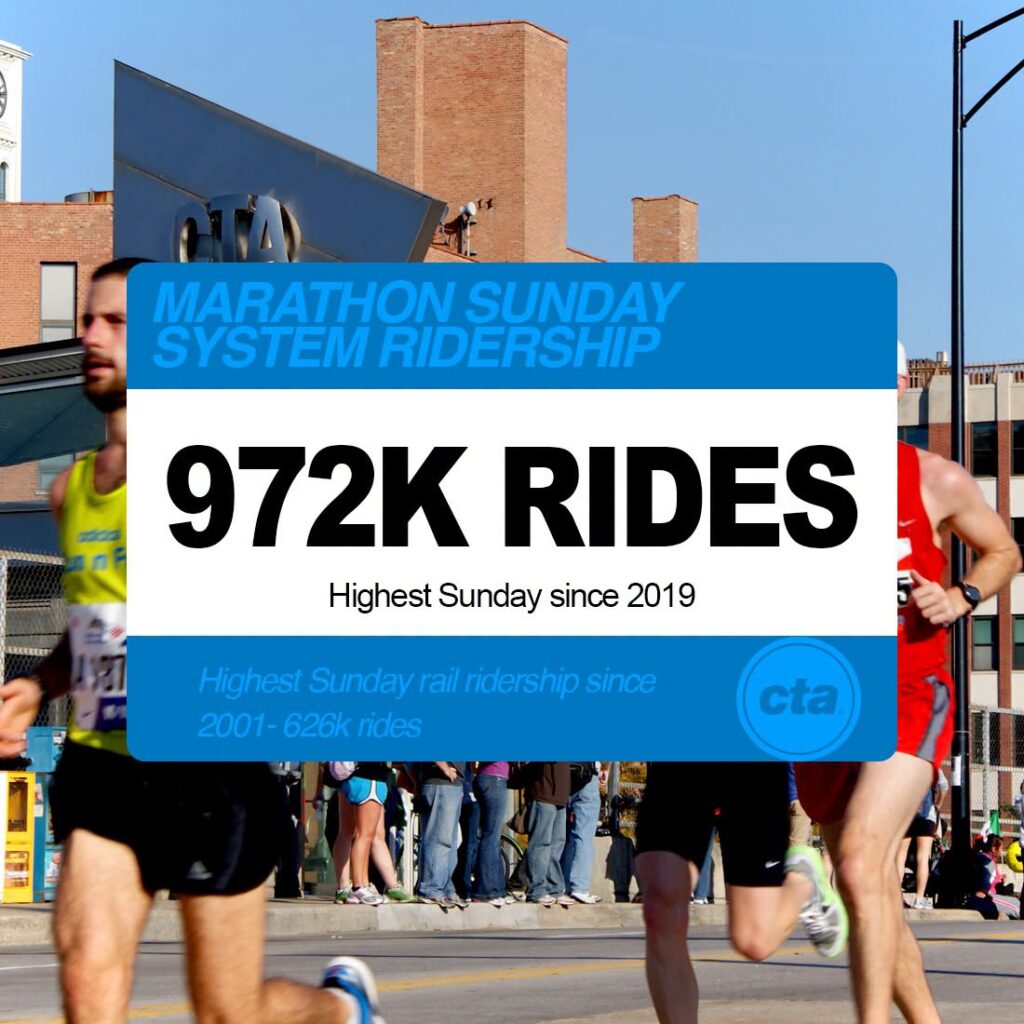
In Chicago, IL, the Chicago Transit Authority (CTA) recorded 972,000 systemwide rides on Marathon Sunday, October 11, its highest Sunday ridership since 2019. Rail accounted for 626,000 rides, marking the highest Sunday rail ridership since 2001.
To prepare for the event, CTA and Metra expanded service, including early openings and additional stops on the days leading up to the event for participants to pick up packets. With bus routes affected by marathon street closures, providing advance travel guidance was an important part of preparations.
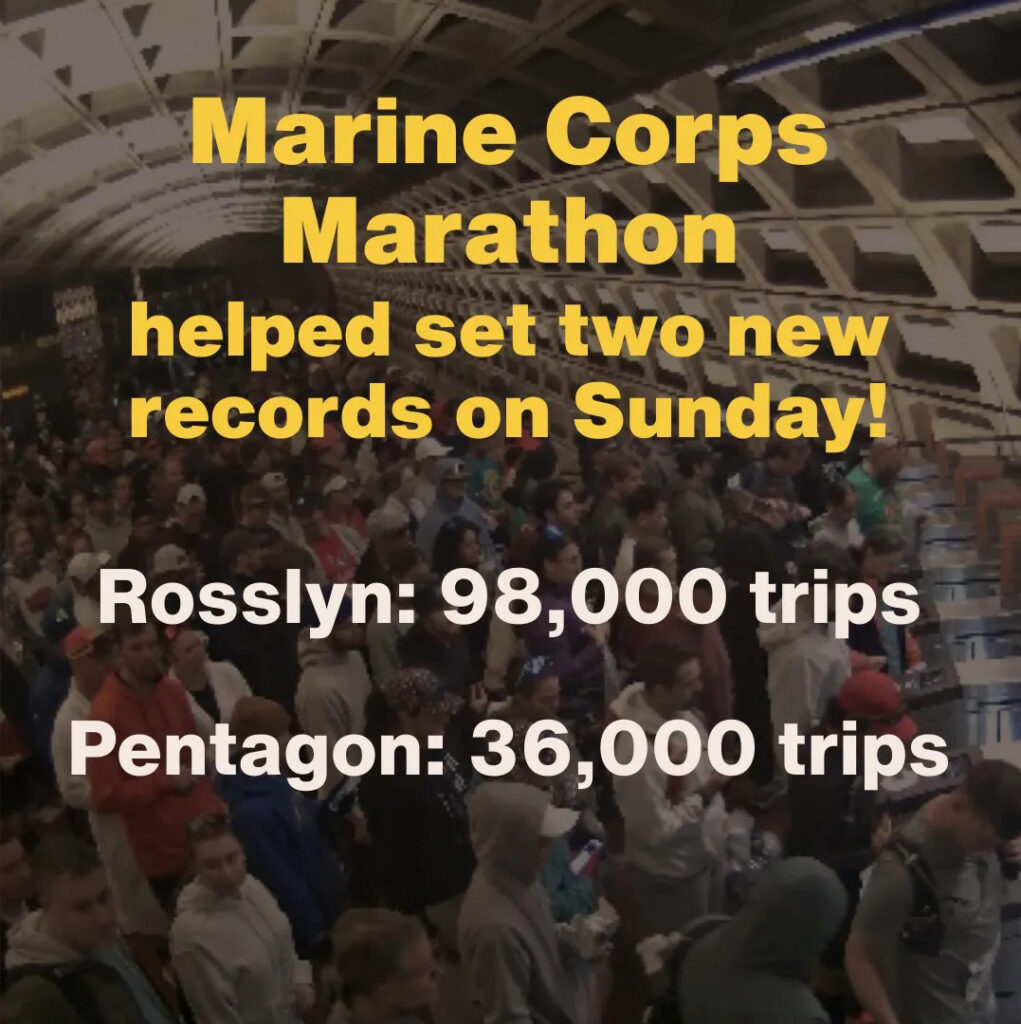
In the Washington, DC, region, the Washington Metropolitan Area Transit Authority (WMATA/Metro) set station records at Rosslyn with 98,000 trips and the Pentagon with 36,000 on the day of the Marine Corps Marathon. The preceding Monday–Sunday was its fourth-busiest week since 2020, driven by major events across the region, including the marathon.
Stations opened early on October 25 to help runners reach the start line and bus operations were adjusted to divert and relocate services. Additional staff were assigned to assist bus customers with navigation due to road closures.
Together, the agencies’ marathon preparations illustrate the work behind a major race weekend: matching service to early starts, supporting travel beyond the course itself, and helping customers navigate a city when familiar streets and bus stops are temporarily unavailable.