Public Transit Digital Displays Expand into Boston-Area Libraries
3/25/2026
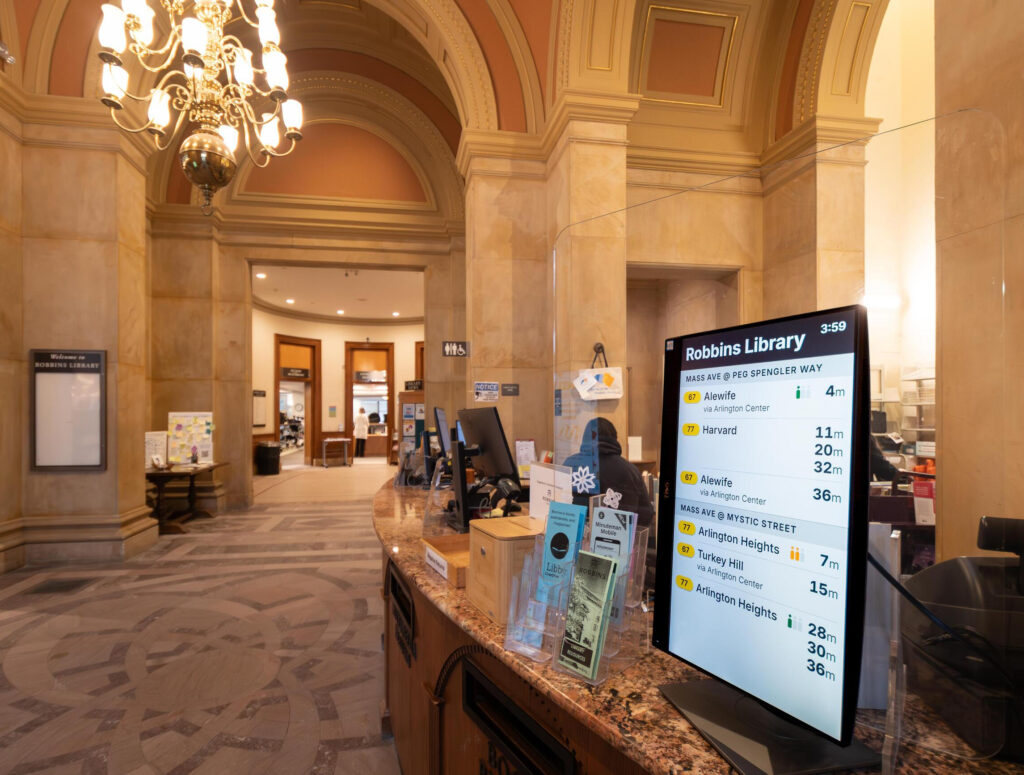
Massachusetts Bay Transportation Authority (MBTA) is partnering with community libraries as part of its Transit Screens @ Libraries initiative. The goal is simple: make it easier for those who use community spaces to plan trips using public transportation.
The agency knows that riders value accurate and reliable predictions, dedicated sources of real-time information, and clear current-trip details. The library initiative responds directly to those needs by providing live, location-specific updates. MBTA Interim Secretary and General Manager Phillip Eng said, “I’ve heard directly from the public that they want to know when their train or bus is arriving so they can plan their commute. Our teams listened and created solutions with the support of partners like local libraries.”
The Lab @ MassDOT evaluated the first year of the program. Observations and qualitative research with library staff helped refine the model. Stephen Toropov, head of teen services at Robbins Library in Arlington, said, “The Teen Advisory Board leaders who asked for it were thrilled to see it come together so quickly. With Arlington as a town basically being built around the 77 bus route, it’s a fantastic tool for the students to get around on their own terms. Even other staff members were excited—our circulation department immediately set up a display of their own at our front desk.”
Libraries aren’t the only place where digital displays can be found. The agency moved toward digital signage in 2019, developed by the MBTA’s Technology Innovation Department using open-source software. Since then, more than 1,000 real-time displays have been installed inside and outside rapid transit stations and at bus stops across the system.
The agency welcomes partnerships with commercial, residential, and public buildings located within its service area. Any digital display with internet access can serve as an information board with real-time departures and alerts. A partner simply needs to complete an intake form, which the agency reviews to identify the most relevant services within a 10-minute walk. From that information, a custom weblink is created for display.
The up-to-date information helps riders make informed decisions, builds confidence in riding public transit, and minimizes stress.