How SacRT Harnesses AI Technology Daily
By Henry Li | 10/6/2026
HENRY LI
General Manager/CEO
Sacramento Regional Transit District
Sacramento, CA

At Sacramento Regional Transit District (SacRT), the brave new world of artificial intelligence is no longer just a future possibility. AI is a tool we use daily to improve rider safety, keep our system well-maintained, and to streamline operations.
Our approach to AI integration follows the framework presented by APTA in its Artificial Intelligence and Machine Learning in Public Transit report, which recommends measured implementation of AI via pilot programs after assessing challenges, costs, and alternatives, among other criteria.
We have three AI-based programs underway—one initiated last year, two others this year. All three are already showing measurable efficiencies and cost savings.
Our newest and third AI venture takes our maintenance and track safety efforts to the skies. SacRT recently launched a pilot program using two AI-enabled drones on a nearly daily basis to scan and monitor our facilities. They are operated for us by a licensed former police drone pilot. One drone has thermal imaging technology, allowing it to operate day or night, and the other has 3-D mapping technology in addition to AI components.
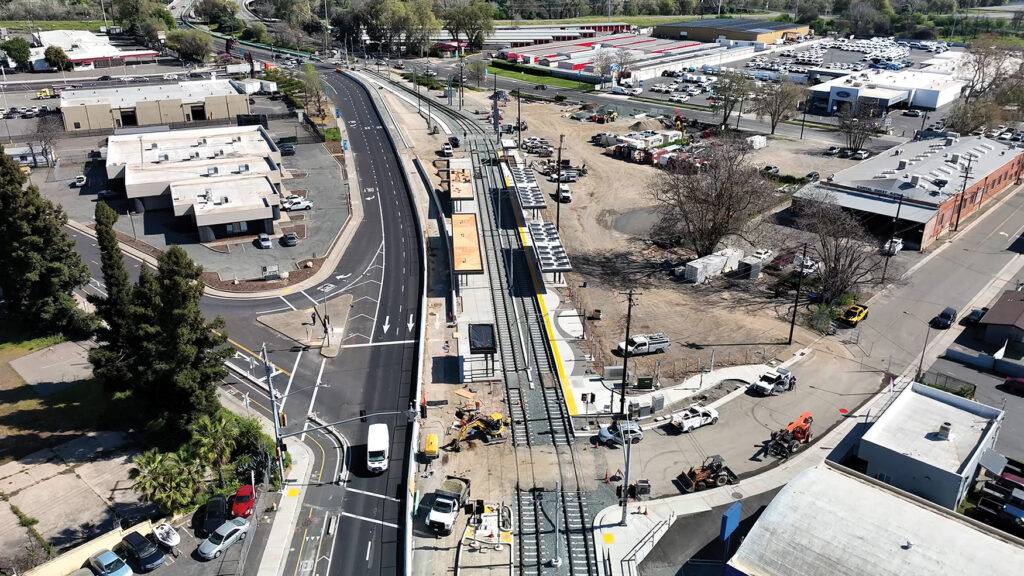
The drones survey rail tracks, structures, and facilities to identify maintenance issues and problems early, sending our crews an immediate “to-do” list of fixes. That includes broken fences, lights that no longer work, overgrown vegetation that could pose a fire risk, and homeless camps too close to tracks. Our drones are not law enforcement or security devices. Nevertheless, our drone pilot recently spotted wire thieves during a fly-over, allowing us to make an arrest on the spot.
This proactive approach allows us to deploy maintenance staff quickly and directly where they are most needed. It is proving to be a cost-effective program by reducing staff time and, most importantly, helps increase employee safety by reducing the number of in-person inspections required in higher-risk areas.
Closer to the ground, we have launched two AI-based technology programs with our bus fleet on our city streets. A hundred buses are equipped with forward-mounted AI cameras that automatically identify and report parked vehicles illegally blocking bus stops and bike lanes. Blocked stops and lanes are a major safety issue, especially for riders with a disability trying to board.
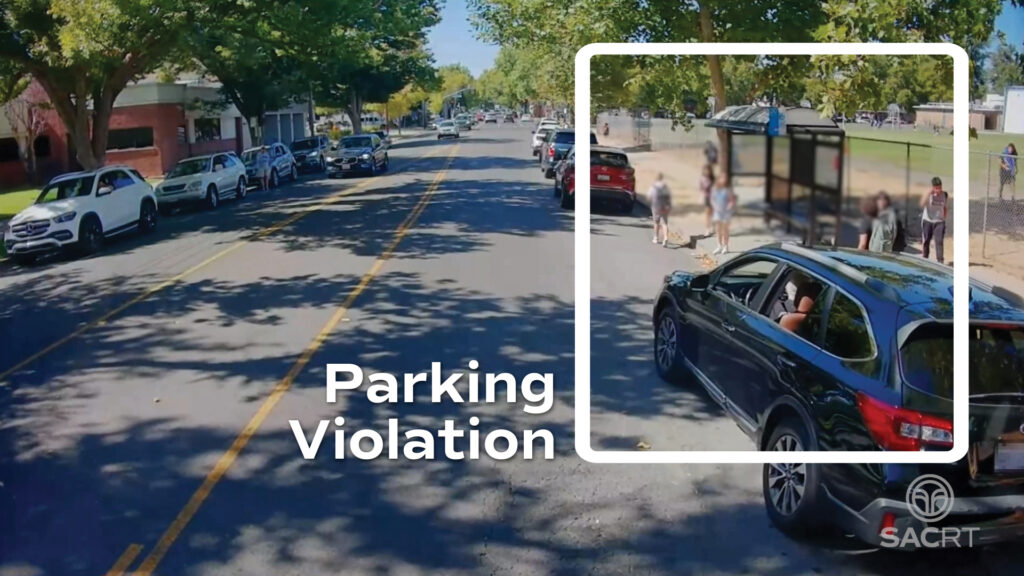
What makes SacRT’s AI program so unique in the transit industry is that this initiative operates through an innovative first-of-its-kind revenue-sharing contract with private AI companies and local jurisdictions. Not only does this allow us to reduce the number of cars blocking buses from pulling to the curb, but the deal also brings us a quarter-share of citation revenues. To date, the program has resulted in 35,000 citations, generating $800,000 in revenue for SacRT.
In recent months, we’ve expanded the use of our front-mounted bus cameras to conduct ongoing virtual inspections of our bus stops and shelters. As our buses pull into each stop, the AI cameras scan the area around bus stops for safety hazards, graffiti, garbage, and other maintenance needs—conditions that could negatively impact rider comfort and perception.
The results of these programs have been instructive. We have reduced illegal parking along transit corridors, eliminating hazards for our riders and helping our buses run on time. Now, instead of sending crews to scout for problems, the data allows us to dispatch staff directly to exact problem sites with the necessary tools and repair plans already prepared. This saves staff time, cuts operational costs, and improves our image in the public’s mind.
Why are we at SacRT moving so assertively into AI-assisted programming? Our leadership team and board of directors believe that the combination of creative thinking, entrepreneurial initiatives, and thoughtful adoption of new technology with private-sector partners will enable us to improve our service and enhance our community reputation, despite ongoing revenue constraints.
SacRT, as well as the transit industry in general, are in the early stages of this technology boom; however, the bottom line is clear: AI is helping make us a more modern, clean, and efficient agency. And that means we can better serve our riders and our community moving forward, all while saving resources.
Learn more at: www.sacrt.com/ai-innovations.