From Policy to Practice: Making Data Governance Real in Public Transit
By Dr. Manjit Sooch | 2/19/2026
Director of Innovation and Technology
Alameda-Contra Costa Transit District (AC Transit)
Oakland, CA
Chair, APTA Innovation Peer Exchange & Data Governance Subcommittee

As transit agencies accelerate digital transformation, data has become one of our most critical enterprise assets. Yet across the industry, agencies continue to face familiar challenges, unclear data ownership, inconsistent definitions, limited trust in data quality, and difficulty translating data into actionable insights. The APTA webinar “Data Governance in Action: From Policy to Practice” was designed to address these challenges by moving the conversation from theory to execution.
As moderator of the session and chair of the APTA Data Governance Subcommittee, I have seen that effective data governance is not about creating more rules. It is about enabling organizations to use data with confidence, make better decisions, collaborate across silos, and prepare for advanced analytics and artificial intelligence.
What Data Governance Means at AC Transit
At AC Transit, data governance provides the framework and operational model that fosters a sustainable, data-driven culture. It establishes clear accountability for data while balancing accessibility, quality, security, and compliance. Governance enables staff to trust the data they rely on, whether for service planning, performance management, regulatory reporting, or emerging AI-driven use cases.
This approach is informed not only by operational experience but also by my doctoral research on implementing data governance in public transit agencies. That research reinforced that governance succeeds when it is positioned as an enabler of people and decisions, not as an IT or compliance function. Organizations that treat data as an enterprise asset, supported by leadership, structure, and shared ownership, are far more likely to realize value from their data investments.
Integrating Governance into Day-to-Day Operations
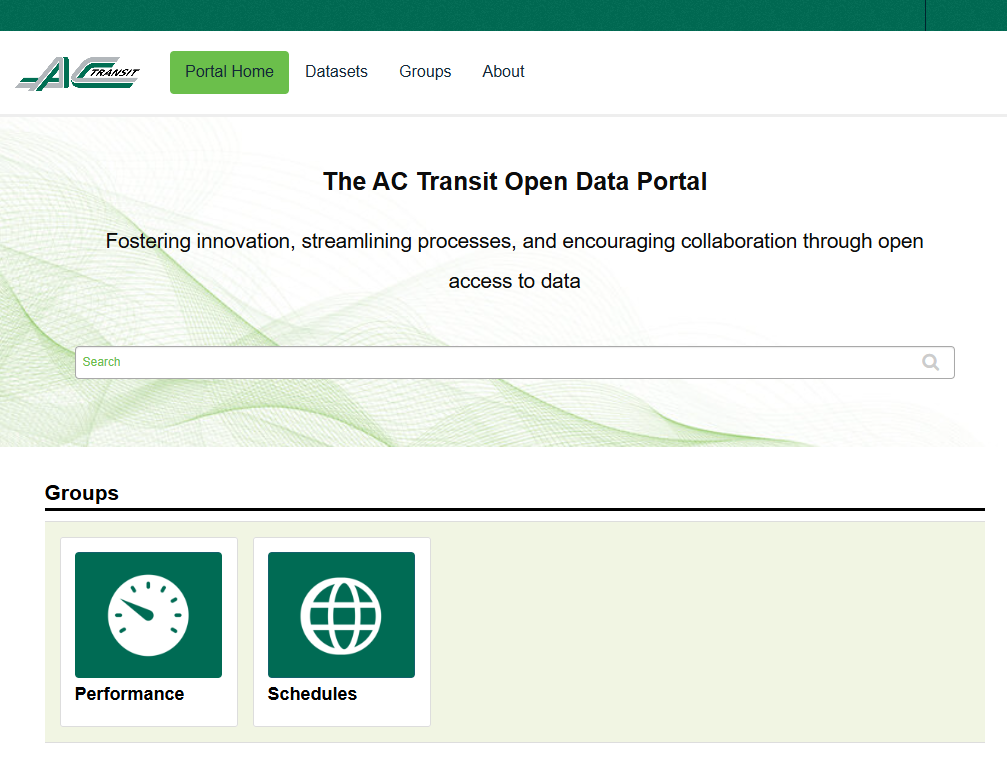
Our Data Governance Plan follows a phased and pragmatic approach. Rather than attempting to govern everything at once, we focused on building a clear organizational structure supported by executive sponsorship and cross-functional participation.
We established formal governance bodies and working groups aligned to business domains, with clearly defined roles for data owners, data stewards, and custodians. These working groups are where governance becomes real—addressing data definitions, standards, classification, prioritization, and issue resolution in the context of everyday business needs. By embedding governance into existing workflows, it becomes part of how the organization operates, not a parallel or disconnected effort. My doctoral research further confirmed the importance of this model. Across multiple transit agencies, executives consistently emphasized that governance is most effective when it is operationalized through collaboration, supported by clear communication, relationship building, trust, and aligned with organizational goals not imposed top-down without engagement.
Lessons Learned: Start Small, Build Trust, Scale with Purpose
One of the most important lessons we shared during the webinar is to start small and scale intentionally. Data governance cannot be implemented everywhere at once, and attempting to do so often leads to resistance or fatigue. Instead, agencies should focus on achievable use cases, demonstrate value early, and expand over time. Equally critical is investing in relationships, trust, and awareness. Governance succeeds when people understand why it matters and how it helps them do their jobs better. Foundational practices, such as labeling data, classifying it appropriately, and clearly assigning owners and stewards, create transparency and accountability.
These steps may seem basic, but they are essential building blocks for analytics, AI, and data democratization. These findings closely align with what emerged from my doctoral research: leadership, trust, data literacy, and incremental progress matter just as much as technology. Data governance is ultimately a people-centered transformation, requiring intentional leadership and sustained engagement.
Moving the Industry Forward
The webinar highlighted that while agencies may be at different stages of maturity, the challenges and solutions are remarkably consistent. Data governance is no longer optional; it is foundational infrastructure for modern public transportation. When implemented thoughtfully and incrementally, it becomes a powerful enabler of collaboration, innovation, and better outcomes for the communities we serve.