Mayor Kirk Watson on Building Austin’s First Light Rail
10/9/2026
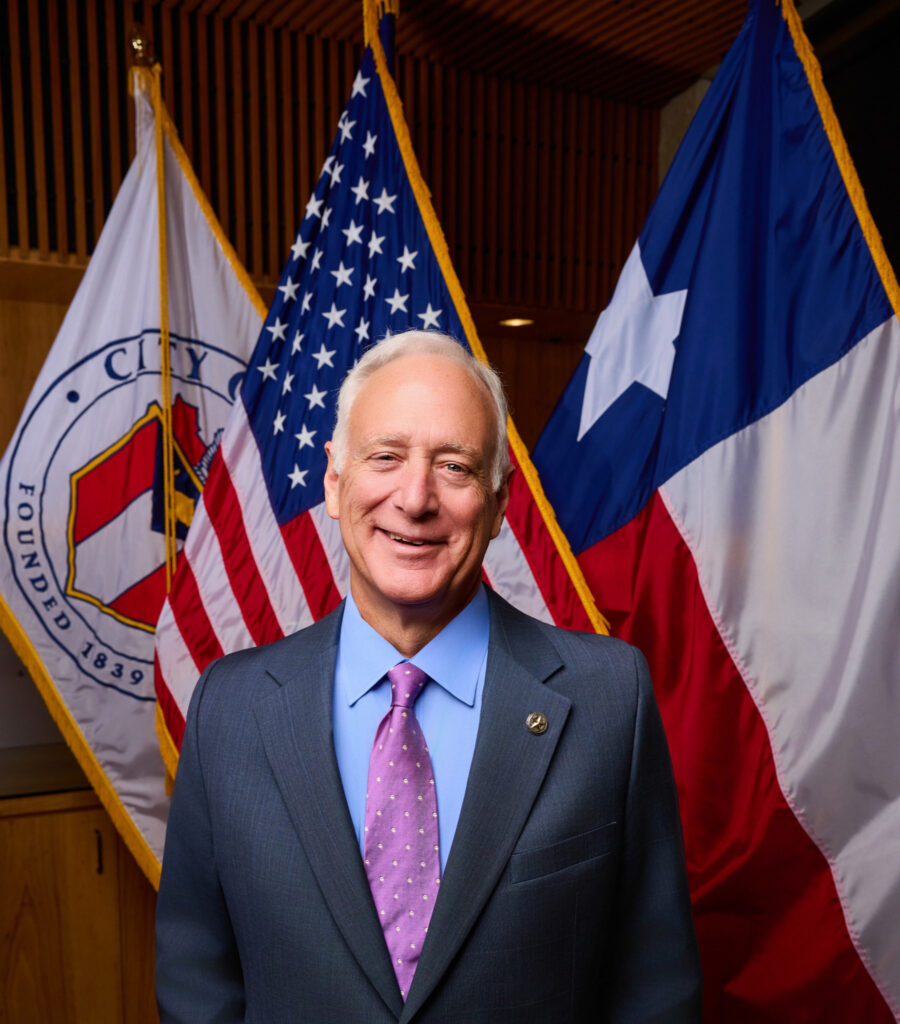
In a panel session at APTA’s 2026 TRANSform Conference and EXPO in Chicago, IL, Austin Mayor Kirk Watson joined Nashville Mayor Freddie O’Connell and Oklahoma City Mayor David Holt to discuss the future of transit in their respective cities. After the session, Passenger Transport sat down with Mayor Watson, who is also vice chair of Austin Transit Partnership (ATP), to learn more about the advancement of ATP’s light rail project, why voters backed it, and what the investment could mean for the city.
Why does this project matter to Austinites today?
At the end of the panel session, Watson said, “We also can’t lose sight of the fact that we’re asking people today to pay for it.” He explained that the benefit of investing in transit today creates more choice and more opportunity. Austin’s success has brought congestion and affordability challenges, and transit must play a key role in addressing both. If good transit and walkable communities allow a household to avoid the roughly $12,000 to $13,000 annual cost of owning a car, the city becomes more affordable. It also expands access to economic opportunity.
What did you do differently to pass the measure in 2020?
Previous transit ballot measures failed in Austin. Watson explained that the 2020 campaign succeeded partly due to better explaining what the project would be and how it would affect daily life. In addition, an independent local government corporation was created to deliver the project. The creation of ATP brought credibility and a board with financial and other expertise.
What is the timeline?
Watson said ATP hopes to break ground in 2027. ATP completed the National Environmental Policy Act (NEPA) process and received its record of decision in January, in under two years—a record under the current guidelines. The dedicated structure and close work with the FTA helped move the process forward.
What makes the delivery approach unique?
In the panel session, Watson said, “One of the things we’ve done at the Austin Transit Partnership is really study the way design is done across the country.” He described an innovative progressive design-build process to engage contractors early, which will save cost and reduce risk. Three major contracts representing about $5 billion were awarded—design and construction, rail vehicles, and the operations and maintenance facility—over approximately six months.
Where does federal funding stand?
When asked about securing federal funding, Watson described a strong partnership with FTA, which is providing feedback on ideas and approaches.
What comes next for the airport connection?
Environmental review is the next step. Watson explained that with the three contracts in place, he feels comfortable moving forward with extension to the airport.
How is Austin preparing its workforce?
Austin has a workforce shortage that the city is addressing through the Austin Infrastructure Academy, a partnership with Austin Community College and the regional Workforce Development Board to help build the workforce needed to deliver several major infrastructure projects. Watson explained that the program meets trainees where they are and helps address childcare and transportation needs. It is both an economic-development initiative and a way to ensure the work gets built.
What is the biggest challenge?
Watson said two big challenges he’s faced are explaining the process and the cost. He said it is difficult to explain why the process takes time after voters have said they want the project, even when they are making progress. In addition, costs change, even outside of inflationary periods. Public officials have to explain why infrastructure and equipment cost what they do while continuing to pay close attention to those costs.
How will transit investment reshape Austin?
By supporting more housing and more walkable communities around rail stations, Watson said, “the affordability issue changes pretty radically and quickly.” Austin’s transit-oriented development is establishing a minimum level of density to expect near transit. This creates more ways to get around without relying solely on a car.
In addition, funding has been set aside to help prevent displacement, including investments in land that the city can redevelop. Taken together, the rail system, land-use changes, and anti-displacement work put Austin on a course that can sustain its success over the next 20 years.