Expertorial: Beacon Mobility—Turning Paratransit Performance Into Better Rider Experiences
10/8/2026
SPECIAL ADVERTISING SECTION
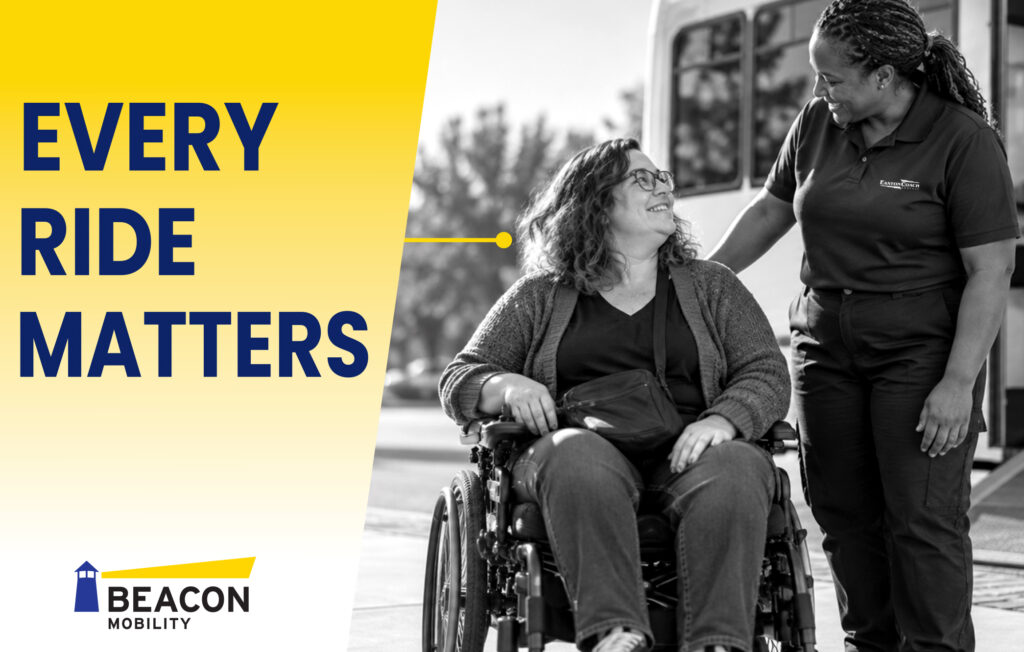

Public transportation is measured in numbers: on-time performance, trip completion, productivity, and cost efficiency. In paratransit, however, there is always a person behind the number. An on-time trip may mean someone made it to a medical appointment, while reliable service may allow another passenger to continue living independently. Good communication can give a family member confidence that their loved one arrived safely.
That connection between performance and the people we serve is at the heart of how we approach our work at Beacon Mobility and across our operating companies. At Easton Coach, we put that approach into practice every day. Taking on a new paratransit service involves more than putting vehicles on the road. A successful transition requires trained people, reliable systems, strong relationships, and continuity of service.the center of decision‑making.
Start by Understanding the Operation
Our experience has taught us to begin by understanding the operation: what is working, where the challenges are, and what the people closest to the service see daily. That means listening to agency partners, frontline employees, riders, and caregivers. From there, we identify where our experience and resources can make the service stronger.
Our partnership with NJ Transit’s Access Link service is one example. Namecca Parker, General Manager of Access Link, described the experience this way:
“Easton Coach Company helped us not just stabilize service but enhance it. The improvements were almost immediate. It was a very complex transition that involved new problems and challenges. I firmly believe that the successes were mostly due to the dedication from the Easton Coach team and leadership. With them we have been able to create new options and opportunities. They are examples of partnerships done right.”
Namecca’s comments reflect what we have seen across our operations. Contracts set responsibilities and performance expectations. The day-to-day relationship between an agency and its provider matters when something isn’t working. Problems are inevitable in paratransit.
Strong partnerships allow both sides to identify them quickly, talk candidly, and work toward solutions.
Partnership in Practice
We have seen that approach make a difference at Hampton Roads Transit. Amy L. Braziel, HRT Director of Contracted Services and Operational Analytics, shared:
“The evolution of Hampton Roads Transit’s paratransit service since partnering with Easton Coach has been nothing short of astounding. Easton has created a partnership with us that is built on trust, collaboration, and a shared vision. That, combined with their expertise and dedication to our service, has elevated HRT to a level that we didn’t think was within our reach. HRT strives for continuous service improvement and Easton’s commitment to excellence has given us confidence that we will continue moving forward on that journey for years to come.”
The improvements Amy describes matter because riders experience them. Better dispatching can mean fewer late or missed trips. Clearer communication gives riders and caregivers greater confidence, while well-trained, supported employees are better equipped to provide safe, dependable transportation. Performance measures show us where service is improving and where more work is needed to better serve the people who depend on it.
Technology is a Tool
Technology increasingly plays a role in delivering those outcomes. AI, predictive analytics, and connected operations platforms can help identify patterns, use resources more effectively, and recognize potential service problems earlier. We continue to explore how these tools can strengthen operations and decision-making. What matters is whether they improve the service riders actually receive.
As experienced operators, we know technology cannot replace the knowledge of people who operate and use a service every day. A system may identify a recurring problem, but understanding why may require a conversation with a dispatcher, driver, rider, or agency partner. Riders need more than an efficient system. They need to know we will show up, understand their needs, and get them where they need to go safely.
As our industry changes, we can use better tools and information alongside what we learn from employees, riders, and agency partners. The numbers we measure represent real trips taken by real people who are counting on us. Improving those numbers means improving someone’s experience of getting where they need to go. That responsibility keeps us focused on making the service better, one trip at a time, because every ride matters.
Easton Coach is part of Beacon Mobility, a family of transportation companies operating in 25 states with more than 20,000 employees. Beacon Mobility’s paratransit operators also include SCR Medical Transportation, based in Chicago, and Transit Team, based in the Twin Cities.
Judith Crawford,
Chief Executive Officer
Beacon Mobility