Worldwide, Good Transit Governance Starts With Prioritizing People
10/8/2026
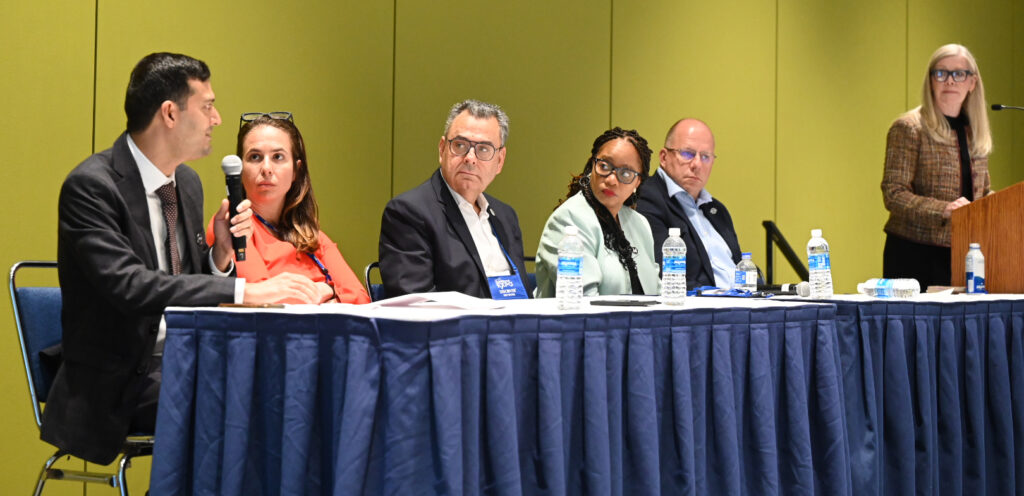

A great regional public transit system, linking multiple agencies in an integrated network, does not require governance by a formal transit authority. An umbrella structure can simplify and standardize processes, but a successful system really needs common goals, accountability, and a customer focus.
Transit authority leaders and consultants from London, Los Angeles, Chicago, Melbourne, and Brussels shared these priorities in the panel discussion Transit Governance Models for Today & Beyond: An International Perspective at APTA’s 2026 TRANSform Conference in Chicago, IL.
Moderator Leanne Redden, APTA immediate past chair and outgoing executive director of the Chicago Regional Transportation Authority, asked panelists about best structures and best practices.
Panelists Lauren Streifer and Mohamed Mezghani had no preferences on structure. Streifer, chief executive, Public Transport Association Australia New Zealand (PTAANZ), said each had advantages and downsides, but the best outcomes came from agencies with common goals.
Mezghani, secretary general of the International Association of Public Transport (UITP) said the best choice “is the one that is defined from the perspective of the users.” It has clearly defined responsibilities in the organization and delivers a network that’s easy to use “with a seamless transfer between modes and integrated ticketing and integrated information.”
Transit for London (TfL) has delivered that, said Commissioner Andy Lord. Publicly funded and governed, TfL has structured its organization to include highly accountable single chief officers. “So, you now have one single customer proposition, you have integrated ticketing, you have full-service planning across the city. We have planning powers that enable us to work out how the city is going to be developed, and it makes a fundamental difference.”
Similarly, Northern Illinois Transit Authority (NITA) holds significant land use power since a restructuring of the Regional Transportation Authority, said Maulik Vaishnav, chief transition officer. The authority is also well funded to support and grow operations long term, he said, but the current task for NITA is balancing representation and responsibility for Chicago, Cook County, and surrounding communities, now that the organization is “empowered to make some of the decisions that the region and the riders and many of our elected officials wanted.”
What people want is a core priority for Los Angeles County Metropolitan Transportation Authority (LA Metro), under CEO Stephanie Wiggins. Her 13-member board recently decided to establish a new board position, designated for a rider, to start in 2028.
The rider experience focus was also a key part of LA Metro’s success in moving millions of fans during the World Cup this summer. As the regional transit authority for 13 transit agencies, she said, “We all agreed on one fare structure, one communications. We made it seamless: one map, one single source for the riders, and it went swimmingly.”
Parsons Transportation group, represented by Amar Rajpurkar, vice president – West Sector Rail & Transit Practice, sponsored the session.