One Connected Fare Experience Drives 67 Percent Student Adoption
By MODESHIFT | 10/1/2026
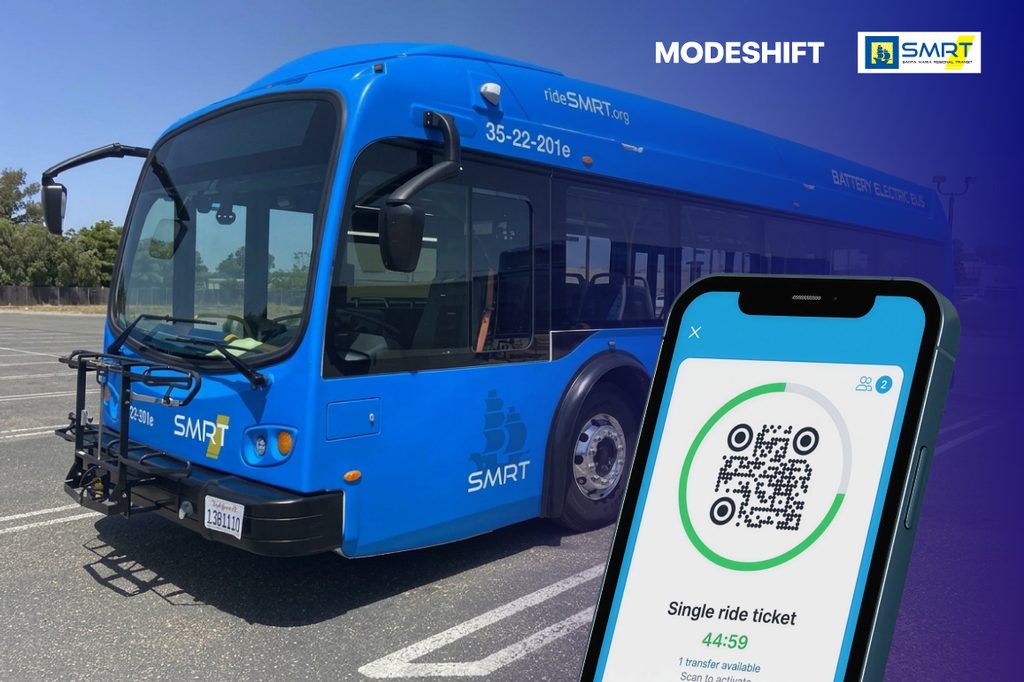
For transit agencies, introducing new fare technology is only part of modernization. The bigger test is whether riders actually use it.
In Santa Maria, California, one group of riders is showing what can happen when technology is designed to make transit easier from the start.
As of May 2026, 67 percent of active students enrolled in Allan Hancock College’s Bulldog Go program were using the SMRTpay app. In that same month, students took 6,206 rides through the program.
Behind that adoption is a partnership between Santa Maria Regional Transit (SMRT) and Modeshift, a 360-degree fare collection provider. Modeshift designed and implemented a connected fare system that brought together digital fare access, payments, electronic validation and trip planning, giving SMRT the rider-facing technology and underlying infrastructure to manage those functions through one platform.
Making transit access easier from the first ride
Transit access is especially important for Allan Hancock College students, fewer than half of whom own a car. Many depend on public transit to reach classes, jobs and other daily activities.
Through Bulldog Go, eligible students receive free transit access. Modeshift helped turn that benefit into a digital experience by integrating student passes directly into SMRTpay.
Rather than requiring students to obtain and manage a separate physical pass, their transit access is connected to their enrollment. Students can use SMRTpay to access their pass, plan a trip and validate their fare onboard.
Modeshift also provided the electronic validation technology installed on SMRT buses and integrated information from vehicle location and dispatch systems into the trip-planning experience.
The result is a much more connected journey: get your fare, plan your trip and validate your ride through the same ecosystem.
And student use has grown considerably. When the program launched through Modeshift in August 2021, Bulldog Go recorded 310 monthly rides. By May 2026, that had grown to 6,206 — roughly 20 times the launch volume.
Looking beyond the transaction
Santa Maria’s experience points to a broader shift in how agencies can think about fare collection.
A fare system is no longer simply the point where a rider pays. Agencies have to consider how riders access fares, which payment methods they can use, how fares are validated, how eligibility programs are managed and how those interactions connect with the rest of the transit experience.
When each piece requires a separate system or vendor, complexity grows quickly.
Modeshift takes a 360-degree approach to fare collection, connecting those functions through one adaptable platform.
For SMRT, that meant Modeshift could support not only the student program but the agency’s broader fare ecosystem. SMRTpay supports the purchase of fare products, secure digital payments and a digital wallet, while Modeshift’s validation technology connects the rider’s fare to the onboard experience. Trip planning and real-time information extend that experience beyond the transaction itself.
For the agency, those capabilities are supported by the same underlying digital infrastructure rather than a collection of disconnected rider-facing tools.
One platform, built around the rider
The Santa Maria story is ultimately not about getting students to use technology for technology’s sake.
Free fares helped remove a financial barrier. Connecting eligibility to enrollment simplified access. Mobile passes removed the need to obtain a traditional fare product. Digital validation made using that pass simple once onboard. Trip information helped students navigate the system.
The power of a connected platform
360-degree fare collection in practice can look like one technology foundation supporting the full fare experience while giving agencies flexibility in how they serve different riders and programs.
For agencies considering their next modernization project, the opportunity goes beyond replacing cash or paper with a digital payment. It’s a chance to look at the entire experience surrounding the fare and operations and ask where technology can remove friction.
Santa Maria offers one answer. When fare access, validation and rider information work together, technology can fade into the background. Getting where you need to go becomes the easy part.
To read more about Modeshift’s work with Santa Maria and other partners, visit https://www.modeshift.com/showcase/
Miroslav Katsarov, CEO of Modeshift
Katsarov is CEO of Modeshift, a leading contactless fare and data collection system provider. He is a motivator, consensus builder and big-picture thinker, leading a team of 40 people with combined transit experience of more than 240 years. His expertise and background include business strategy, business planning, telecommunications, managing system integrations, security and automation business units.