Caltrans Grant Supports Data-Driven Approach to Highway Safety
8/12/2026
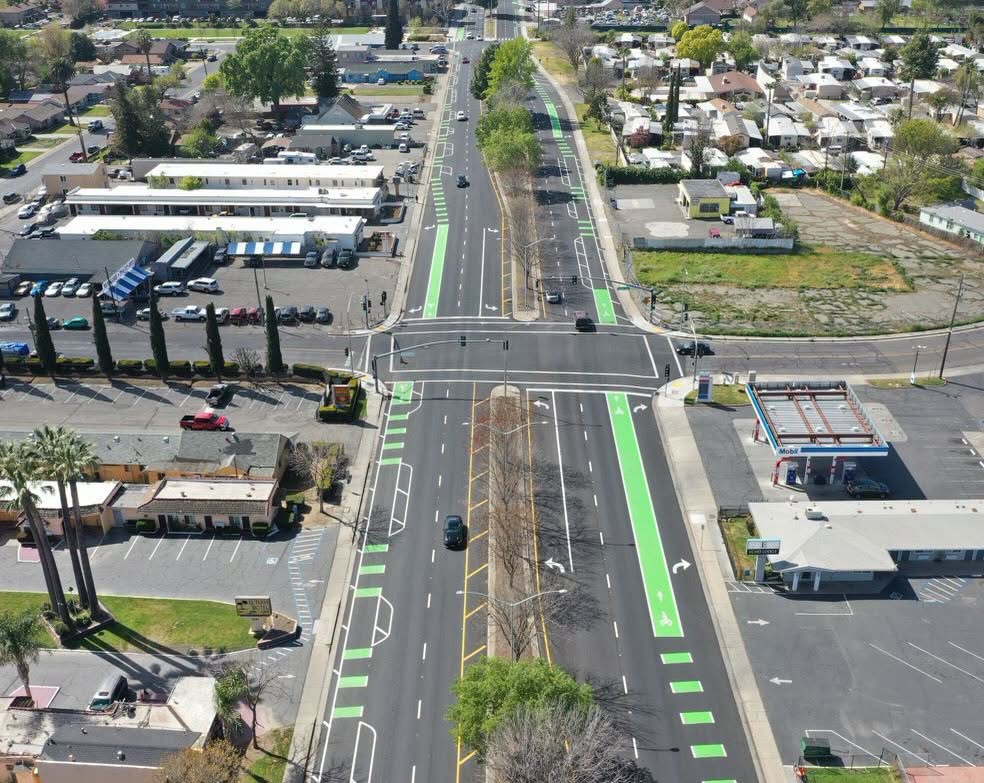
The California Department of Transportation (Caltrans) has received approximately $1.4 million in grant funding to strengthen traffic data collection efforts that will help guide future highway safety investments across the state.
The funding, awarded by the California Office of Traffic Safety (OTS) through the National Highway Traffic Safety Administration (NHTSA), will support expanded collection and analysis of roadway data used to identify safety risks, prioritize improvements, and advance California’s goal of eliminating traffic fatalities and serious injuries.
Transportation agencies increasingly rely on data analytics to make infrastructure investment decisions, moving beyond reactive approaches toward predictive, evidence-based safety management. By improving the quality and breadth of roadway data, agencies can better identify systemic risks before crashes occur and direct limited resources to projects with the greatest potential safety benefits.
“Strengthening California’s roadway data helps us better understand crash patterns and make smarter safety investments,” said Caltrans Director Dina El-Tawansy. “This grant will boost our ability to improve safety statewide and advance our goal of zero fatalities and serious injuries.”
Caltrans currently evaluates numerous datasets—including lane configurations, shoulder types, intersection designs, traffic controls, speed limits, and traffic volumes—to assess roadway performance and identify locations where engineering improvements may be warranted.
The new funding will expand those efforts by supporting traffic volume data collection on non-Federal Aid System roads, including rural highways, collector roads that connect to the state highway network, and urban local streets. The grant will also fund inventories of intersection types and designs on those roadways and strengthen coordination with metropolitan planning organizations, regional transportation planning agencies, local governments, counties, and tribal agencies.
The initiative reflects the growing role of integrated data platforms in transportation planning. By combining traffic volumes, roadway characteristics, and crash trends, agencies can develop more comprehensive safety analyses and prioritize investments using measurable performance indicators rather than isolated incidents.
The expanded data collection also supports Caltrans’ implementation of the Safe System approach, which recognizes that roadway safety depends on multiple interconnected factors, including roadway design, operating speeds, vehicle technology, road user behavior, and post-crash response. The framework emphasizes designing transportation systems that reduce the likelihood of severe crashes and minimize their consequences when they do occur.
For transportation agencies nationwide, investments in data infrastructure have become as important as investments in physical infrastructure. Advances in geographic information systems (GIS), automated traffic monitoring, connected data sources, and predictive analytics are enabling engineers to better understand network performance and deploy safety improvements more strategically.