The Quiet Work of Keeping Transit Safe
By Magnus Friberg | 6/15/2026
MAGNUS FRIBERG
Chief Executive Officer
Luminator Technology Group

Back in April, I left APTA’s 50th Legislative Conference with one message unmistakably clear: safety is the top priority for everyone in this industry.
It was there in remarks from Leanne Redden, APTA’s chair, who framed our industry’s charge as a commitment to safe, accessible, and modern mobility. It was there in the FTA panel where Deputy Associate Administrator for Transit Safety and Oversight Teona Edwards spoke plainly about reducing fatalities and protecting transit workers. It was in USDOT Chief of Staff Pete Meachum’s remarks the following morning. It was in Representative Rick Larsen’s reminder that riders should be thinking about their final destination, not whether they will get there at all.
Safety was not a tagline at this conference. It was a through line—present in every panel and keynote discussion, every hallway conversation, and every handout. For an industry absorbing the aftershocks of a pandemic, a leadership transition at FTA, and a reauthorization cycle that will shape the next decade, I think that emphasis is exactly right.
And yet, for all the volume this topic carried in Washington, the work of safety itself is rarely loud. It lives on the frontlines, in the hundreds of small, uneventful moments a rider never thinks about because everything went the way it should. Very little of that work is announced or celebrated, and that is often by design. The standard we are asked to meet is the absence of incident. When safety is working, it is being upheld quietly, every day, through practices, technology, and the stewardship of the riders who trust us to get them home.
The Work Ahead
APTA’s 2026 advocacy message that “public transportation drives our economy, connects our communities, and moves America forward” is true. The quieter truth beneath it is that none of that happens unless riders feel safe enough to step on board and drivers feel supported enough to stay in their seats.
Safety is not a hardware problem, not a software problem, not a policy problem alone. It is a partnership problem. Agencies cannot solve it alone. Suppliers cannot solve it by shipping equipment. Congress cannot legislate it into being without the industry showing what good looks like in practice.
What this moment asks of our industry is better, stronger, and more efficient collaboration. A reauthorization that treats safety and rider experience as one conversation, not two. Procurement processes that reward partners whose innovation is oriented around riders, not feature lists. And a shared discipline across suppliers and agencies to turn the operational data that already exists into intelligence that agencies can actually use, rather than leaving it siloed in systems that were never designed to work together.
Safety Is Not a Feature; It Is the Contract
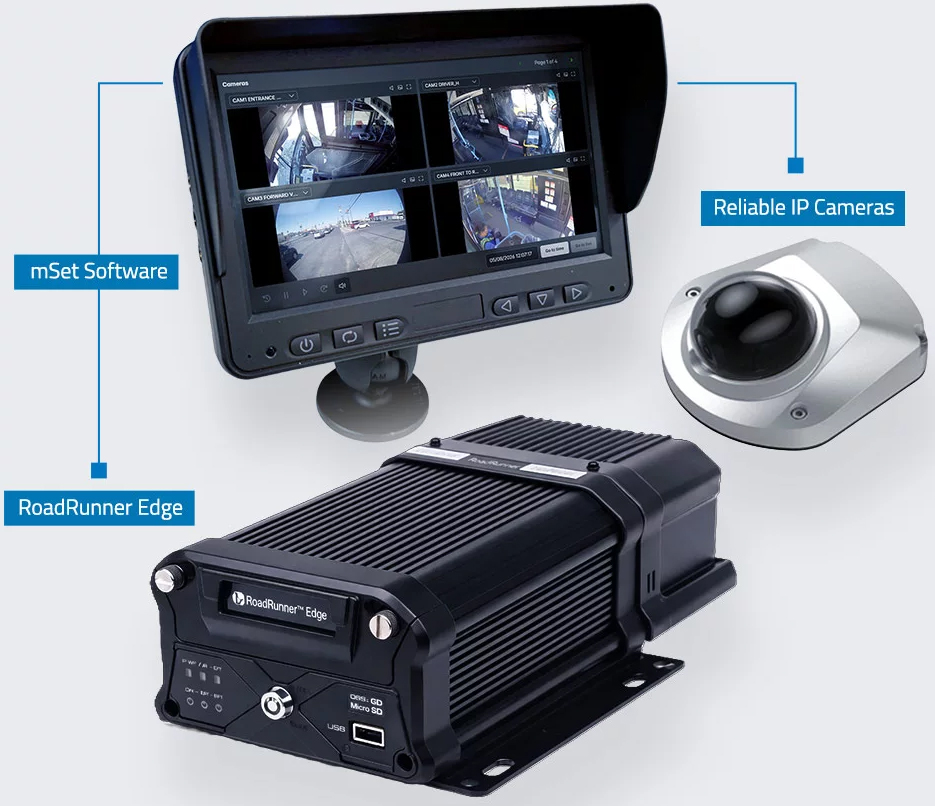
The United States loses more than 40,000 people to roadway deaths in a typical year. Public transportation remains among the safest ways to move. That’s not a talking point, it’s an obligation. The safer and more reliable our systems feel, the more we honor the quiet social agreement that makes transit work: a rider steps on board, trusts the driver, trusts the agency, trusts the equipment, and trusts that they will arrive home safely.
Riders do not grade safety by statistics. They grade it by what they can see, hear, feel, and sense. Does the driver have the situational awareness to know what is happening behind them? If something goes wrong, will the video record what is needed to make the next shift safer than this one?
Safety, in practice, lives in those small, repeated moments of daily clarity.
Trust Is Cumulative
Randy Clarke, who leads the Washington Metropolitan Area Transit Authority, spoke in Washington about his agency reaching one of its highest customer satisfaction levels alongside historically low crime numbers.
The two facts belong together. Confidence is built the way it is lost: one ride at a time. Each trip without confusion, each driver who feels supported by their equipment, each shift that ends the way it started adds to a quiet reserve of trust most riders never think about but absolutely feel.
Across Congress, FTA, and agency leaders themselves, I heard that this reserve is under pressure. Worker assaults, fare-evasion dynamics, families asking whether a stroller or a wheelchair user can navigate a platform with dignity, and the basic question of whether a station feels like a welcoming place. These are not separate issues. They all draw from the same reserve of rider trust, and that trust is slower to rebuild than it is to lose.
From Supplier to Solutions Partner
Luminator has worked in this industry for nearly a century. We have had the privilege of working alongside leading bus manufacturers and many of the country’s largest transit operators. Much of the market still thinks of us primarily as a hardware company—a perception that’s about a decade behind reality. Today, Luminator delivers a unified transit platform that brings together software, data management, and AI-enabled analytics with proven hardware, all aimed at three outcomes: smarter operations, safer environments, and better rider journeys.
But that is the smallest honest description of what we do. A more accurate description is that we’re a conduit of safety.
A properly designed overview sign is not a sign; it is a passenger recovering their bearings in a disorienting station. A properly placed camera is not a camera; it is an operator and an investigator reconstructing what happened so the next shift is safer than the last. An analytics layer is not a dashboard; it is the difference between an agency drowning in raw operational data and one that can actually see itself clearly and act on what it sees.
I left the Legislative Conference grateful for the urgency I heard across the conference. It reinforced something important: when our industry treats safety as a promise we renew every day—not a milestone we celebrate once—we’re all ready for what’s ahead.