The Growth of Automated Transit Vehicles
2/26/2026
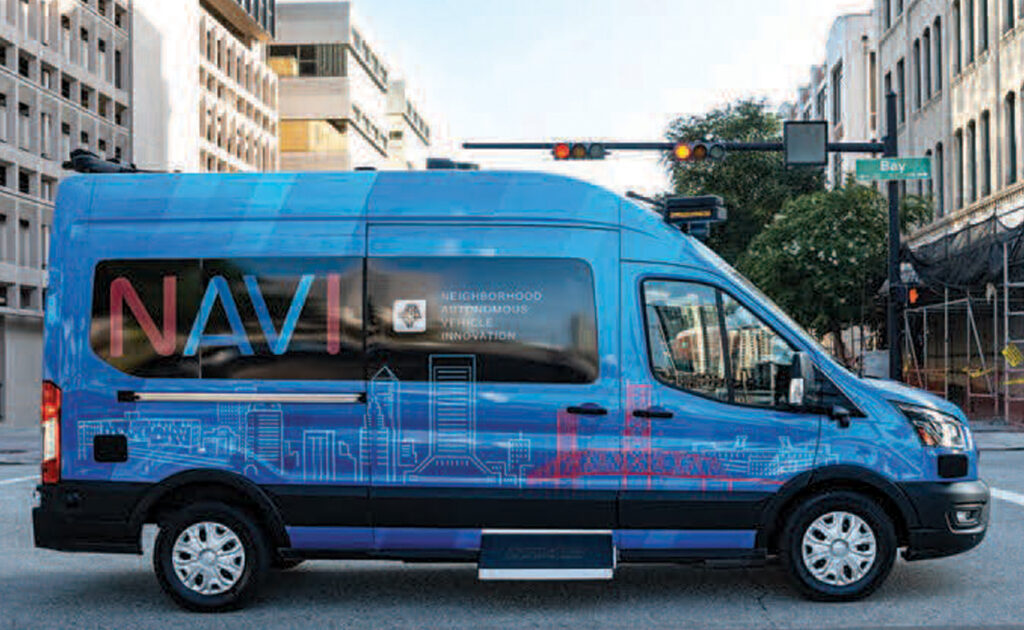
A poet once wrote “What is now proved was once only imagined.” Through the ages, humans have imagined flying cars, underground trains, and yes, vehicles that drive themselves. These driverless vehicles, or autonomous vehicles (AV) are no longer a thing for imagination; they are here and are proven, including for public transportation. Many public transportation agencies across the United States are exploring how to maximize this technology to advance mobility for their communities, creating the foundation for an innovative mobility ecosystem, while others are actively launching or exploring pilot programs. Some have even achieved full-service deployment.
“For many agencies, the first question is: Where do I begin?” said Nathaniel P. Ford Sr., CEO, Jacksonville Transportation Authority (JTA), FL, and past APTA chair. “Fortunately, several transit agencies—including JTA—are already operating successful and expanding autonomous vehicle programs. We stand ready to share our lessons learned, deployment strategies, safety framework, and governance model to help others move from concept to implementation with confidence.”

Ford is chair of APTA’s newly formed Automated Vehicles Innovation Committee and recently moderated a webinar on Automated Vehicles 101: What Public Transportation Agencies Need to Know. Panelists included: Frank Martz, city manager, City of Altamonte Springs; Dinero Washington, CEO, SporTran; and Tim Haile, executive director, Contra Costa Transportation Authority. The discussion focused on how agencies should get started as well as challenges to expect and how to overcome them.
“We focused on the good, bad, and ugly of AV implementation,” said Ford. “Fortunately, there is a lot of good. The panel featured pioneers from whom we can all learn as we advance this amazing technology.”
The webinar addressed key questions, such as:
- What have agencies learned from launching AV programs?
- Where do AVs make the most sense in transit operations?
- How can agencies fund and sustain an AV initiative?
- Where can you go to learn more and take the next step?
Whether exploring the idea of AVs or looking for a clear path forward, the discussion aimed to help agencies move from curiosity to confidence—moving beyond the starting line.