Federal Transit Investment Boosts Local Economies, Creates Jobs, Improves Service
12/4/2025
FTA invested $2 billion in 165 transit projects in 45 states and Washington, DC, through its Grants for Buses and Bus Facilities Program and Low or No Emission Grant Program Nov. 20. The investment is aimed at modernizing bus infrastructure, reducing traffic congestion, and helping people travel more efficiently and affordably. These competitive grants will also create good-paying jobs in both rural and urban communities across the U.S. The impact is already being felt…
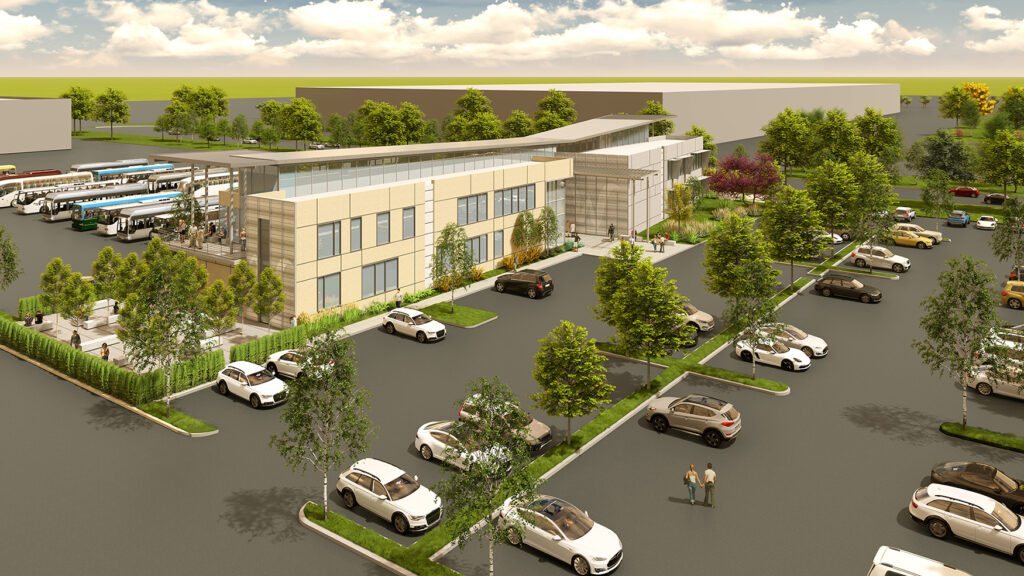
The Livermore Amador Valley Transit Authority (LAVTA), CA, announces its award of a $63.95 million grant. This critical funding will construct a new agency campus on Atlantis Court in Livermore, including modern operations, administration and maintenance facilities, and support the replacement of eight aging buses with modern, low-emission vehicles to be built in Livermore. The infrastructure upgrades will improve service reliability, reduce emissions, and allow for expansion of transit service throughout Tri-Valley communities.
LAVTA’s award is the largest Low-No award in the state of California, and the fourth largest award in the U.S., recognizing strong alignment of LAVTA’s project with federal priorities to modernize critical infrastructure, reduce emissions, and improve access to transportation for local communities.
“This critical investment completes the funding plan for Atlantis,” said Christy Wegener, LAVTA executive director. “This project will create good-paying local jobs, ensure Wheels can expand services to meet the growing needs of the Tri-Valley community, and ensure access to safe and efficient transit. I am so grateful to my amazing staff who pulled this application together, to our congressional delegation for their support of our application, as well as to the FTA for their recognition of our efforts to improve the nation’s transit infrastructure. Now it’s time to get moving!”
The award constitutes approximately 75 percent of total cost of the full project. The design for the project was completed in 2020 through a grant from the Alameda County Transportation Commission; Other funding partners include the Alameda County Transportation Commission and the State of California.
In addition to safety and efficiency benefits, the new facility will allow for fleet expansion as the current LAVTA maintenance yard built in 1991 has been operating at 50 percent beyond its design capacity for more than 20 years.
The purchase of eight low-emission diesel-electric hybrid replacement buses supports Livermore’s local bus manufacturer, GILLIG LLC, and ensures the fixed-route fleet’s continued state of good repair.

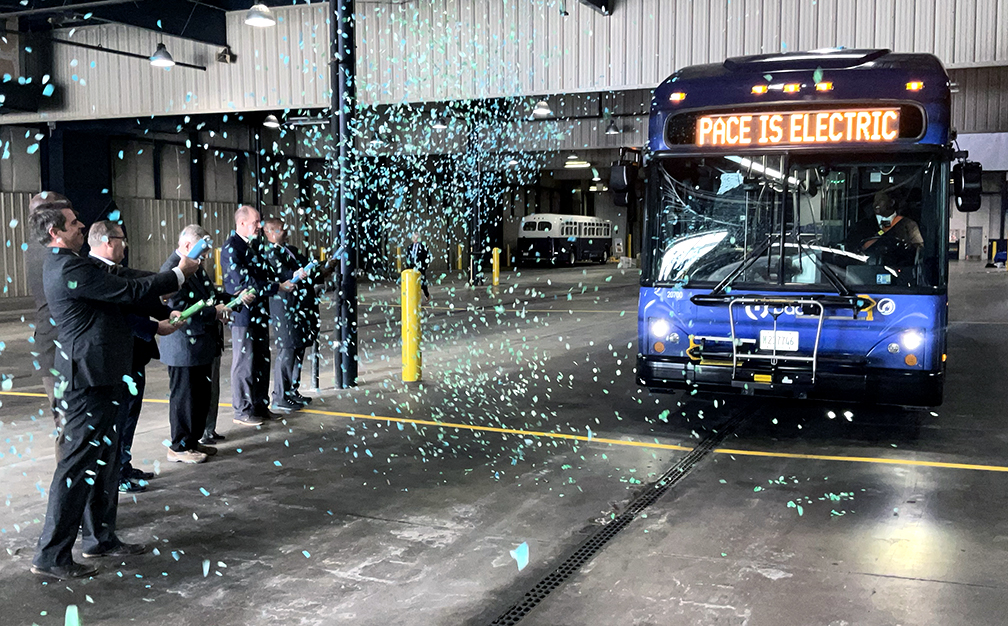
Pace Suburban Bus, Arlington Heights, IL, is to receive $39,780,000, enabling the agency to purchase 36 hybrid-electric buses for its West Division in Melrose Park. The award marks significant step forward in the agency’s commitment to sustainability and enhanced transit service across western Cook and DuPage Counties.
“We’re proud to take this important step toward reducing emissions and creating a more sustainable future for our communities,” said Melinda Metzger, Pace executive director. “By modernizing existing garage infrastructure, we can make this transition efficiently while continuing to serve our growing ridership in western Cook and DuPage Counties.”
This is the second consecutive year Pace received a Low-or-No Emissions grant. The $30.9 million grant awarded by FTA in 2024 helped the agency purchase 33 hybrid-electric buses for its fleet, which have begun to arrive as of October 2025. These investments support Pace’s Project Zero, an initiative designed to replace aging, higher-emission diesel buses with cleaner, more efficient hybrid-electric and electric vehicles.
“We are thrilled to receive this generous funding from the FTA and grateful for the letters of support we received from our partners and community members this past summer,” said Pace Chairman Rick Kwasneski. “Pace thanks the 19 federal, state, and local elected officials who formally supported the project with letters to FTA. Their support for this application and for Project Zero has been instrumental in all the progress made on this project in recent years.”
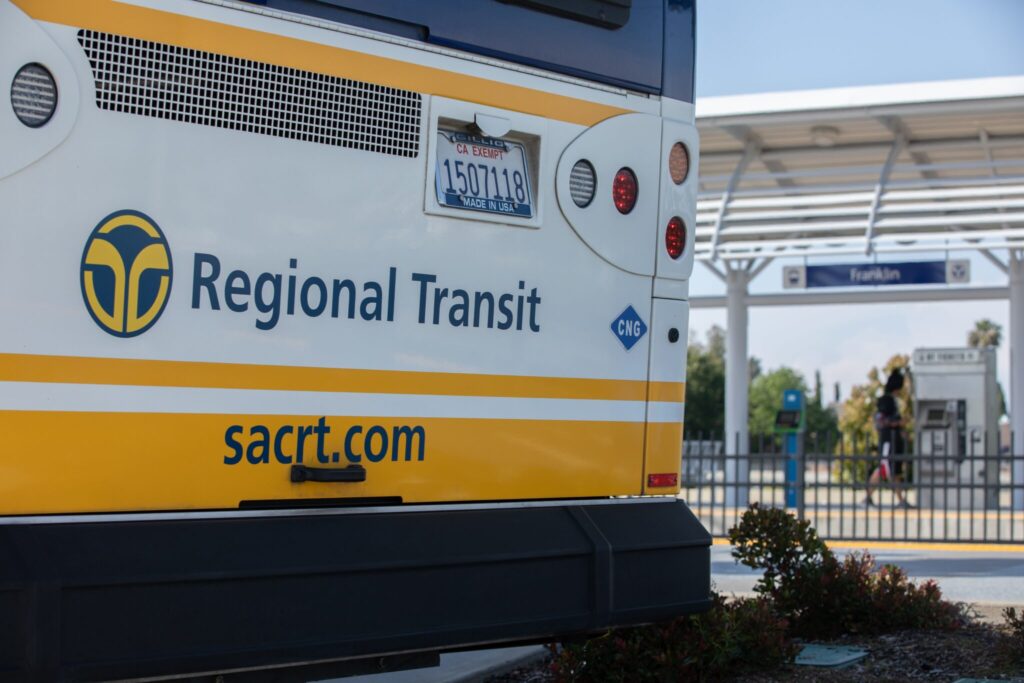
The Sacramento Regional Transit District (SacRT), CA, is to receive a $39.67 million grant to support the replacement of 49 aging compressed natural gas (CNG) buses with modern, low-emission vehicles and fund infrastructure upgrades that will improve service reliability, reduce emissions, and enhance transit access in underserved communities.
This project builds on SacRT’s momentum from the nearly $77 million Low-No grant awarded in 2024, which is supporting the transformation of SacRT’s McClellan facility (BMF-2) into a state-of-the-art bus maintenance hub. A 2021 redesign enables the facility to house and maintain up to 270 buses, including the 49 new CNG buses funded through this grant and future clean-fuel vehicles. Together, these investments in fleet and facility will relieve pressure at BMF-1 and improve service reliability.
SacRT is facing an urgent need to modernize its fleet. By the end of FY25, 78 buses will be due for retirement, with 129 reaching the end of their useful life by 2028. The 49 buses being replaced through this project, some dating back to 2008, average 510,000 miles and 16 years in service, and operate at just 56 percent availability due to frequent mechanical issues.
“This funding is another major step forward in our ongoing efforts to deliver cleaner, more efficient and more reliable transit for the Sacramento region,” said SacRT general manager/CEO Henry Li. “These new buses will improve the rider experience and help SacRT continue to operate frequent bus service through the region.”
“This federal investment in SacRT’s bus fleet and maintenance infrastructure is a win for the Sacramento region,” said Rep. Kevin Kiley (R-CA). “This project demonstrates that good things can happen when we work across party and geographic lines to get things done for local communities and residents. It will improve air quality, enhance transit reliability, and support emergency preparedness in communities north of the American River. I’m proud to advocate for funding that delivers real benefits to our constituents and strengthens our regional transportation network.”
In addition to environmental and service improvements, the project will generate substantial operational savings. During the first two years of the manufacturer warranty, SacRT anticipates saving approximately $1.19 million annually on spare parts, $827,800 on non-preventive maintenance labor, and $463,097 per year in fuel costs due to reduced consumption of 154,882 gasoline gallon equivalents.
“Clean and reliable public transportation is essential to the health and economic vitality of our region,” said Rep. Ami Bera (D-CA). “I’m pleased to see SacRT receive this critical funding to replace aging buses and invest in infrastructure that supports underserved communities. These improvements will help reduce pollution, create good-paying jobs, and ensure that more residents have access to safe and efficient transit.”
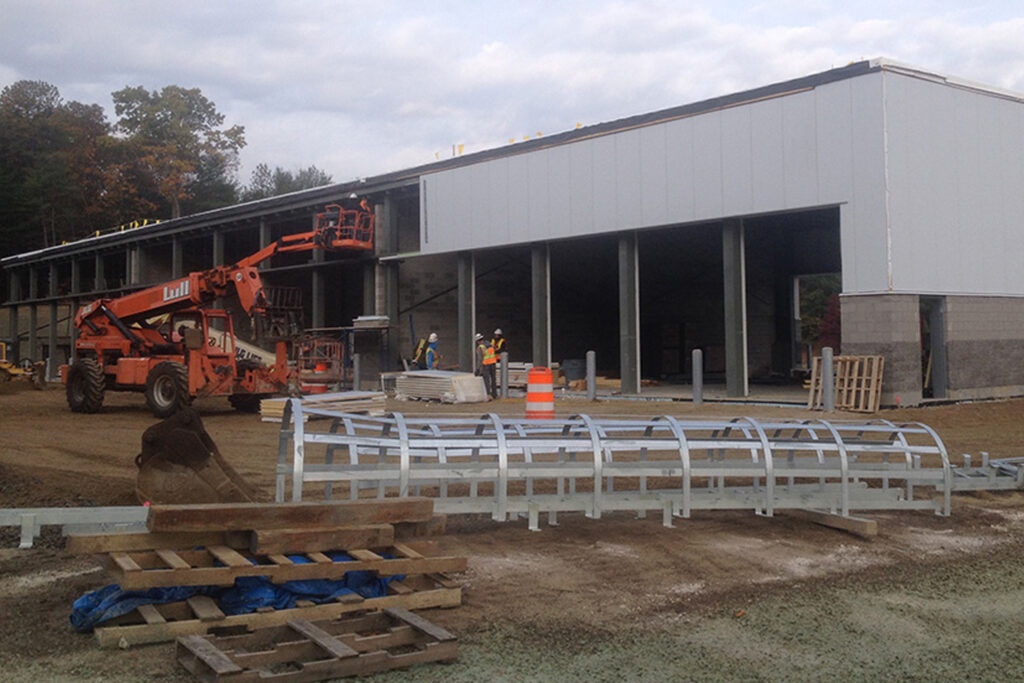
In Connecticut, Governor Ned Lamont and Connecticut Transportation Commissioner Garrett Eucalitto announce that the Connecticut Department of Transportation (CTDOT) has been awarded $35.7 million to support the modernization and expansion of the Windham Region Transit District (WRTD) bus facility in Mansfield.
The project will more than double the size of the existing facility, enabling it to support a fleet of up to 50 low- and zero-emission batter-electric buses. The upgraded facility will include 25 new chargers; administrative space; a bus wash; and indoor storage to ensure reliable, uninterrupted service for the region.
“This investment is a major step forward in our commitment to clean transportation and reliable public transit,” said Gov. Lamont. “By modernizing this facility, we’re not only reducing emissions and improving service, but also creating jobs and expanding access to opportunity in eastern Connecticut. This is exactly the kind of forward-thinking infrastructure our state needs.”
WRTD currently serves 23 municipalities, including the University of Connecticut Storrs campus, with nine fixed routes, ADA paratransit, and dial-a-ride services. The expanded facility will support both WRTD and UConn transit operations, enhancing regional connectivity and improving access to major employers, healthcare providers, and educational institutions.
WRTD’s service area covers a large, rural section of eastern Connecticut, with more than 50 percent of residents indicating they have one vehicle or no access to a vehicle. In FY24, WRTD provided more than 1.1 million passenger trips.
“So many people in eastern Connecticut, particularly college students and rural seniors, don’t have reliable access to transportation, which can make it impossible for them to consistently get to work, medical appointments, or class,” said Sen. Chris Murphy (D-CT). “But with these federal dollars, we are going to majorly upgrade and expand the UConn and WRTD transit networks to make it much easier for eastern Connecticut residents to get where they need to be. And we’re going to create a lot of good paying jobs in the process. This is going to be a game changer for thousands of people in rural communities and provide a significant boost to the region’s economy.”
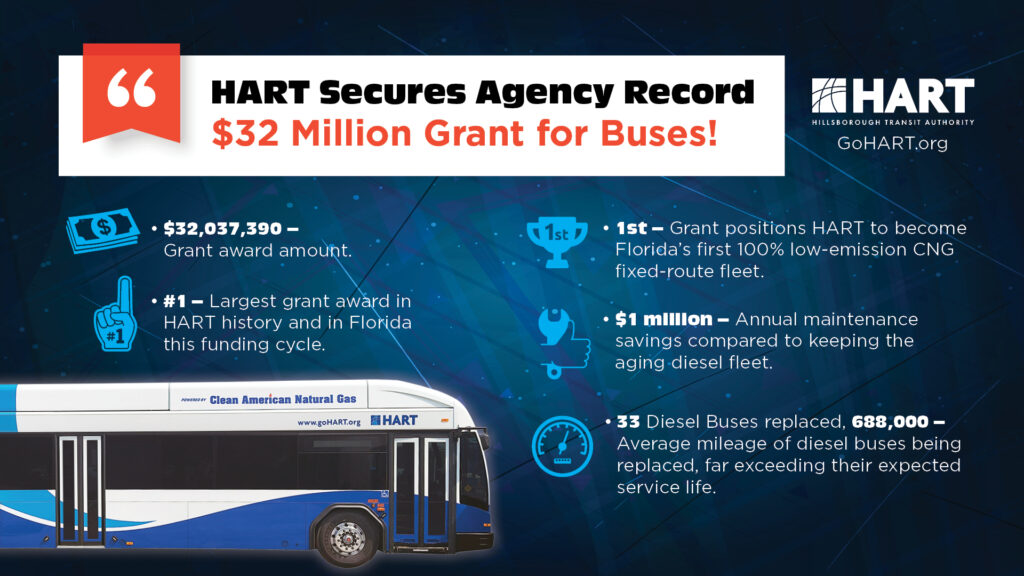
The Hillsborough Transit Authority (HART), Tampa, FL, has been awarded $32,037,390—the largest award in the state of Florida and among the top transit awards nationwide. The funding will allow HART to replace 33 aging diesel buses with modern, low emission Compressed Natural Gas (CNG) vehicles and expand vocational and registered apprenticeship training for fleet technicians.
“Today’s announcement represents a major step forward for reliable transit in Hillsborough County,” said HART CEO Scott Drainville. “This investment will help us improve service for riders, reduce costly breakdowns, strengthen our workforce pipeline, and continue transitioning our fleet to cleaner, low-emission technology.
“This federal investment is a significant step forward for transit in Hillsborough County. With the addition of 33 new CNG buses, HART will be able to improve reliability, lower operating costs, and better serve the riders who depend on these routes every day,” said Rep. Laurel Lee (R-FL). “I was proud to support HART’s application and am grateful to Secretary Duffy and Administrator Molinaro for prioritizing this project. These upgrades will make a real difference for families, workers, and students across our community.”
In Reno, NV, the Regional Transportation Commission of Washoe County (RTC) has been awarded $21.5 million, advancing the agency’s commitment to a cleaner, more reliable public transit system. The funding will allow RTC to replace a portion of its fleet with modern diesel-electric hybrid buses to improve service reliability, reduce emissions, and lower long-term maintenance costs.
“This investment is a substantial win for our community,” said RTC Executive Director Bill Thomas. “Replacing older buses with cleaner, more efficient technology will help ensure safe and dependable service while also meeting our region’s sustainability and air quality goals. We’re incredibly grateful to Sen. Cortez Masto, Sen. Rosen, and Rep. Amodei for their advocacy on behalf of Nevada’s transportation future.”
“It was a pleasure partnering with the RTC of Washoe County to secure funding to replace buses that have reached the end of their useful life with new hybrid models. This upgrade strengthens safety, sustainability, and the overall transit experience for our community,” said Rep. Mark Amodei (R-NV).
“I was proud to help secure this grant funding to make Reno’s transit system cleaner and more efficient,” said Sen. Catherine Cortez Masto (D-NV). “I’ll always work to ensure Nevadans can get where they need to go safely and quickly, and replacing Reno’s aging bus fleet with new, low-emissions buses will do just that.”
In San Jose, CA, the Santa Clara Valley Transportation Authority (VTA) will receive $20 million for hybrid diesel-electric low-emission buses.
“Replacing outdated buses with low-emission hybrids isn’t optional—it’s essential,” said Carolyn Gonot, general manager/CEO. “Government funding is critical to reducing harmful emissions, safeguarding public health, and ensuring our transit systems remain resilient for the future.”
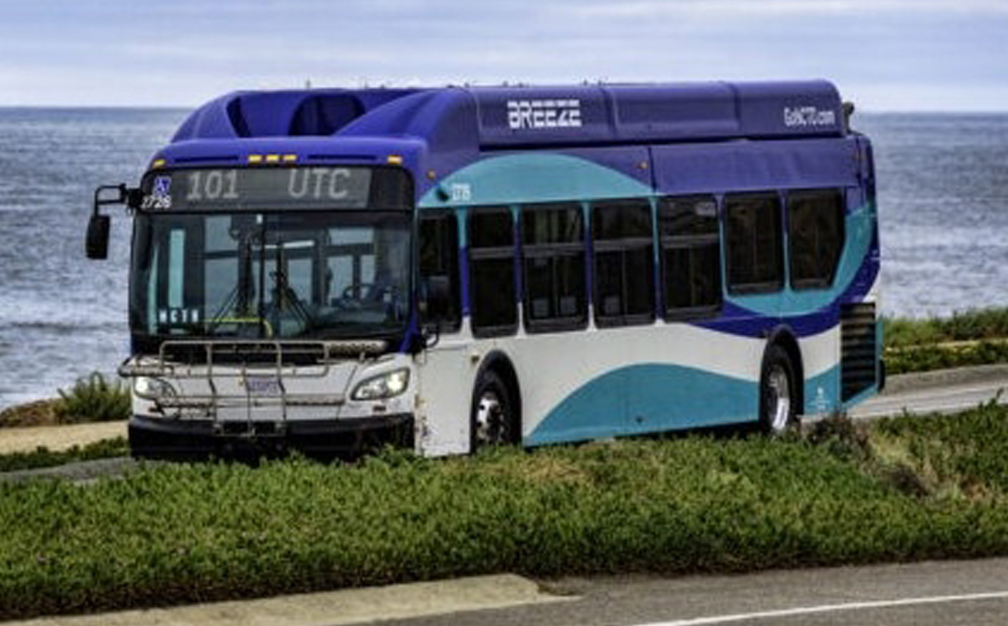
North County Transit – San Diego Railroad (NCTD), Oceanside, CA, announced the award of $16,774,170 to replace end-of-life compressed natural gas (CNG) buses that operate on the agency’s BREEZE fixed-route service throughout North San Diego County.
The new buses will be deployed on routes operated out of NCTD’s East Division facility in Escondido, which runs 21 of NCTD’s routes, primarily serving inland North County communities including Escondido, San Marcos, Vista, and areas of unincorporated San Diego County. In FY24, East Division BREEZE routes carried more than 2.2 million riders, helping reduce traffic congestion and improve regional air quality.
“This award from the FTA underscores NCTD’s commitment to enhance safety and security on our modes and to provide a world-class transit experience for our customers,” said NCTD CEO Shawn M. Donaghy. “The replacement of aging buses near the end of their useful life will reduce delays caused by mechanical failures, ensuring our customers arrive to their destinations safely and on time.”
Many BREEZE routes serve areas with high youth density and transit dependency, reinforcing the need for reliable vehicles to maintain access to education, jobs, and essential services. Within a quarter mile of the 21 East Division BREEZE routes, there are approximately 745 youth per square mile, more than three times NCTD’s systemwide average.
“Putting new, clean air buses on California’s streets will improve commutes, cut pollution, and enhance the quality of life for communities all across our state. Even years after its passage, the Bipartisan Infrastructure Law is continuing to deliver for California,” said Senator Adam Schiff (D-CA).
The Redding Area Bus Authority (RABA), CA, was awarded $2.6 million to support the transition to low-emission buses and modernize transit infrastructure in Shasta County. The investment will allow RABA to begin replacing aging diesel vehicles with cleaner, more efficient buses, while also supporting the upgrades needed to operate and maintain the next generation of transit technology. These improvements will enhance service reliability, reduce emissions, and contribute to better air quality for the region.
“We are grateful for this significant federal support, which marks an important step toward building a cleaner and more modern transit system for the Redding area,” said Manager John Andoh. “This investment will directly benefit the residents of Shasta County by improving the comfort, reliability, and sustainability of public transportation.”